Gao Xin, Zhang Peizhen
School of Sports Medicine and Rehabilitation, Beijing Sport University, Beijing 100084, China.
Zhong Nan Da Xue Xue Bao Yi Xue Ban. 2024 Apr 28;49(4):508-515. doi: 10.11817/j.issn.1672-7347.2024.230550.
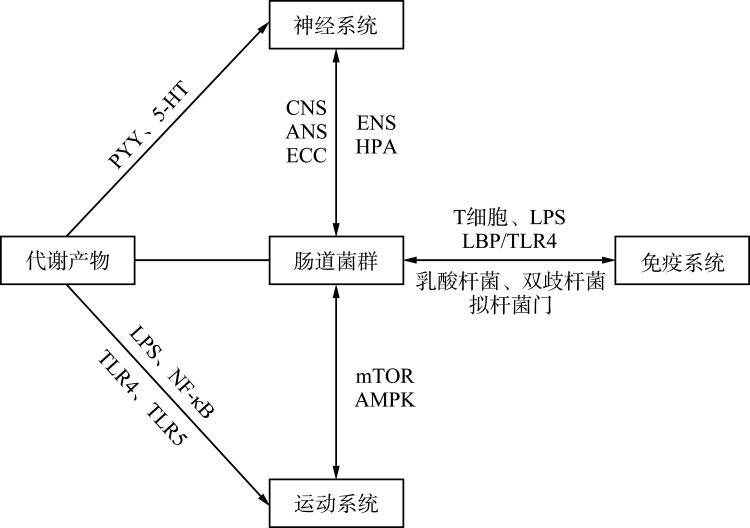
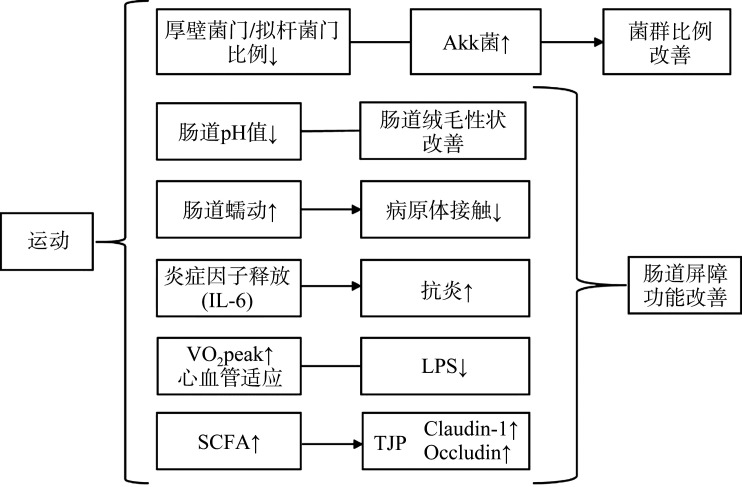
Gut microbiota refers to the vast and diverse community of microorganisms residing in the intestines. Factors such as genetics, environmental influences (e.g., exercise, diet), and early life experiences (e.g., infant feeding methods) can all affect the ecological balance of gut microbiota within the body. Dysbiosis of the gut microbiota is associated with extra-intestinal diseases such as Parkinson's syndrome, osteoporosis, and autoimmune diseases, suggesting that disturbances in gut microbiota may be one of the causes of these diseases. Exercise benefits various diseases, with gut microbiota playing a role in regulating the nervous, musculoskeletal, and immune systems. Gut microbiota can impact the body's health status through the gut-brain axis, gut-muscle axis, and immune pathways. Moderate-intensity aerobic exercise can increase the quantity of gut microbiota and change microbial abundance, although short-term exercise does not significantly affect the alpha diversity of the microbiota. Resistance exercise also does not have a significant regulatory effect on gut microbiota.
肠道微生物群是指存在于肠道内的庞大而多样的微生物群落。遗传、环境影响(如运动、饮食)以及早期生活经历(如婴儿喂养方式)等因素都会影响体内肠道微生物群的生态平衡。肠道微生物群失调与帕金森综合征、骨质疏松症和自身免疫性疾病等肠道外疾病有关,这表明肠道微生物群的紊乱可能是这些疾病的病因之一。运动对多种疾病有益,肠道微生物群在调节神经、肌肉骨骼和免疫系统方面发挥作用。肠道微生物群可通过肠-脑轴、肠-肌肉轴和免疫途径影响身体的健康状况。中等强度的有氧运动可增加肠道微生物群的数量并改变微生物丰度,不过短期运动对微生物群的α多样性没有显著影响。抗阻运动对肠道微生物群也没有显著的调节作用。