Jenks Olivia J, Peng Zhe, Schueneman Melinda K, Rutherford Madison, Handschy Anne V, Day Douglas A, Jimenez Jose L, de Gouw Joost A
Department of Chemistry, University of Colorado, Boulder, Colorado 80309, United States.
Cooperative Institute for Research in Environmental Sciences (CIRES), Boulder, Colorado 80309, United States.
ACS EST Air. 2024 May 4;1(7):725-733. doi: 10.1021/acsestair.4c00065. eCollection 2024 Jul 12.
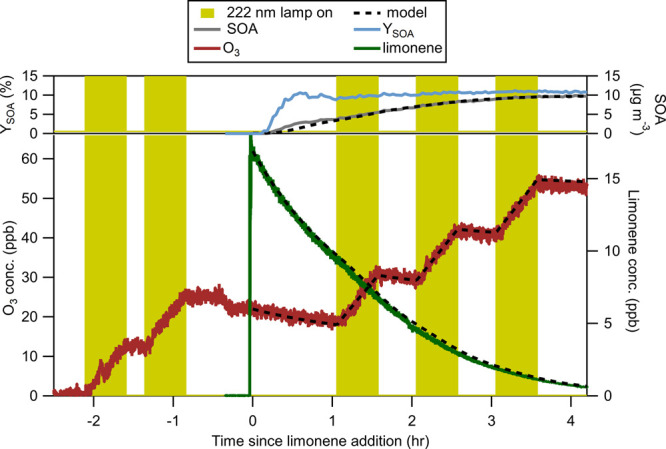
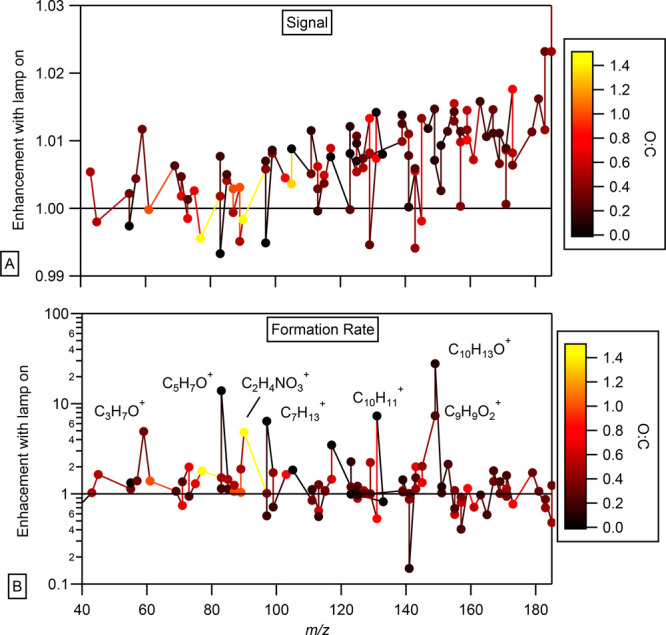
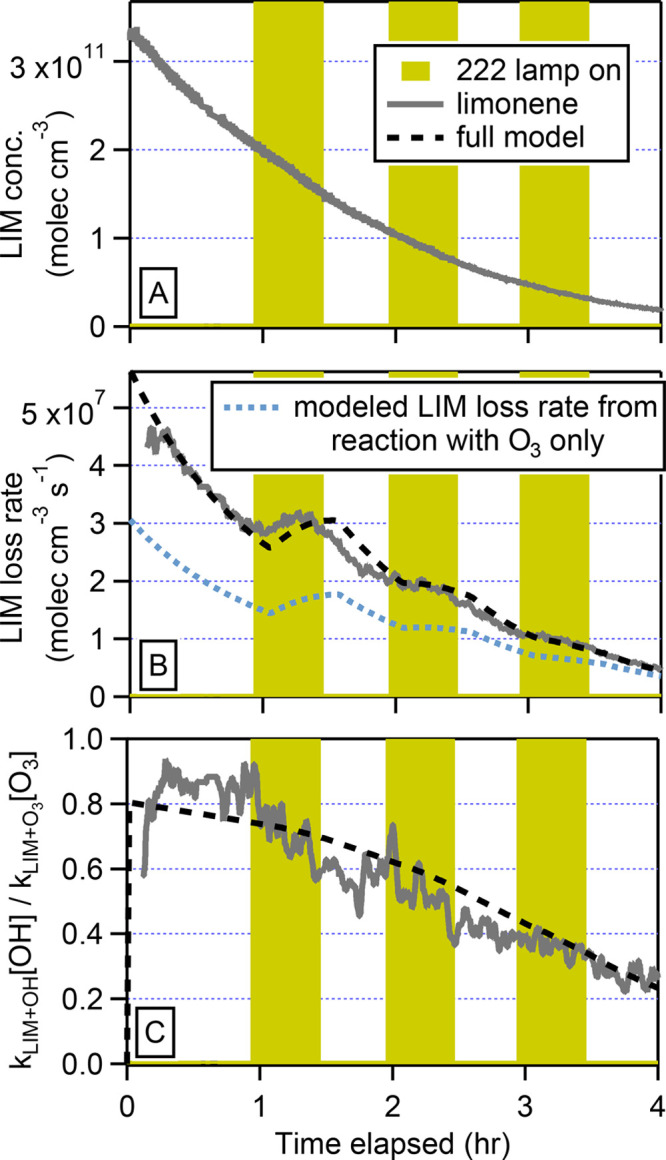
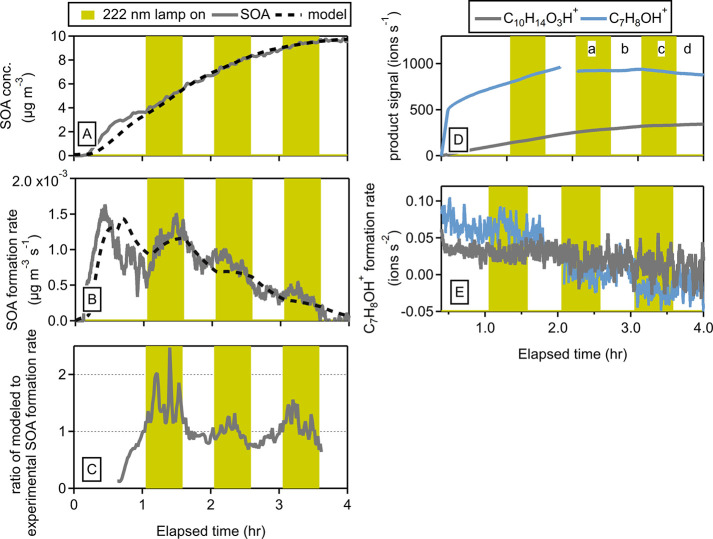
Since the 1930s, germicidal ultraviolet (GUV) irradiation has been used indoors to prevent the transmission of airborne diseases, such as tuberculosis and measles. Recently, it has received renewed attention due to the COVID-19 pandemic. While GUV radiation has been shown to be effective in inactivating airborne bacteria and viruses, few studies on the impact of GUV on indoor air quality have been published. In this work, we evaluate the effects of GUV222 (GUV at 222 nm) on the chemistry of a common indoor volatile organic compound (VOC), limonene. We found that the production of O by the GUV222 lamps caused the formation of particulate matter (PM) and oxygenated volatile organic compounds (VOCs). We also found that the chemistry proceeds through the ozonolysis of limonene as well as the reaction with secondary OH, and that the presence of GUV light led to observable but small perturbations to this chemistry. Understanding the effects of GUV222 on indoor air quality is important in evaluating the safety of these devices.
自20世纪30年代以来,杀菌紫外线(GUV)照射已在室内用于预防空气传播疾病的传播,如肺结核和麻疹。最近,由于新冠疫情,它再次受到关注。虽然已证明GUV辐射能有效灭活空气中的细菌和病毒,但关于GUV对室内空气质量影响的研究却鲜有发表。在这项工作中,我们评估了222纳米的GUV(GUV222)对常见室内挥发性有机化合物(VOC)柠檬烯化学性质的影响。我们发现,GUV222灯产生的氧原子导致了颗粒物(PM)和含氧挥发性有机化合物(VOCs)的形成。我们还发现,该化学反应通过柠檬烯的臭氧分解以及与次级羟基的反应进行,并且GUV光的存在对该化学反应产生了可观察到但较小的扰动。了解GUV222对室内空气质量的影响对于评估这些设备的安全性很重要。