Bogale Dereje E
School of Medicine, Department of Oncology, Addis Ababa University, Addis Ababa, Ethiopia.
Discov Oncol. 2024 Jul 20;15(1):295. doi: 10.1007/s12672-024-01173-z.
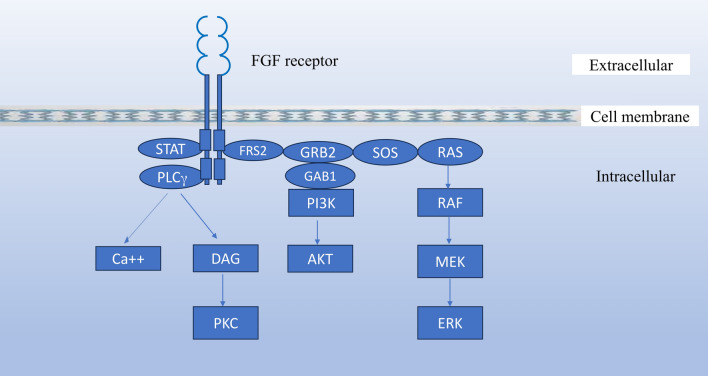
Bladder cancer is one of the most frequently occurring cancers worldwide. At diagnosis, 75% of urothelial bladder cancer cases have non-muscle invasive bladder cancer while 25% have muscle invasive or metastatic disease. Aberrantly activated fibroblast growth factor receptor (FGFR)-3 has been implicated in the pathogenesis of bladder cancer. Activating mutations of FGFR3 are observed in around 70% of NMIBC cases and ~ 15% of MIBCs. Activated FGFR3 leads to ligand-independent receptor dimerization and activation of downstream signaling pathways that promote cell proliferation and survival. FGFR3 is an important therapeutic target in bladder cancer, and clinical studies have shown the benefit of FGFR inhibitors in a subset of bladder cancer patients. c-MYC is a well-known major driver of carcinogenesis and is one of the most commonly deregulated oncogenes identified in human cancers. Studies have shown that the antitumor effects of FGFR inhibition in FGFR3 dependent bladder cancer cells and other FGFR dependent cancers may be mediated through c-MYC, a key downstream effector of activated FGFR that is involved tumorigenesis. This review will summarize the current general understanding of FGFR signaling and MYC alterations in cancer, and the role of FGFR3 and MYC dysregulation in the pathogenesis of urothelial bladder cancer with the possible therapeutic implications.
膀胱癌是全球最常见的癌症之一。在确诊时,75%的尿路上皮膀胱癌病例为非肌层浸润性膀胱癌,而25%为肌层浸润性或转移性疾病。异常激活的成纤维细胞生长因子受体(FGFR)-3与膀胱癌的发病机制有关。在约70%的非肌层浸润性膀胱癌病例和约15%的肌层浸润性膀胱癌病例中观察到FGFR3的激活突变。激活的FGFR3导致非配体依赖性受体二聚化并激活促进细胞增殖和存活的下游信号通路。FGFR3是膀胱癌的一个重要治疗靶点,临床研究已显示FGFR抑制剂对一部分膀胱癌患者有益。c-MYC是一种众所周知的致癌主要驱动因子,是在人类癌症中最常失调的致癌基因之一。研究表明,FGFR抑制在FGFR3依赖性膀胱癌细胞和其他FGFR依赖性癌症中的抗肿瘤作用可能通过c-MYC介导,c-MYC是激活的FGFR的关键下游效应因子,参与肿瘤发生。本综述将总结目前对癌症中FGFR信号传导和MYC改变的一般认识,以及FGFR3和MYC失调在尿路上皮膀胱癌发病机制中的作用及其可能的治疗意义。