Sehrawat Sandeep, Behera Abhijit, Kapoor Love, Kumar Venkatesan Sampath, Bakhshi Sameer, Khan Shah Alam
Department of Orthopedics, All India Institute of Medical Sciences, New Delhi, India.
Department of Medical Oncology, Dr BRA Institute Rotary Cancer Hospital, All India Institute of Medical Sciences, New Delhi, India.
JSES Int. 2024 Feb 24;8(4):692-698. doi: 10.1016/j.jseint.2024.01.018. eCollection 2024 Jul.
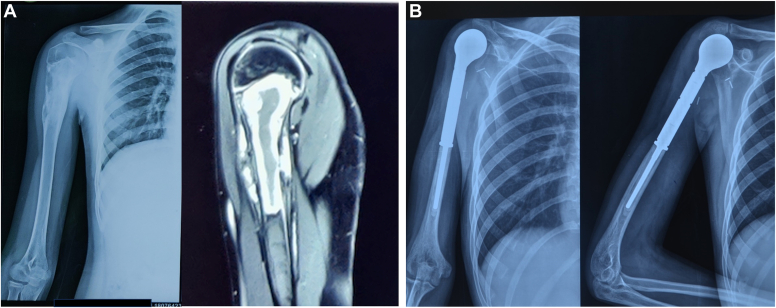
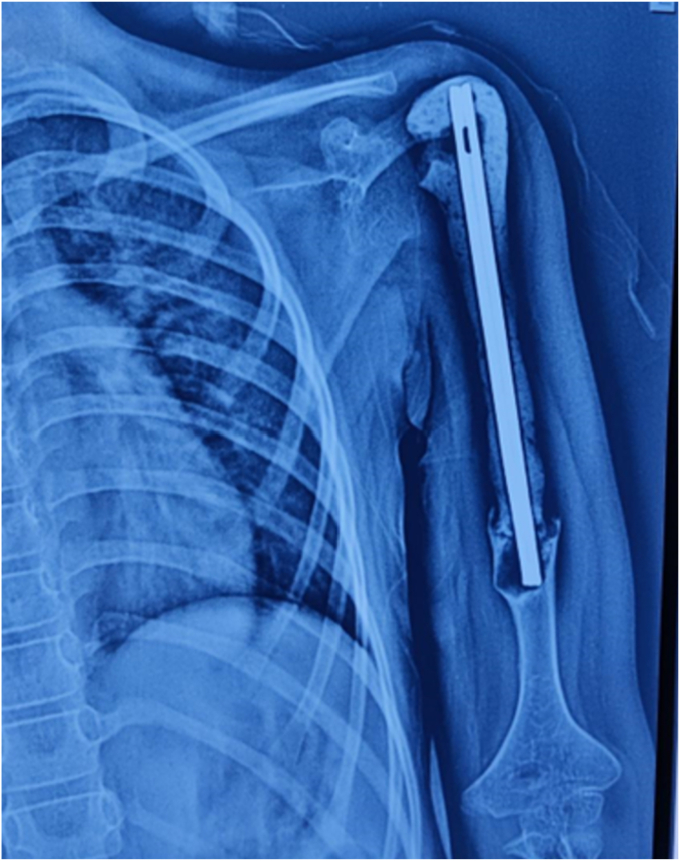
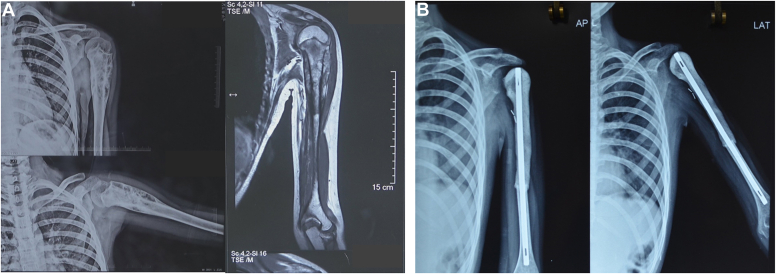
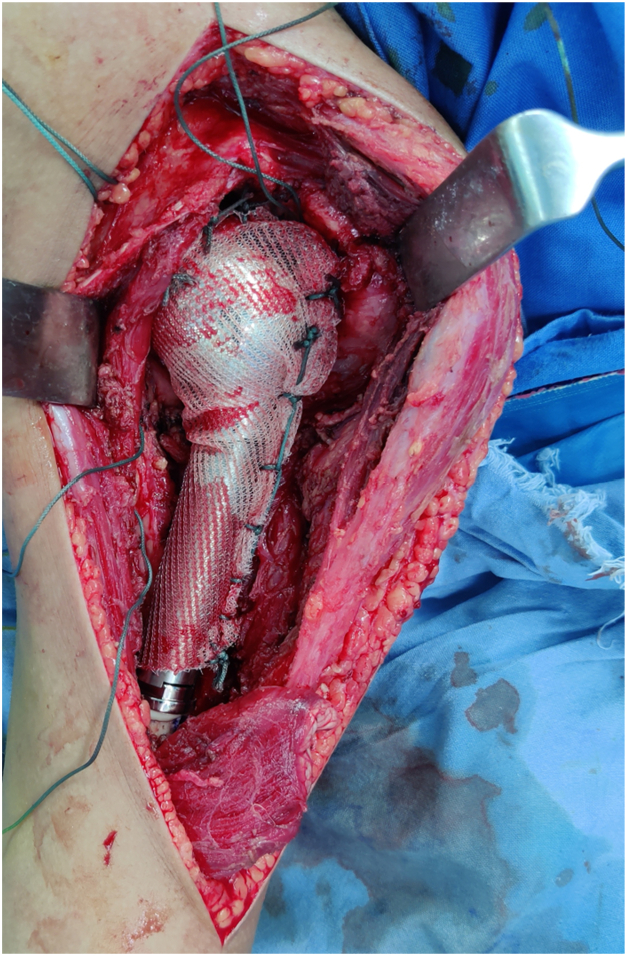
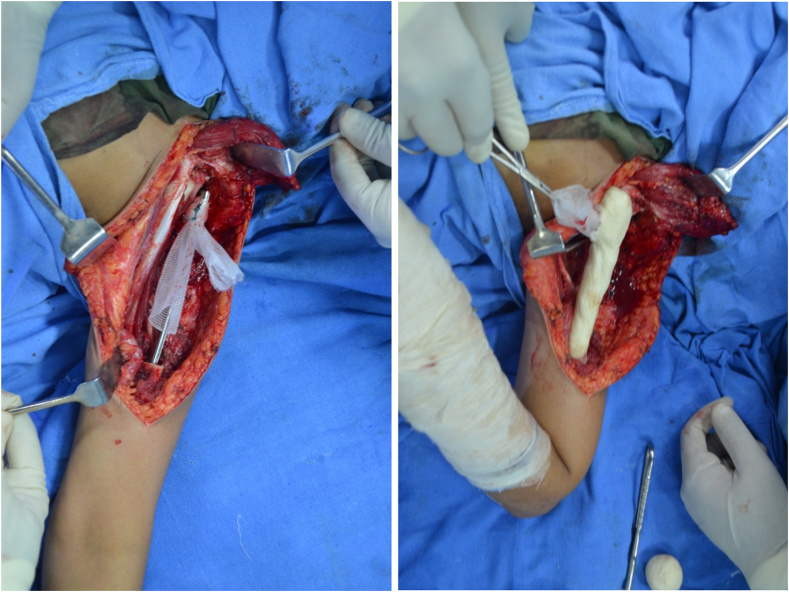
The proximal humerus is a common site for primary malignant and benign aggressive bone tumors, necessitating wide resection and subsequent skeletal defect reconstruction. Various reconstruction options include osteoarticular allografts, autografts, endoprosthesis, nail-cement spacer, reverse shoulder arthroplasty, and allograft-prosthesis composites. However, there is no consensus on the optimal reconstruction method. This study aims to compare functional outcomes and complications between these two methods.
A total of 40 patients with proximal humerus tumors who underwent endoprosthesis or nail-cement spacer reconstruction between March 2012 and December 2020 were included. The mean follow-up in the study was 31.37 +/- 12 months. Demographic and clinical data were collected, and functional outcomes were assessed using the Musculoskeletal Tumor Society 93 scoring system and the Disabilities of the Arm, Shoulder, and Hand questionnaire. Complications and oncological outcomes were recorded.
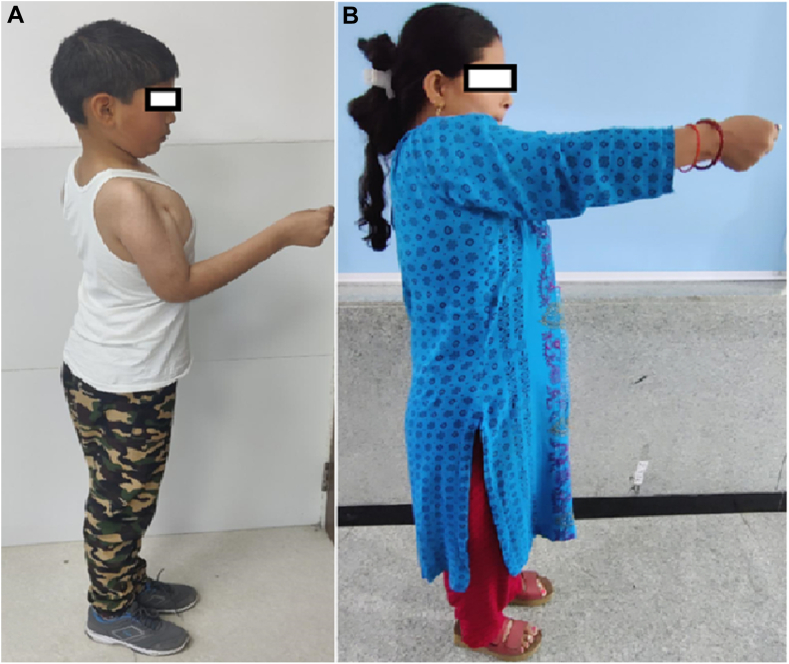
Both groups were similar in terms of demographic and clinical variables. Endoprosthesis reconstruction demonstrated significantly better active shoulder forward flexion compared to nail-cement spacer (45.8 vs. 25.2 degrees) ( = .015). Endoprosthesis group also exhibited greater active shoulder internal rotation (68.25 vs. 63.25 degrees) ( = .004). No statistically significant differences were observed in overall functional outcomes. Complications, including radial nerve palsy and infection, were comparable between groups, with one case of spacer loosening.
Both endoprosthesis and nail-cement spacer reconstruction provide comparable functional outcomes and complication rates following proximal humerus tumor resection. Nail-cement spacer offers a cost-effective alternative for patients in resource-constrained settings.
肱骨近端是原发性恶性和良性侵袭性骨肿瘤的常见部位,需要进行广泛切除并随后重建骨骼缺损。各种重建选择包括骨关节异体移植、自体移植、人工关节置换、髓内钉-骨水泥间隔物、反式肩关节置换以及异体移植-假体复合物。然而,对于最佳重建方法尚无共识。本研究旨在比较这两种方法的功能结局和并发症。
纳入2012年3月至2020年12月期间接受人工关节置换或髓内钉-骨水泥间隔物重建的40例肱骨近端肿瘤患者。研究中的平均随访时间为31.37±12个月。收集人口统计学和临床数据,并使用肌肉骨骼肿瘤学会93评分系统和上肢、肩部和手部功能障碍问卷评估功能结局。记录并发症和肿瘤学结局。
两组在人口统计学和临床变量方面相似。与髓内钉-骨水泥间隔物相比,人工关节置换重建的肩关节主动前屈明显更好(45.8度对25.2度)(P = 0.015)。人工关节置换组的肩关节主动内旋也更大(68.25度对63.25度)(P = 0.004)。在总体功能结局方面未观察到统计学上的显著差异。两组的并发症,包括桡神经麻痹和感染,相当,有1例间隔物松动。
人工关节置换和髓内钉-骨水泥间隔物重建在肱骨近端肿瘤切除术后提供了相当的功能结局和并发症发生率。髓内钉-骨水泥间隔物为资源有限环境中的患者提供了一种经济有效的替代方案。