The Faculty of Medicine, Duy Tan University, Da Nang, Vietnam.
Cardiovascular Center, Hue Central Hospital, Hue, Vietnam.
PLoS One. 2024 Jul 23;19(7):e0301319. doi: 10.1371/journal.pone.0301319. eCollection 2024.
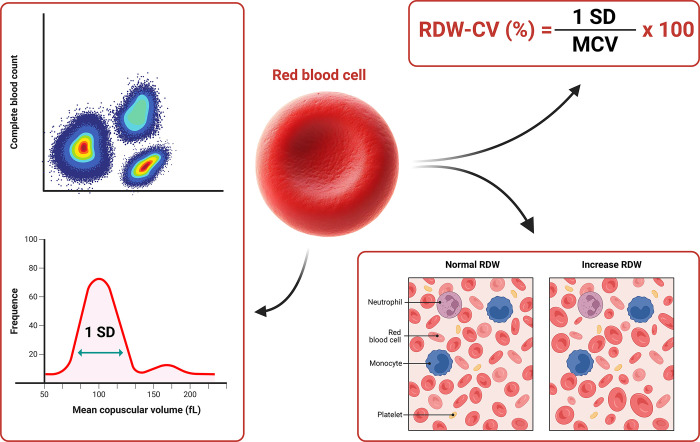
Heart failure (HF) is becoming a growing public health concern. Diagnostic tests for determining the severity of HF often come with high costs and require specialized expertise, which makes it difficult to assess HF severity, especially in low-income countries or at primary healthcare facilities. Recently, red blood cell distribution width (RDW) has emerged as a promising, easily accessible marker associated with HF severity. The study aimed to assess changes in RDW levels in HF patients and the diagnostic value of RDW in detecting acute heart failure (AHF) among HF patients.
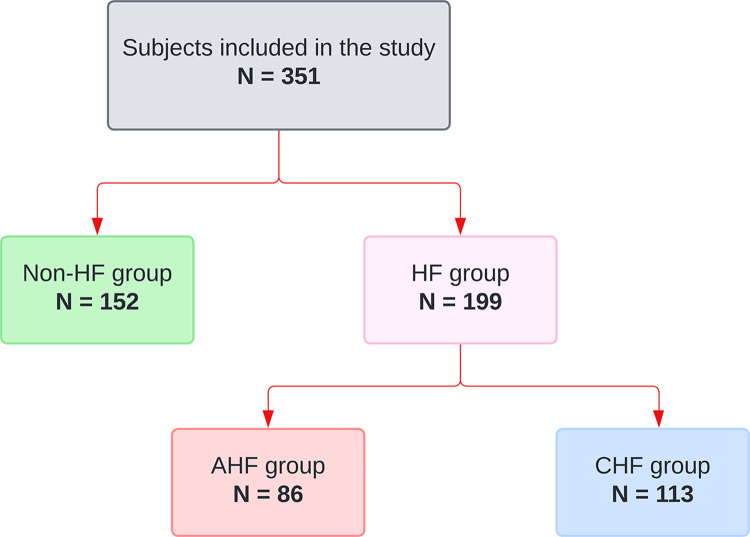
We conducted a cross-sectional examination involving 351 participants divided into HF and non-HF cohorts. HF was defined and categorized according to the diagnostic and treatment guidelines for AHF and chronic heart failure (CHF) set forth by the European Society of Cardiology (2021). Univariate and multivariate analysis of factors associated with AHF was performed.
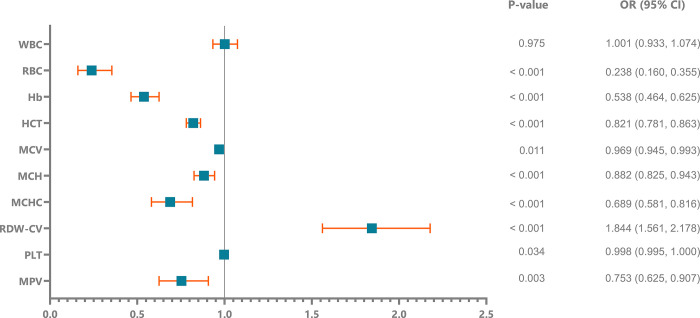
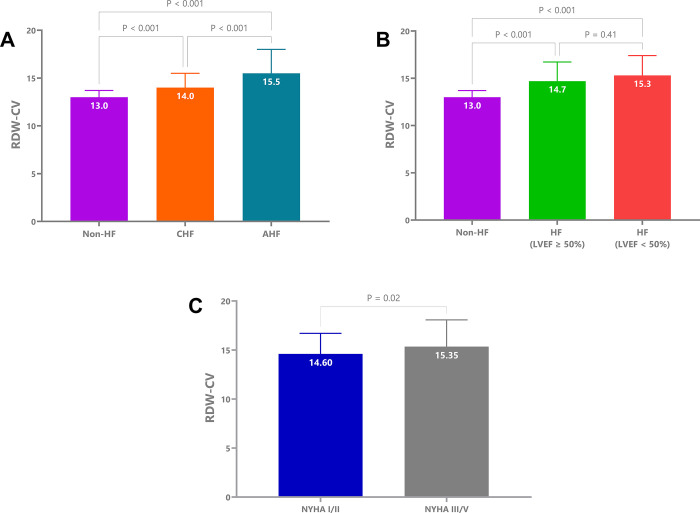
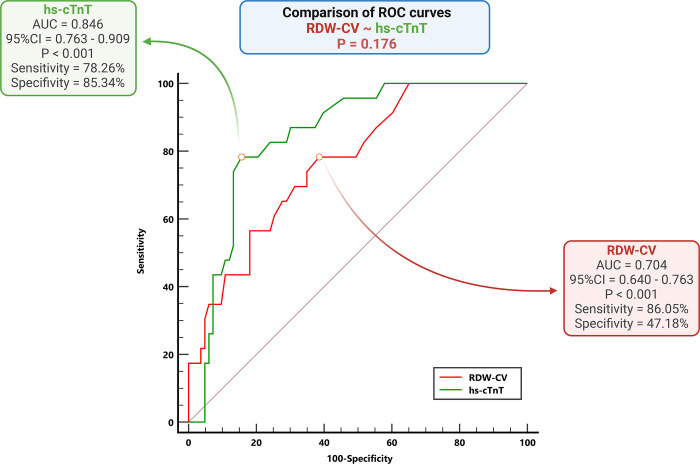
The study revealed that HF patients displayed higher median RDW levels (14.90% [13.70-17.00]) compared to non-HF individuals (13.00% [12.23-13.78]). RDW was notably elevated in HF patients with left ventricular ejection fraction < 50% compared to those with left ventricular ejection fraction ≥ 50%. ROC curve analysis of RDW for AHF detection identified a cutoff value of 13.85%, with a sensitivity of 86.05% and specificity of 47.18%, statistically significant at p < 0.001. RDW > 13.85% was identified as an independent risk factor for AHF in patients with HF, with odds ratios of 2.644 (95% CI, 1.190-5.875; p = 0.017).
The study revealed significant RDW variations in patients with CHF and AHF compared to the control group. These findings suggest that RDW could be a biomarker for detecting HF severity.
心力衰竭(HF)正成为一个日益严重的公共卫生问题。用于确定 HF 严重程度的诊断测试通常成本高昂,且需要专业知识,这使得评估 HF 严重程度变得困难,尤其是在低收入国家或基层医疗机构。最近,红细胞分布宽度(RDW)作为一种有前途的、易于获取的标志物,与 HF 严重程度相关。本研究旨在评估 HF 患者的 RDW 水平变化,以及 RDW 在检测 HF 患者急性心力衰竭(AHF)中的诊断价值。
我们进行了一项横断面研究,共纳入 351 名参与者,分为 HF 和非 HF 两组。HF 根据欧洲心脏病学会(ESC)2021 年发布的 AHF 和慢性心力衰竭(CHF)诊断和治疗指南进行定义和分类。对与 AHF 相关的因素进行单因素和多因素分析。
研究表明,HF 患者的 RDW 中位数水平(14.90%[13.70-17.00])高于非 HF 个体(13.00%[12.23-13.78])。与左心室射血分数(LVEF)≥50%的 HF 患者相比,LVEF<50%的 HF 患者的 RDW 明显升高。RDW 对 AHF 检测的 ROC 曲线分析确定了 13.85%的截断值,其敏感性为 86.05%,特异性为 47.18%,p<0.001 有统计学意义。RDW>13.85%是 HF 患者发生 AHF 的独立危险因素,优势比(OR)为 2.644(95%CI,1.190-5.875;p=0.017)。
本研究表明,与对照组相比,CHF 和 AHF 患者的 RDW 有显著差异。这些发现表明,RDW 可能是一种检测 HF 严重程度的生物标志物。