Jiang Ting, Yu Fei, Zhou Yuqi, Li Ruomei, Zheng Mengting, Jiang Yangyang, Li Zhenxia, Pan Jun, Ouyang Ningjuan
Department of Orthodontics, Shanghai Ninth People's Hospital, Shanghai Jiao Tong University School of Medicine, College of Stomatology, Shanghai Jiao Tong University, National Center for Stomatology, National Clinical Research Center for Oral Diseases, Shanghai Key Laboratory of Stomatology, Research Unit of Oral and Maxillofacial Regenerative Medicine, Chinese Academy of Medical Sciences, Shanghai, 200011, China.
Oral Bioengineering Lab, Shanghai Key Laboratory of Stomatology & Shanghai Research Institute of Stomatology, Shanghai, 200011, China.
Mater Today Bio. 2024 Jul 5;27:101147. doi: 10.1016/j.mtbio.2024.101147. eCollection 2024 Aug.
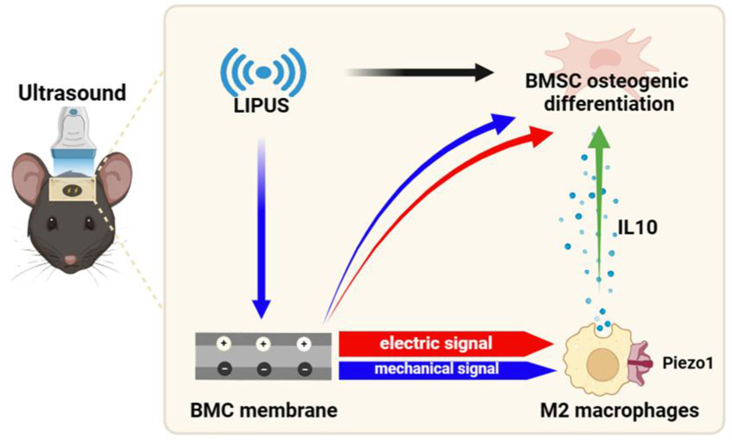
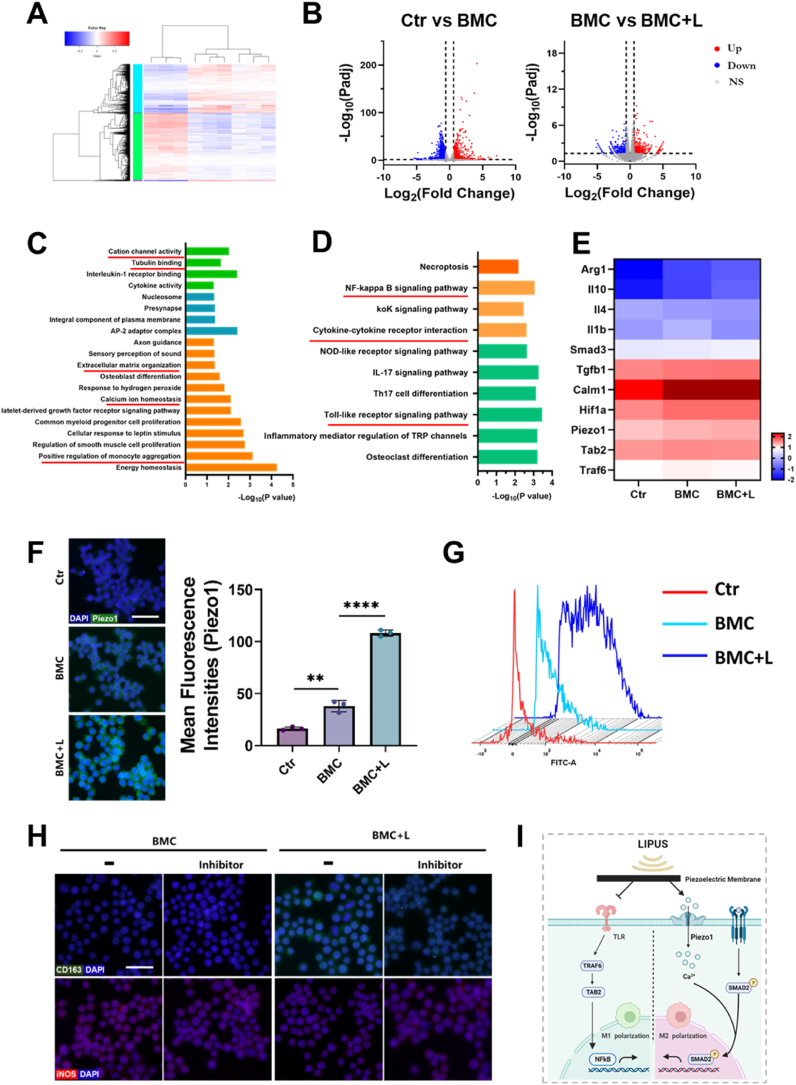
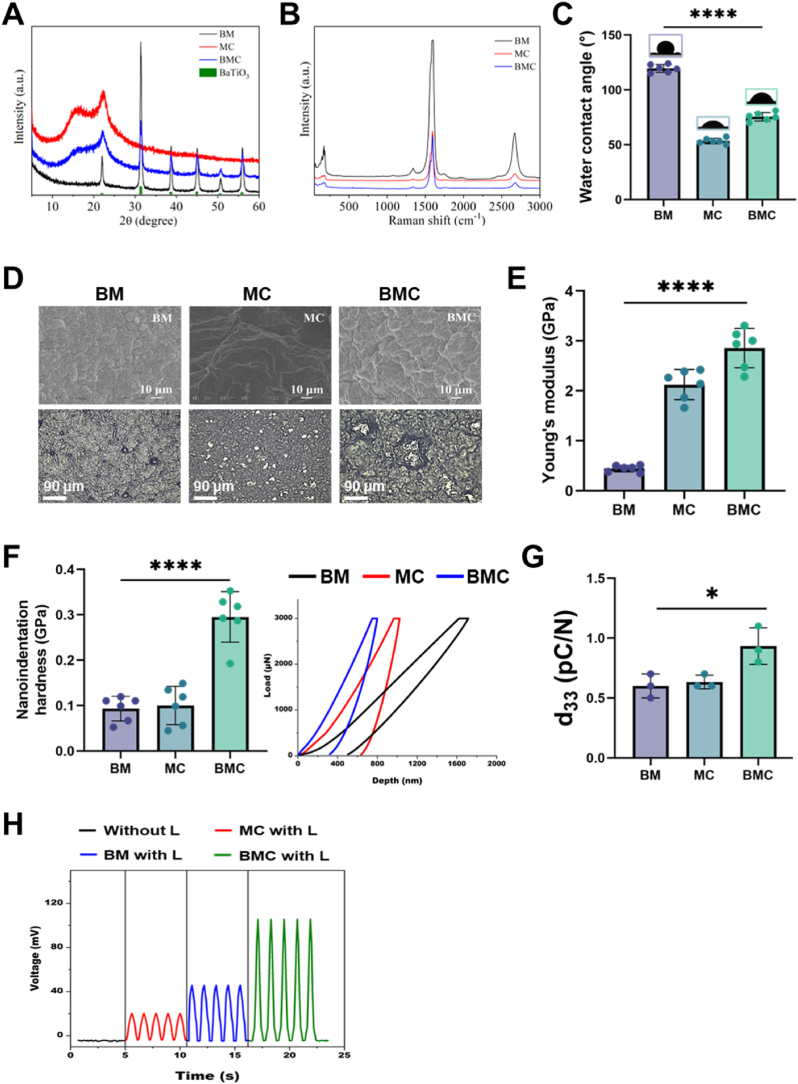
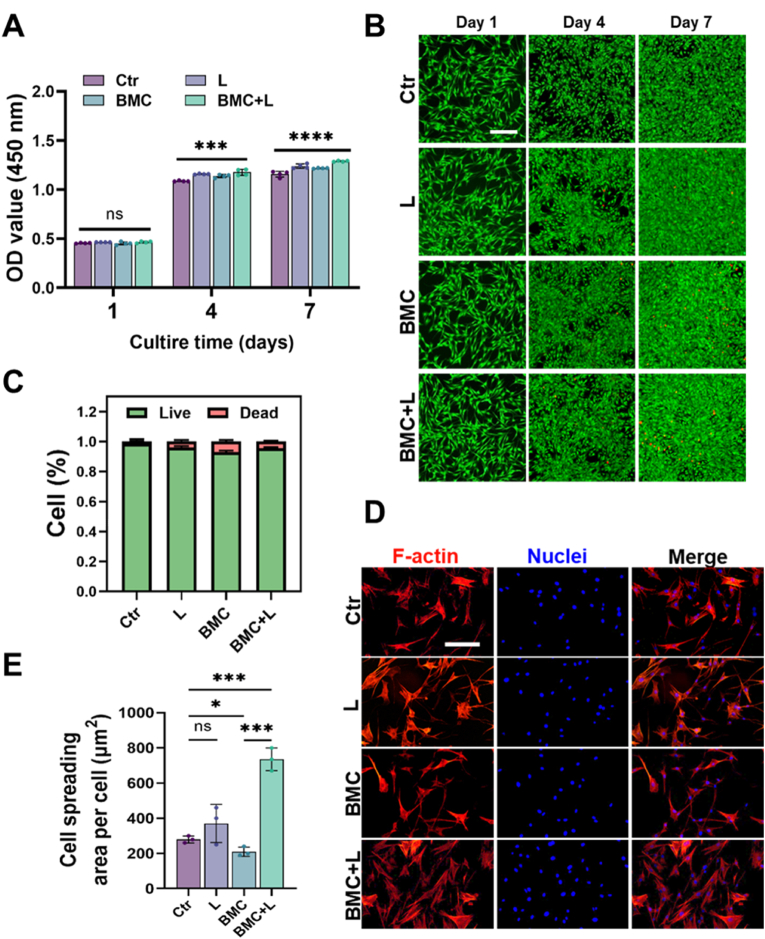
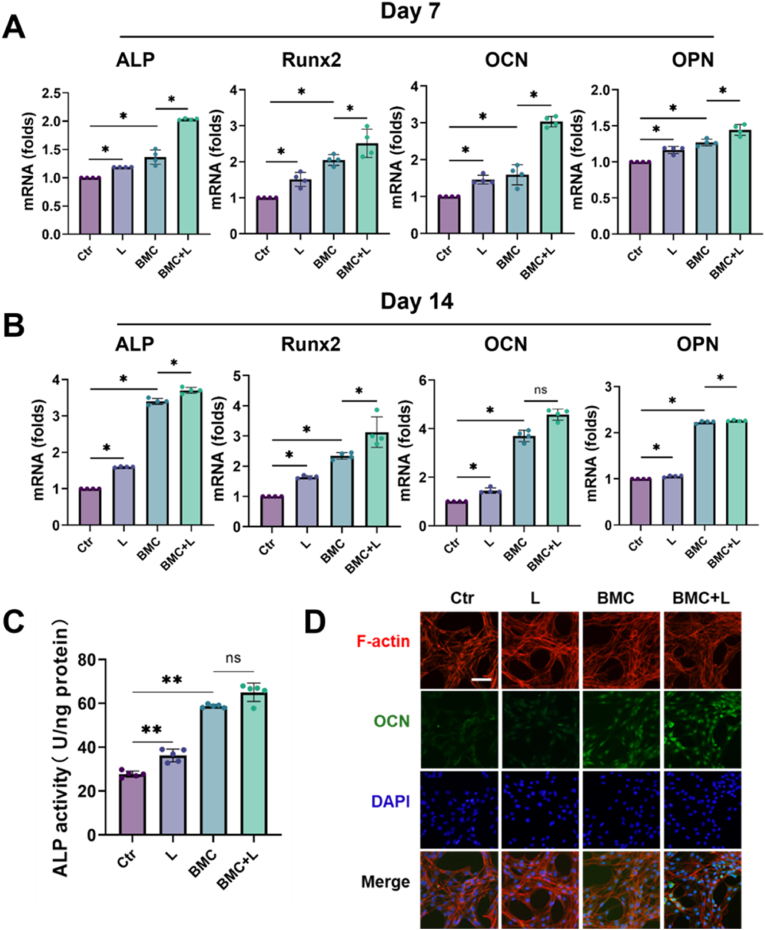
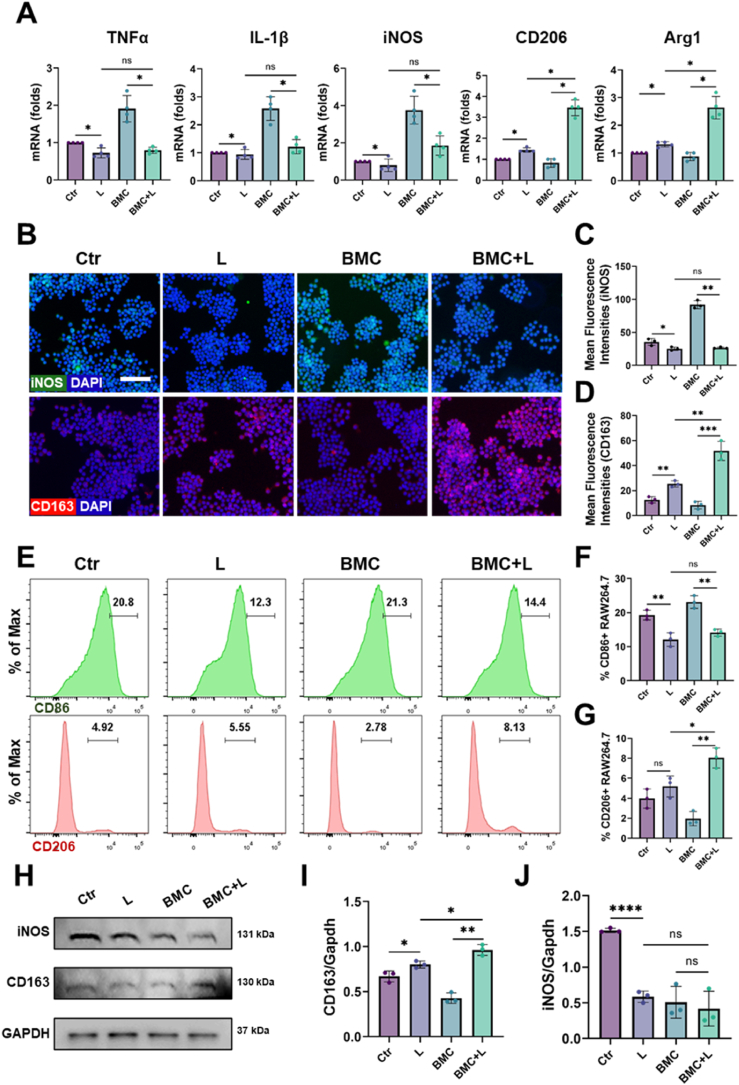
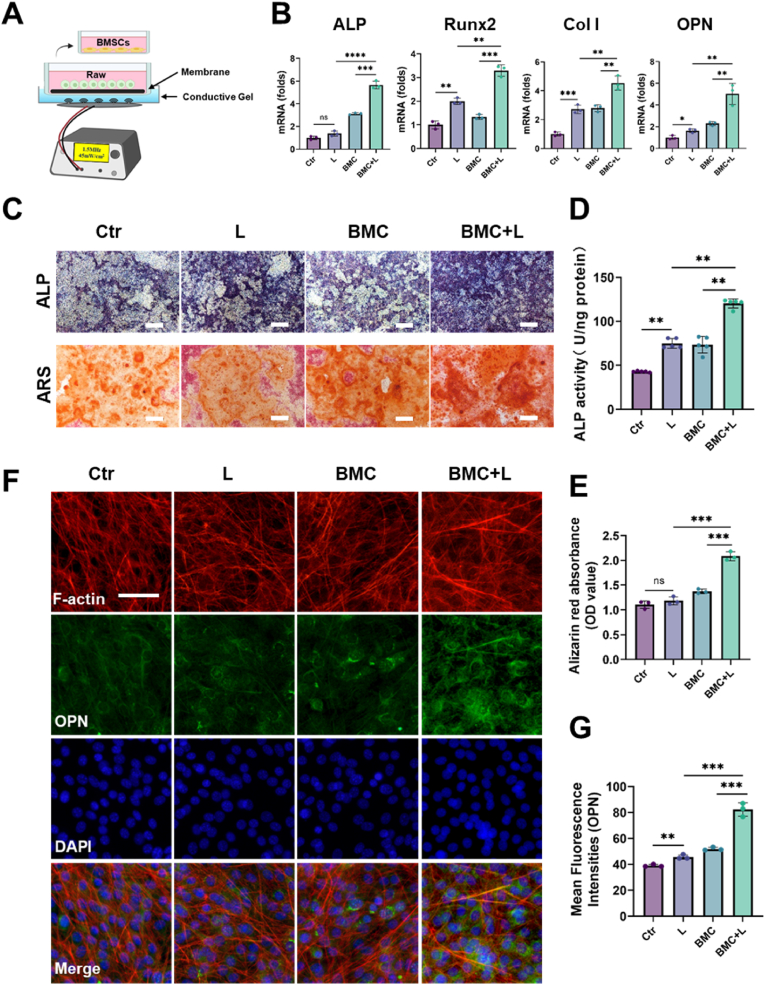
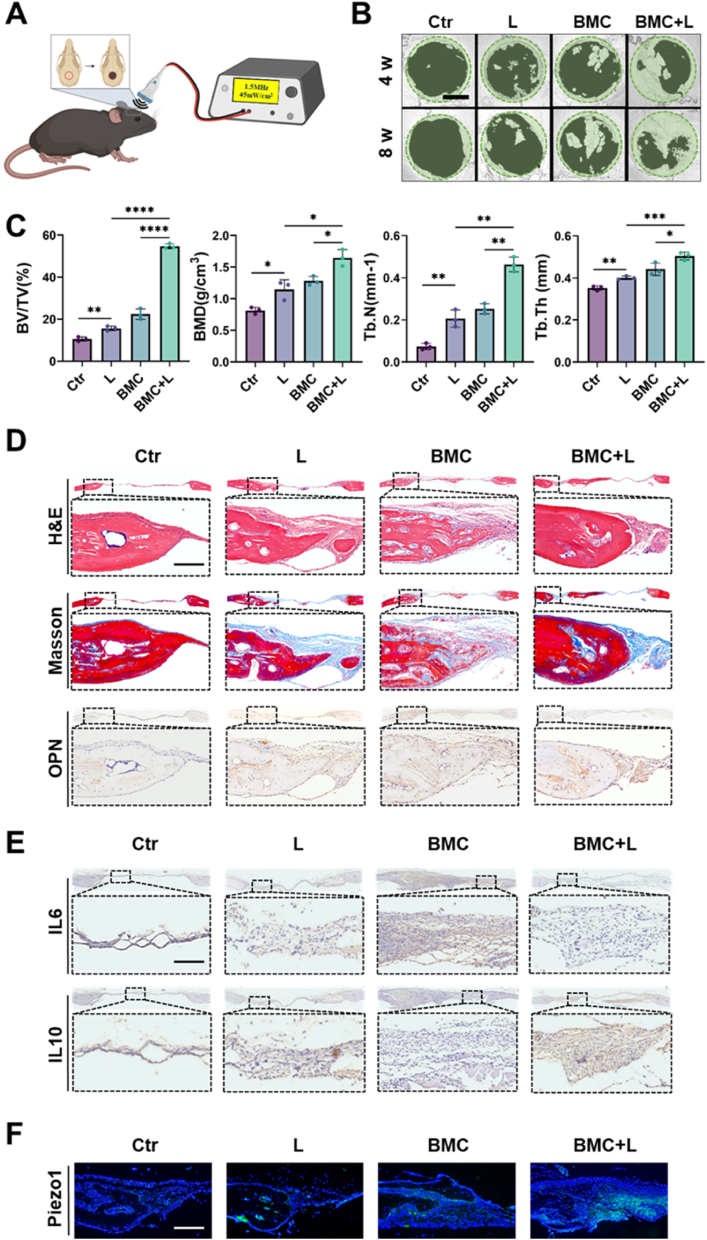
The periosteum plays a vital role in repairing bone defects. Researchers have demonstrated the existence of electrical potential in the periosteum and native bone, indicating that electrical signals are essential for functional bone regeneration. However, the clinical use of external electrical treatments has been limited due to their inconvenience and inefficacy. As an alternative, low-intensity pulsed ultrasound (LIPUS) is a noninvasive form of physical therapy that enhances bone regeneration. Furthermore, the wireless activation of piezoelectric biomaterials through ultrasound stimulation would generate electric charges precisely at the defect area, compensating for the insufficiency of external electrical stimulation and potentially promoting bone regeneration through the synergistic effect of mechanical and electrical stimulation. However, the optimal integration of LIPUS with an appropriate piezoelectric periosteum is yet to be explored. Herein, the BaTiO/multiwalled-carbon nanotubes/collagen (BMC) membranes have been fabricated, possessing physicochemical properties including improved surface hydrophilicity, enhanced mechanical performance, ideal piezoelectricity, and outstanding biocompatibility, all of which are conducive to bone regeneration. When combined with LIPUS, the endogenous electrical microenvironment of native bone was recreated. After that, the wireless-generated electrical signals, along with the mechanical signals induced by LIPUS, were transferred to macrophages and activated Ca influx through Piezo1. Ultimately, the regenerative effect of the BMC membrane with LIPUS stimulation (BMC + L) was confirmed in a mouse cranial defect model. Together, this research presents a co-engineering strategy that involves fabricating a novel biomimetic periosteum and utilizing the synergistic effect of ultrasound to enhance bone regeneration, which is achieved through the reinforcement of the electrical environment and the immunomodulation of macrophage polarization.
骨膜在修复骨缺损中起着至关重要的作用。研究人员已经证明骨膜和天然骨中存在电位,这表明电信号对于功能性骨再生至关重要。然而,外部电疗的临床应用因其不便和无效而受到限制。作为一种替代方法,低强度脉冲超声(LIPUS)是一种增强骨再生的非侵入性物理治疗形式。此外,通过超声刺激对压电生物材料进行无线激活将在缺损区域精确产生电荷,弥补外部电刺激的不足,并可能通过机械和电刺激的协同作用促进骨再生。然而,LIPUS与合适的压电骨膜的最佳整合尚未得到探索。在此,制备了钛酸钡/多壁碳纳米管/胶原蛋白(BMC)膜,其具有改善的表面亲水性、增强的机械性能、理想的压电性和出色的生物相容性等物理化学性质,所有这些都有利于骨再生。当与LIPUS结合时,天然骨的内源性电微环境得以重建。之后,无线产生的电信号与LIPUS诱导的机械信号一起传递给巨噬细胞,并通过Piezo1激活钙离子内流。最终,在小鼠颅骨缺损模型中证实了LIPUS刺激的BMC膜(BMC + L)的再生效果。总之,本研究提出了一种协同工程策略,即制造一种新型仿生骨膜并利用超声的协同作用来增强骨再生,这是通过强化电环境和巨噬细胞极化的免疫调节来实现的。