• 文献检索
  • 文档翻译
  • 深度研究
  • 学术资讯
  • Suppr Zotero 插件Zotero 插件
  • 邀请有礼
  • 套餐&价格
  • 历史记录
应用&插件
Suppr Zotero 插件Zotero 插件浏览器插件Mac 客户端Windows 客户端微信小程序
定价
高级版会员购买积分包购买API积分包
服务
文献检索文档翻译深度研究API 文档MCP 服务
关于我们
关于 Suppr公司介绍联系我们用户协议隐私条款
关注我们

Suppr 超能文献

核心技术专利:CN118964589B侵权必究
粤ICP备2023148730 号-1Suppr @ 2026

文献检索

告别复杂PubMed语法,用中文像聊天一样搜索,搜遍4000万医学文献。AI智能推荐,让科研检索更轻松。

立即免费搜索

文件翻译

保留排版,准确专业,支持PDF/Word/PPT等文件格式,支持 12+语言互译。

免费翻译文档

深度研究

AI帮你快速写综述,25分钟生成高质量综述,智能提取关键信息,辅助科研写作。

立即免费体验

推进全氟和多氟烷基物质(PFAS)风险评估:采用基于主体的建模和生理动力学方法进行环境与健康安全综合评估。

Advancing PFAS risk assessment: Integrative approaches using agent-based modelling and physiologically-based kinetic for environmental and health safety.

作者信息

Iulini Martina, Russo Giulia, Crispino Elena, Paini Alicia, Fragki Styliani, Corsini Emanuela, Pappalardo Francesco

机构信息

Università degli Studi di Milano, Department of Pharmacology and Biomolecular Sciences 'Rodolfo Paoletti', Milan, Italy.

University of Catania, Department of Drug and Health Sciences, Italy.

出版信息

Comput Struct Biotechnol J. 2024 Jul 1;23:2763-2778. doi: 10.1016/j.csbj.2024.06.036. eCollection 2024 Dec.

DOI:10.1016/j.csbj.2024.06.036
PMID:39050784
原文链接:https://pmc.ncbi.nlm.nih.gov/articles/PMC11267999/
Abstract

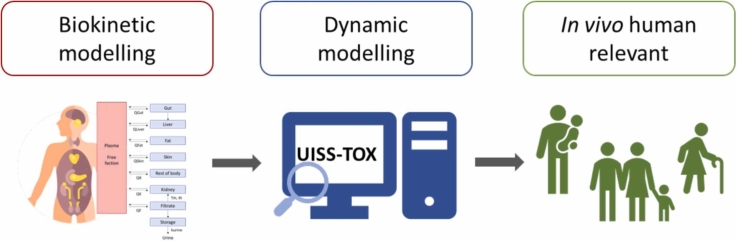
Per- and polyfluoroalkyl substances (PFAS), ubiquitous in a myriad of consumer and industrial products, and depending on the doses of exposure represent a hazard to both environmental and public health, owing to their persistent, mobile, and bio accumulative properties. These substances exhibit long half-lives in humans and can induce potential immunotoxic effects at low exposure levels, sparking growing concerns. While the European Food Safety Authority (EFSA) has assessed the risk to human health related to the presence of PFAS in food, in which a reduced antibody response to vaccination in infants was considered as the most critical human health effect, a comprehensive grasp of the molecular mechanisms spearheading PFAS-induced immunotoxicity is yet to be attained. Leveraging modern computational tools, including the Agent-Based Model (ABM) Universal Immune System Simulator (UISS) and Physiologically Based Kinetic (PBK) models, a deeper insight into the complex mechanisms of PFAS was sought. The adapted UISS serves as a vital tool in chemical risk assessments, simulating the host immune system's reactions to diverse stimuli and monitoring biological entities within specific adverse health contexts. In tandem, PBK models unravelling PFAS' biokinetics within the body i.e. absorption, distribution, metabolism, and elimination, facilitating the development of time-concentration profiles from birth to 75 years at varied dosage levels, thereby enhancing UISS-TOX's predictive abilities. The integrated use of these computational frameworks shows promises in leveraging new scientific evidence to support risk assessments of PFAS. This innovative approach not only allowed to bridge existing data gaps but also unveiled complex mechanisms and the identification of unanticipated dynamics, potentially guiding more informed risk assessments, regulatory decisions, and associated risk mitigations measures for the future.

摘要

全氟和多氟烷基物质(PFAS)广泛存在于无数消费品和工业产品中,根据接触剂量的不同,因其具有持久性、流动性和生物累积性,对环境和公众健康均构成危害。这些物质在人体内半衰期很长,在低暴露水平下即可诱发潜在的免疫毒性效应,引发了越来越多的关注。虽然欧洲食品安全局(EFSA)已评估了食品中PFAS存在对人类健康的风险,其中婴儿对疫苗接种的抗体反应降低被视为最关键的人类健康影响,但尚未全面掌握引发PFAS诱导免疫毒性的分子机制。利用包括基于主体模型(ABM)通用免疫系统模拟器(UISS)和生理药代动力学(PBK)模型在内的现代计算工具,旨在更深入地了解PFAS的复杂机制。经过改进的UISS在化学风险评估中是一个重要工具,可模拟宿主免疫系统对各种刺激的反应,并监测特定不良健康背景下的生物实体。与此同时,PBK模型揭示了PFAS在体内的生物动力学,即吸收、分布、代谢和消除,有助于绘制不同剂量水平下从出生到75岁的时间-浓度曲线,从而提高UISS-TOX的预测能力。这些计算框架的综合使用有望利用新的科学证据来支持PFAS的风险评估。这种创新方法不仅能够弥补现有数据缺口,还揭示了复杂机制并识别出意外动态,可能为未来更明智的风险评估、监管决策及相关风险缓解措施提供指导。
https://cdn.ncbi.nlm.nih.gov/pmc/blobs/2431/11267999/7e74989ae4ba/gr19.jpg
https://cdn.ncbi.nlm.nih.gov/pmc/blobs/2431/11267999/d8629d04801f/ga1.jpg
https://cdn.ncbi.nlm.nih.gov/pmc/blobs/2431/11267999/64d61473a855/gr1.jpg
https://cdn.ncbi.nlm.nih.gov/pmc/blobs/2431/11267999/a3e296a7554f/gr2.jpg
https://cdn.ncbi.nlm.nih.gov/pmc/blobs/2431/11267999/543bfbd48bb7/gr3.jpg
https://cdn.ncbi.nlm.nih.gov/pmc/blobs/2431/11267999/e5d6fe4194c4/gr4.jpg
https://cdn.ncbi.nlm.nih.gov/pmc/blobs/2431/11267999/b3fd7314dc8a/gr5.jpg
https://cdn.ncbi.nlm.nih.gov/pmc/blobs/2431/11267999/c1a7c9dc6b56/gr6.jpg
https://cdn.ncbi.nlm.nih.gov/pmc/blobs/2431/11267999/ed8625367963/gr7.jpg
https://cdn.ncbi.nlm.nih.gov/pmc/blobs/2431/11267999/892a7a1b1cd9/gr8.jpg
https://cdn.ncbi.nlm.nih.gov/pmc/blobs/2431/11267999/be41434d2127/gr9.jpg
https://cdn.ncbi.nlm.nih.gov/pmc/blobs/2431/11267999/1c8bbb98408e/gr10.jpg
https://cdn.ncbi.nlm.nih.gov/pmc/blobs/2431/11267999/ca8787292353/gr11.jpg
https://cdn.ncbi.nlm.nih.gov/pmc/blobs/2431/11267999/57b8958cbcdb/gr12.jpg
https://cdn.ncbi.nlm.nih.gov/pmc/blobs/2431/11267999/242eb340985a/gr13.jpg
https://cdn.ncbi.nlm.nih.gov/pmc/blobs/2431/11267999/1fccf5e8d485/gr14.jpg
https://cdn.ncbi.nlm.nih.gov/pmc/blobs/2431/11267999/fc2da862de8f/gr15.jpg
https://cdn.ncbi.nlm.nih.gov/pmc/blobs/2431/11267999/15b1f1c8ca13/gr16.jpg
https://cdn.ncbi.nlm.nih.gov/pmc/blobs/2431/11267999/08e3febac7be/gr17.jpg
https://cdn.ncbi.nlm.nih.gov/pmc/blobs/2431/11267999/e90456f83a9f/gr18.jpg
https://cdn.ncbi.nlm.nih.gov/pmc/blobs/2431/11267999/7e74989ae4ba/gr19.jpg
https://cdn.ncbi.nlm.nih.gov/pmc/blobs/2431/11267999/d8629d04801f/ga1.jpg
https://cdn.ncbi.nlm.nih.gov/pmc/blobs/2431/11267999/64d61473a855/gr1.jpg
https://cdn.ncbi.nlm.nih.gov/pmc/blobs/2431/11267999/a3e296a7554f/gr2.jpg
https://cdn.ncbi.nlm.nih.gov/pmc/blobs/2431/11267999/543bfbd48bb7/gr3.jpg
https://cdn.ncbi.nlm.nih.gov/pmc/blobs/2431/11267999/e5d6fe4194c4/gr4.jpg
https://cdn.ncbi.nlm.nih.gov/pmc/blobs/2431/11267999/b3fd7314dc8a/gr5.jpg
https://cdn.ncbi.nlm.nih.gov/pmc/blobs/2431/11267999/c1a7c9dc6b56/gr6.jpg
https://cdn.ncbi.nlm.nih.gov/pmc/blobs/2431/11267999/ed8625367963/gr7.jpg
https://cdn.ncbi.nlm.nih.gov/pmc/blobs/2431/11267999/892a7a1b1cd9/gr8.jpg
https://cdn.ncbi.nlm.nih.gov/pmc/blobs/2431/11267999/be41434d2127/gr9.jpg
https://cdn.ncbi.nlm.nih.gov/pmc/blobs/2431/11267999/1c8bbb98408e/gr10.jpg
https://cdn.ncbi.nlm.nih.gov/pmc/blobs/2431/11267999/ca8787292353/gr11.jpg
https://cdn.ncbi.nlm.nih.gov/pmc/blobs/2431/11267999/57b8958cbcdb/gr12.jpg
https://cdn.ncbi.nlm.nih.gov/pmc/blobs/2431/11267999/242eb340985a/gr13.jpg
https://cdn.ncbi.nlm.nih.gov/pmc/blobs/2431/11267999/1fccf5e8d485/gr14.jpg
https://cdn.ncbi.nlm.nih.gov/pmc/blobs/2431/11267999/fc2da862de8f/gr15.jpg
https://cdn.ncbi.nlm.nih.gov/pmc/blobs/2431/11267999/15b1f1c8ca13/gr16.jpg
https://cdn.ncbi.nlm.nih.gov/pmc/blobs/2431/11267999/08e3febac7be/gr17.jpg
https://cdn.ncbi.nlm.nih.gov/pmc/blobs/2431/11267999/e90456f83a9f/gr18.jpg
https://cdn.ncbi.nlm.nih.gov/pmc/blobs/2431/11267999/7e74989ae4ba/gr19.jpg

相似文献

1
Advancing PFAS risk assessment: Integrative approaches using agent-based modelling and physiologically-based kinetic for environmental and health safety.推进全氟和多氟烷基物质(PFAS)风险评估:采用基于主体的建模和生理动力学方法进行环境与健康安全综合评估。
Comput Struct Biotechnol J. 2024 Jul 1;23:2763-2778. doi: 10.1016/j.csbj.2024.06.036. eCollection 2024 Dec.
2
Consideration of pathways for immunotoxicity of per- and polyfluoroalkyl substances (PFAS).考虑全氟和多氟烷基物质 (PFAS) 的免疫毒性途径。
Environ Health. 2023 Feb 22;22(1):19. doi: 10.1186/s12940-022-00958-5.
3
Public Health Risks of PFAS-Related Immunotoxicity Are Real.PFAS 相关免疫毒性的公共健康风险是真实存在的。
Curr Environ Health Rep. 2024 Jun;11(2):118-127. doi: 10.1007/s40572-024-00441-y. Epub 2024 Mar 25.
4
Studying mixture effects on uptake and tissue distribution of PFAS in zebrafish (Danio rerio) using physiologically based kinetic (PBK) modelling.利用基于生理的动力学(PBK)模型研究 PFAS 在斑马鱼(Danio rerio)体内的摄取和组织分布的混合物效应。
Sci Total Environ. 2024 Feb 20;912:168738. doi: 10.1016/j.scitotenv.2023.168738. Epub 2023 Nov 27.
5
Internal relative potency factors based on immunotoxicity for the risk assessment of mixtures of per- and polyfluoroalkyl substances (PFAS) in human biomonitoring.基于免疫毒性的内部相对效力因子,用于人体生物监测中全氟和多氟烷基物质(PFAS)混合物的风险评估。
Environ Int. 2023 Jan;171:107727. doi: 10.1016/j.envint.2022.107727. Epub 2023 Jan 4.
6
Per- and Polyfluoroalkyl Substances (PFAS) in Integrated Crop-Livestock Systems: Environmental Exposure and Human Health Risks.全氟和多氟烷基物质(PFAS)在种养结合系统中的环境暴露和人类健康风险。
Int J Environ Res Public Health. 2021 Nov 28;18(23):12550. doi: 10.3390/ijerph182312550.
7
The Minderoo-Monaco Commission on Plastics and Human Health.美诺集团-摩纳哥基金会塑料与人体健康委员会
Ann Glob Health. 2023 Mar 21;89(1):23. doi: 10.5334/aogh.4056. eCollection 2023.
8
Translatability and transferability of in silico models: Context of use switching to predict the effects of environmental chemicals on the immune system.计算机模拟模型的可翻译性与可转移性:使用背景切换以预测环境化学物质对免疫系统的影响。
Comput Struct Biotechnol J. 2022 Mar 26;20:1764-1777. doi: 10.1016/j.csbj.2022.03.024. eCollection 2022.
9
Immunomodulation and exposure to per- and polyfluoroalkyl substances: an overview of the current evidence from animal and human studies.免疫调节与全氟及多氟烷基物质暴露:动物和人体研究现有证据概述。
Arch Toxicol. 2022 Aug;96(8):2261-2285. doi: 10.1007/s00204-022-03303-4. Epub 2022 Jun 13.
10
Effect of prenatal exposure to per- and polyfluoroalkyl substances on childhood allergies and common infectious diseases in children up to age 7 years: The Hokkaido study on environment and children's health.产前暴露于全氟和多氟烷基物质对7岁以下儿童的儿童期过敏和常见传染病的影响:北海道环境与儿童健康研究。
Environ Int. 2020 Oct;143:105979. doi: 10.1016/j.envint.2020.105979. Epub 2020 Jul 24.

引用本文的文献

1
Research Progress in Current and Emerging Issues of PFASs' Global Impact: Long-Term Health Effects and Governance of Food Systems.全氟和多氟烷基物质全球影响的当前及新出现问题的研究进展:长期健康影响与食品系统治理
Foods. 2025 Mar 11;14(6):958. doi: 10.3390/foods14060958.
2
In Vitro Prediction of Skin-Sensitizing Potency Using the GARDskin Dose-Response Assay: A Simple Regression Approach.使用GARDskin剂量反应试验对皮肤致敏效力进行体外预测:一种简单回归方法
Toxics. 2024 Aug 24;12(9):626. doi: 10.3390/toxics12090626.

本文引用的文献

1
New approach methodologies: A quantitative in vitro to in vivo extrapolation case study with PFASs.新方法学:全氟和多氟烷基物质的定量体外到体内外推案例研究。
Food Chem Toxicol. 2023 Feb;172:113559. doi: 10.1016/j.fct.2022.113559. Epub 2022 Dec 16.
2
Perfluoroalkyl substances (PFASs) are substrates of the renal human organic anion transporter 4 (OAT4).全氟烷基物质(PFASs)是肾脏人有机阴离子转运蛋白 4(OAT4)的底物。
Arch Toxicol. 2023 Mar;97(3):685-696. doi: 10.1007/s00204-022-03428-6. Epub 2022 Nov 27.
3
Computational modelling and simulation for immunotoxicity prediction induced by skin sensitisers.
皮肤致敏剂诱导的免疫毒性预测的计算建模与模拟
Comput Struct Biotechnol J. 2022 Oct 29;20:6172-6181. doi: 10.1016/j.csbj.2022.10.032. eCollection 2022.
4
Exposure modelling in Europe: how to pave the road for the future as part of the European Exposure Science Strategy 2020-2030.欧洲暴露建模:如何为未来铺平道路,作为 2020-2030 年欧洲暴露科学战略的一部分。
J Expo Sci Environ Epidemiol. 2022 Jul;32(4):499-512. doi: 10.1038/s41370-022-00455-4. Epub 2022 Aug 2.
5
Translatability and transferability of in silico models: Context of use switching to predict the effects of environmental chemicals on the immune system.计算机模拟模型的可翻译性与可转移性:使用背景切换以预测环境化学物质对免疫系统的影响。
Comput Struct Biotechnol J. 2022 Mar 26;20:1764-1777. doi: 10.1016/j.csbj.2022.03.024. eCollection 2022.
6
Emerging and legacy PFAS and cytokine homeostasis in women of childbearing age.育龄期妇女新兴和传统全氟和聚氟烷基物质与细胞因子动态平衡。
Sci Rep. 2022 Apr 20;12(1):6517. doi: 10.1038/s41598-022-10501-8.
7
Derivation of a Human In Vivo Benchmark Dose for Bisphenol A from ToxCast In Vitro Concentration Response Data Using a Computational Workflow for Probabilistic Quantitative to Extrapolation.使用概率定量外推的计算工作流程,从ToxCast体外浓度响应数据推导双酚A的人体体内基准剂量。
Front Pharmacol. 2022 Feb 11;12:754408. doi: 10.3389/fphar.2021.754408. eCollection 2021.
8
A Systematic Review of Published Physiologically-based Kinetic Models and an Assessment of their Chemical Space Coverage.基于生理学的药代动力学模型的系统评价及其化学空间覆盖度评估
Altern Lab Anim. 2021 Sep;49(5):197-208. doi: 10.1177/02611929211060264. Epub 2021 Nov 26.
9
Systemic PFOS and PFOA exposure and disturbed lipid homeostasis in humans: what do we know and what not?全氟辛烷磺酸(PFOS)和全氟辛酸(PFOA)在人体中的系统性暴露与脂质稳态紊乱:我们知道什么,不知道什么?
Crit Rev Toxicol. 2021 Feb;51(2):141-164. doi: 10.1080/10408444.2021.1888073. Epub 2021 Apr 15.
10
Toxicity studies of perfluoroalkyl carboxylates administered by gavage to Sprague Dawley (Hsd:Sprague Dawley SD) rats (revised).经口灌胃给予斯普拉格-道利(Hsd:Sprague Dawley SD)大鼠全氟烷基羧酸盐的毒性研究(修订版)
Toxic Rep Ser. 2019 Aug(97). doi: 10.22427/NTP-TOX-97.