Deshayes A, Herrera-Estrella L, Caboche M
EMBO J. 1985 Nov;4(11):2731-7. doi: 10.1002/j.1460-2075.1985.tb03996.x.
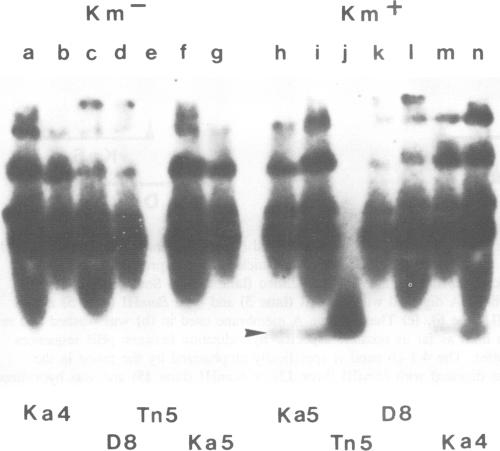
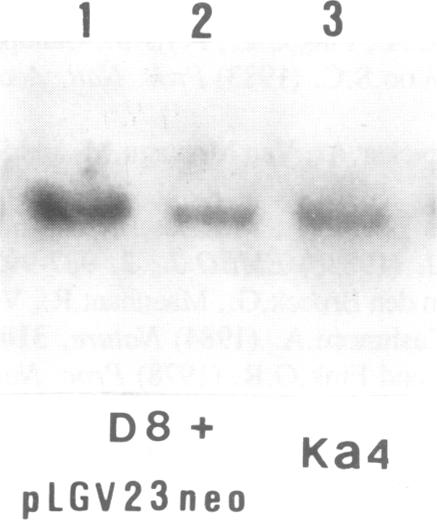
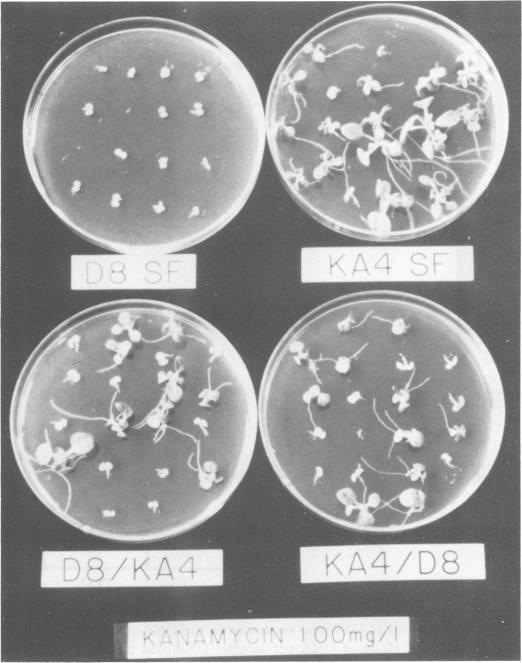
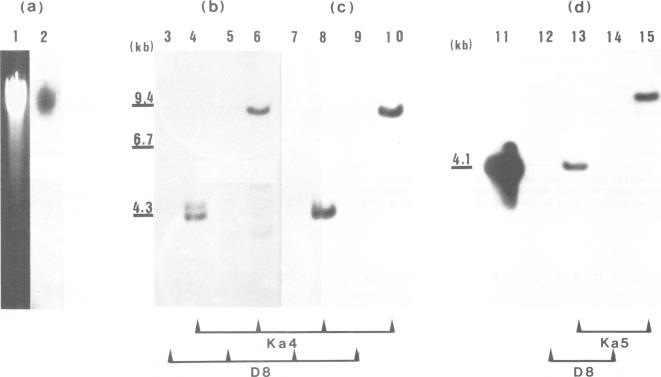
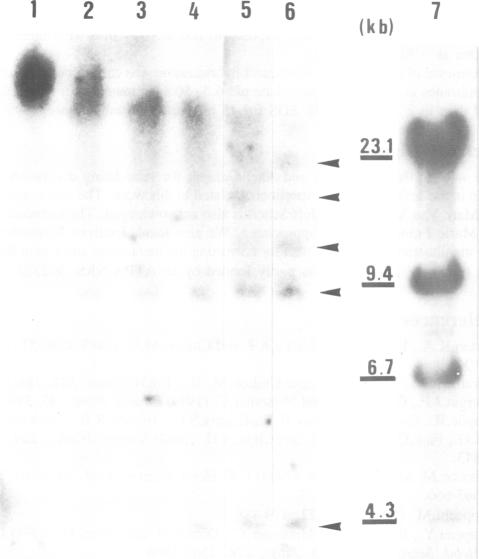
An Escherichia coli plasmid, pLGV23neo, carrying a kanamycin resistance gene expressed in plant cells, was encapsulated into negatively charged liposomes prepared by the reverse phase evaporation technique. These liposomes were induced to fuse with tobacco mesophyll protoplasts by polyethyleneglycol treatment. Kanamycin-resistant clones were reproducibly isolated from transfected cultures at an average frequency of 4 X 10(-5). Plants regenerated from these resistant colonies were confirmed to be transformed according to three criteria. Protoplasts isolated from their leaves were resistant to 100 micrograms/ml kanamycin. The enzyme aminoglycoside 3'-phosphotransferase II encoded by the plasmid pLGV23neo was detected in leaf extracts. Approximately 3-5 copies of the gene encoding for kanamycin resistance were inserted in the genome of at least one of the studied transformants. The restriction pattern of inserted DNA was best explained by assuming a tandem integration of the pPLGV23neo sequences, implying an homologous recombination event between these sequences during transformation. Kanamycin resistance was transmitted as a single dominant nuclear marker to the progeny of resistant plants after selfing or cross-pollination with the wild-type.
一种携带在植物细胞中表达的卡那霉素抗性基因的大肠杆菌质粒pLGV23neo,被包裹在通过反相蒸发技术制备的带负电荷的脂质体中。通过聚乙二醇处理诱导这些脂质体与烟草叶肉原生质体融合。以平均4×10⁻⁵的频率从转染培养物中可重复地分离出卡那霉素抗性克隆。根据三个标准确认从这些抗性菌落再生的植物已被转化。从它们的叶子中分离出的原生质体对100微克/毫升卡那霉素具有抗性。在叶提取物中检测到由质粒pLGV23neo编码的氨基糖苷3'-磷酸转移酶II。在所研究的至少一个转化体的基因组中插入了大约3 - 5个编码卡那霉素抗性的基因拷贝。通过假设pPLGV23neo序列的串联整合来最好地解释插入DNA的限制性图谱,这意味着在转化过程中这些序列之间发生了同源重组事件。卡那霉素抗性作为单个显性核标记在抗性植物自交或与野生型杂交授粉后传递给后代。