Zorlu Tolga, Hetey Daniel, Reithofer Michael R, Chin Jia Min
Department of Functional Materials and Catalysis, University of Vienna, Währinger Straße 42, 1090 Vienna, Austria.
Department of Inorganic Chemistry, University of Vienna, Währinger Straße 42, 1090 Vienna, Austria.
Acc Chem Res. 2024 Aug 6;57(15):2105-2116. doi: 10.1021/acs.accounts.4c00250. Epub 2024 Jul 26.
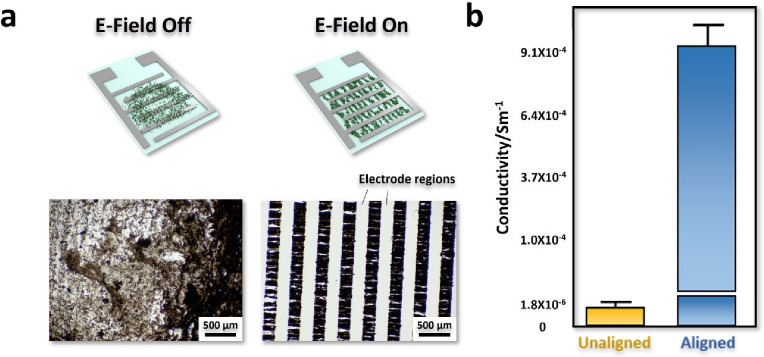
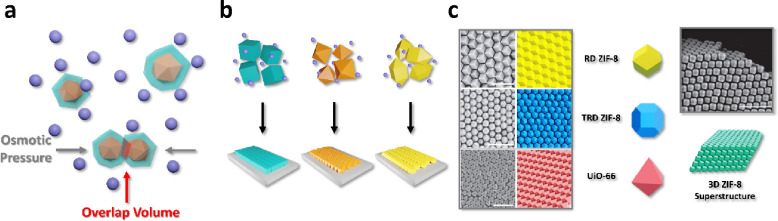
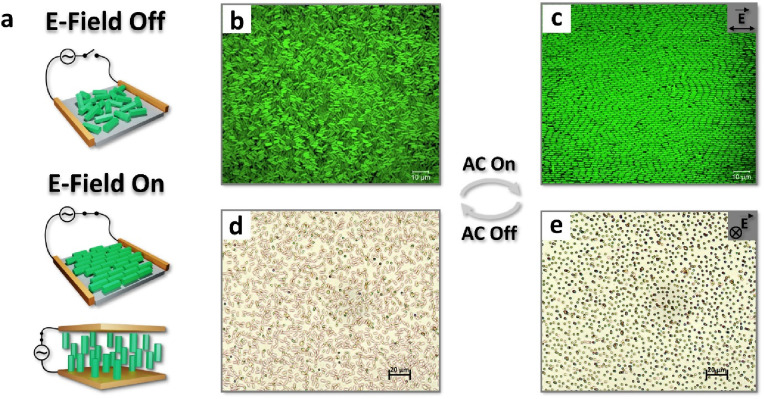
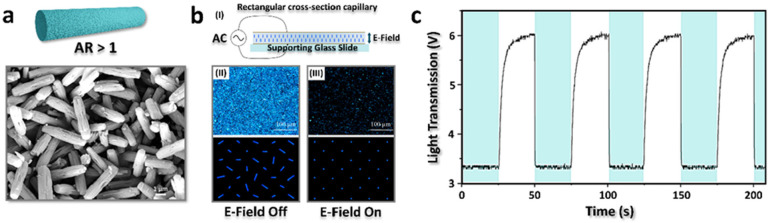
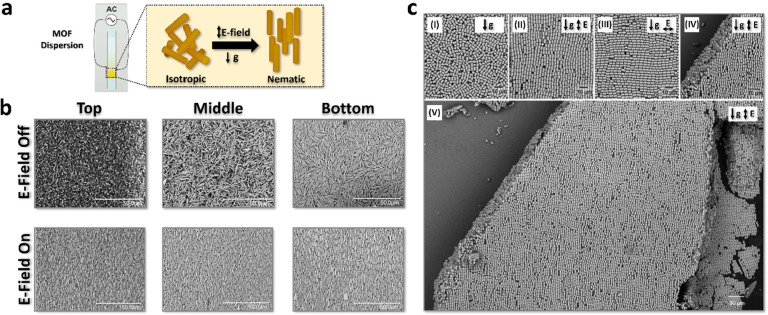
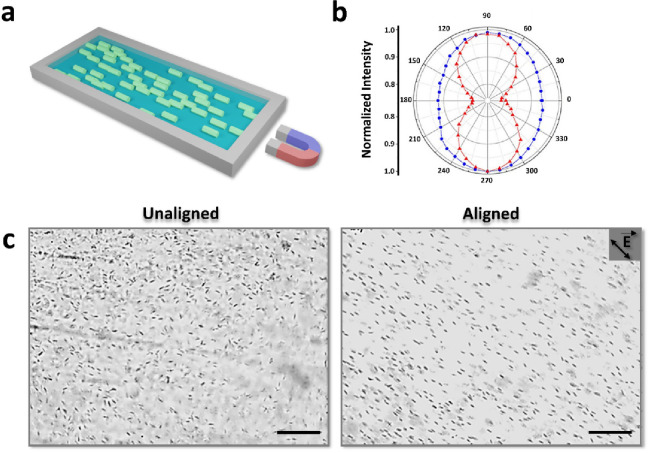
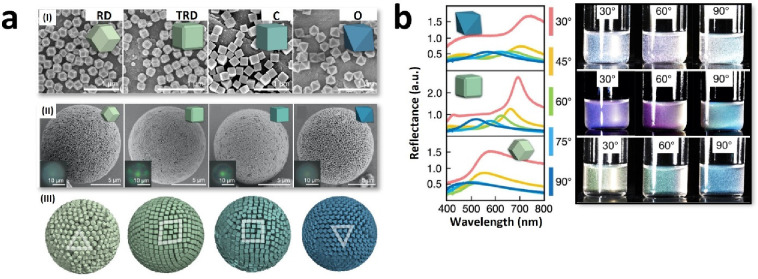
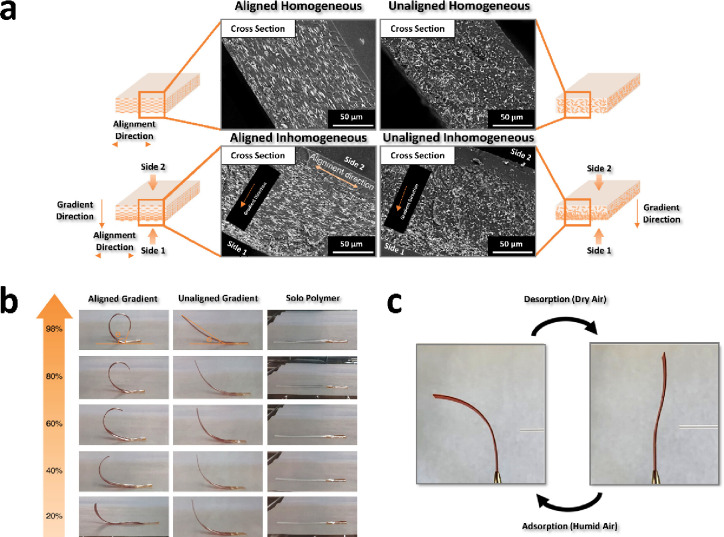
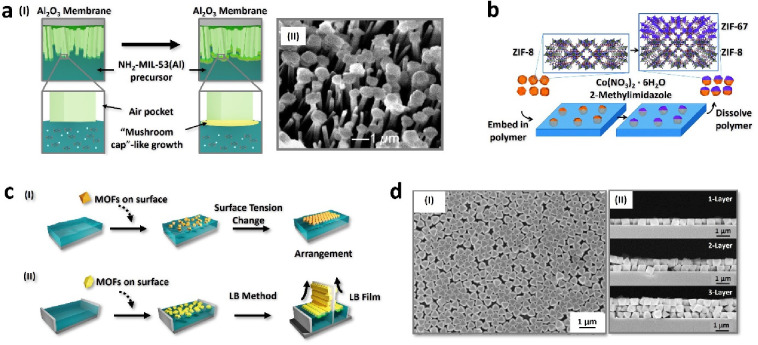
ConspectusMetal-organic frameworks (MOFs) are promising for various applications through the creation of innovative materials and assemblies. This potential stems from their modular nature, as diverse metal ions and organic linkers can be combined to produce MOFs with unique chemical properties and lattice structures. Following extensive research on the design and postsynthetic chemical modification of MOF lattices at the molecular level, increasing attention is now focused on the next hierarchical level: controlling the morphology of MOF crystals and their subsequent assembly and positioning to create functional composites.Beyond well-established methods to regulate crystal size and shape through nucleation and coordination modulation, physicochemical techniques leveraging wetting effects, interparticle interactions, and magnetic or electric fields offer attractive avenues for the hierarchical structuring and assembly of MOFs. These techniques facilitate crystal alignment and yield unique superstructures. While our research group primarily focuses on directing MOF crystal orientation and positioning using external stimuli such as magnetic and electric fields, we also explore hierarchical MOF synthesis and structuring using liquid interfaces and depletion force-assisted packing.This account highlights our journey and progress in developing methods to regulate the morphology, assembly, orientation, and positioning of MOF crystals, placed in the context of work by other groups. First, we examine commonly utilized structuring methods for MOF crystals that employ liquid-liquid and air-liquid interfaces to spatially confine reactions, allowing us to access unique morphologies such as mushroom-like crystals and Janus particles. We also discuss strategies for concentrating and packing MOF crystals into superstructures, utilizing fluid interfaces for spatial confinement of crystals, depletion forces, entropic effects, and crystal sedimentation.A particularly compelling challenge in expanding the applicability of MOF materials is how to manipulate free-standing MOF crystals. This issue is especially important because MOFs are typically produced as loose powders, and industrial material processing is generally more efficient when the material is fluidized. While extensive research has been conducted regarding MOF growth on substrates with both positional and orientational control, there is a clear need for similar precision with free-standing MOFs dispersed in a fluid matrix. Our group has thus focused on the relatively new, yet powerful approach of using electric and magnetic fields to manipulate MOF crystals, which offers unprecedented control over the orientation and positioning of dispersed MOF crystals, complementing the more well-established methods of MOF growth on substrates. In this Account, we provide foundational background and discussions on the interactions between these external fields and MOF crystals, including critical considerations for effective MOF manipulation using such techniques. We also discuss their unique advantages and applications, and briefly examine potential application areas, such as photonics, smart materials like soft robotics and absorbents, and sensing. This Account highlights the promising potential of well-organized and aligned MOF crystals over randomly oriented ones in various applications, owing to enhanced selectivity and performance. It underscores the importance of specialized assembly methods to advance materials science and engineering, encouraging the reader to explore such approaches.
综述
金属有机框架(MOF)通过创造创新材料和组件在各种应用中具有广阔前景。这种潜力源于其模块化性质,因为不同的金属离子和有机连接体可以组合生成具有独特化学性质和晶格结构的MOF。在对MOF晶格在分子水平上的设计和合成后化学修饰进行广泛研究之后,现在越来越多的注意力集中在下一个层次:控制MOF晶体的形态及其后续的组装和定位,以创建功能复合材料。
除了通过成核和配位调制来调节晶体尺寸和形状的成熟方法外,利用润湿效应、颗粒间相互作用以及磁场或电场的物理化学技术为MOF的分级结构和组装提供了有吸引力的途径。这些技术有助于晶体排列并产生独特的超结构。虽然我们的研究小组主要专注于利用磁场和电场等外部刺激来引导MOF晶体的取向和定位,但我们也探索使用液界面和耗尽力辅助堆积进行分级MOF合成和结构构建。
本综述突出了我们在开发调节MOF晶体形态、组装、取向和定位方法方面的历程和进展,并与其他研究小组的工作背景相结合。首先,我们研究了常用于MOF晶体的结构化方法,这些方法利用液 - 液和气 - 液界面在空间上限制反应,使我们能够获得独特的形态,如蘑菇状晶体和Janus颗粒。我们还讨论了将MOF晶体浓缩和堆积成超结构的策略,利用流体界面对晶体进行空间限制、耗尽力、熵效应和晶体沉降。
在扩大MOF材料适用性方面,一个特别引人注目的挑战是如何操纵独立的MOF晶体。这个问题尤为重要,因为MOF通常以松散粉末形式生产,而当材料流化时,工业材料加工通常更高效。虽然已经对在具有位置和取向控制的基底上生长MOF进行了广泛研究,但显然需要对分散在流体基质中的独立MOF具有类似的精确控制。因此,我们小组专注于使用电场和磁场来操纵MOF晶体这种相对较新但强大的方法,它为分散的MOF晶体的取向和定位提供了前所未有的控制,补充了在基底上生长MOF的更成熟方法。在本综述中,我们提供了关于这些外部场与MOF晶体之间相互作用的基础背景和讨论,包括使用此类技术有效操纵MOF的关键考虑因素。我们还讨论了它们的独特优势和应用,并简要考察了潜在的应用领域,如光子学、软机器人和吸收剂等智能材料以及传感。本综述强调了在各种应用中,有序排列的MOF晶体相对于随机取向的MOF晶体具有更有前景的潜力,这归因于其增强的选择性和性能。它强调了专门的组装方法对推进材料科学与工程的重要性,鼓励读者探索此类方法。