Koumpis Epameinondas, Papoudou-Bai Alexandra, Papathanasiou Konstantina, Kolettas Evangelos, Kanavaros Panagiotis, Hatzimichael Eleftheria
Department of Hematology, Faculty of Medicine, School of Health Sciences, University of Ioannina, 45 500 Ioannina, Greece.
Department of Pathology, Faculty of Medicine, School of Health Sciences, University of Ioannina, 45 500 Ioannina, Greece.
Curr Issues Mol Biol. 2024 Jul 5;46(7):7048-7064. doi: 10.3390/cimb46070420.
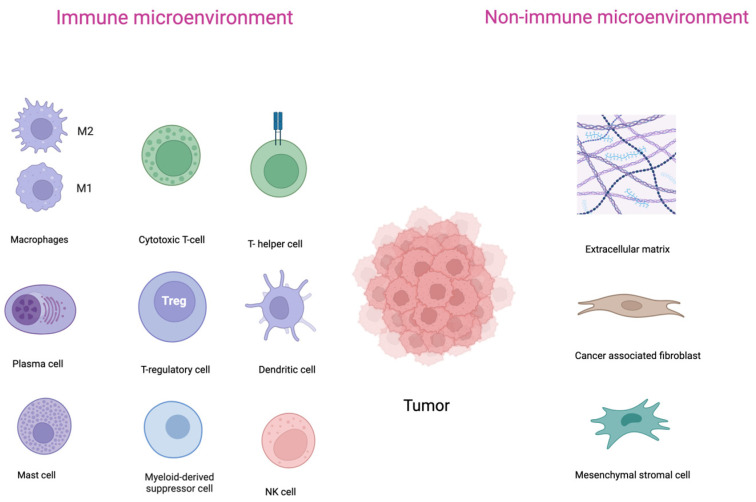
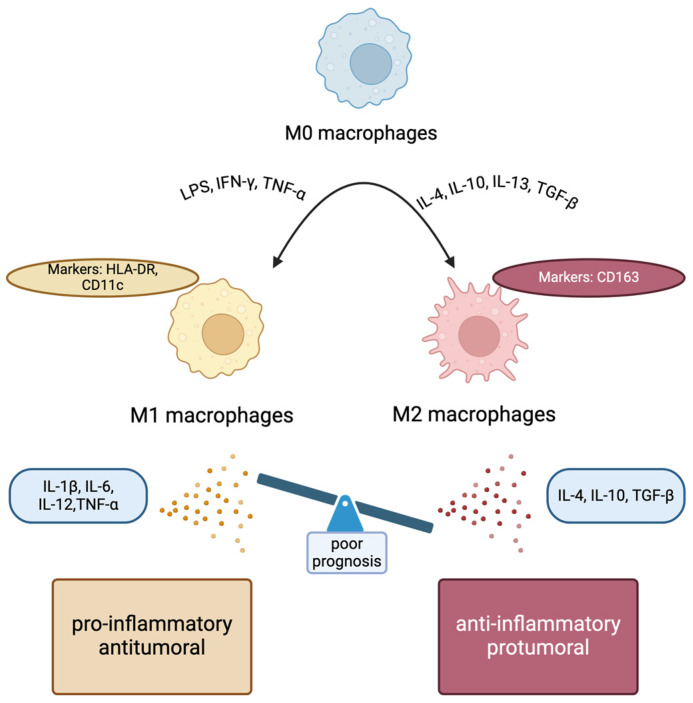
Diffuse large B cell lymphoma (DLBCL) is a multifaceted condition characterized by significant diversity in its molecular and pathological subtypes and clinical manifestation. Despite the progress made in the treatment of DLBCL through the development of novel drugs, an estimated one-third of patients encounter relapse or acquire refractory disease. The tumor microenvironment (TME) of DLBCL, a complex network consisting of cellular and noncellular components that engage in interactions with the tumor, is a parameter that is gaining increasing attention. The TME comprises both the immune and nonimmune microenvironments. The immune microenvironment comprises natural killer (NK) cells, dendritic cells (DCs), tumor-associated macrophages (TAMs), neutrophils, myeloid-derived suppressor cells (MDSCs), and T and B lymphocytes. The nonimmune microenvironment consists of the extracellular matrix (ECM), cancer-associated fibroblasts (CAFs), mesenchymal stromal cells, and other molecules that are secreted. Despite ongoing research, the exact impact of these components and their interaction on the progression of the disease remains elusive. A comprehensive review of significant discoveries concerning the cellular and noncellular constituents, molecular characteristics, and treatment response and prognosis of the TME in DLBCL, as well as the potential targeting of the TME with novel therapeutic approaches, is provided in this article.
弥漫性大B细胞淋巴瘤(DLBCL)是一种多方面的疾病,其分子和病理亚型以及临床表现具有显著多样性。尽管通过开发新型药物在DLBCL治疗方面取得了进展,但估计仍有三分之一的患者会出现复发或患上难治性疾病。DLBCL的肿瘤微环境(TME)是一个越来越受关注的参数,它是一个由与肿瘤相互作用的细胞和非细胞成分组成的复杂网络。TME包括免疫和非免疫微环境。免疫微环境包括自然杀伤(NK)细胞、树突状细胞(DC)、肿瘤相关巨噬细胞(TAM)、中性粒细胞、髓源性抑制细胞(MDSC)以及T和B淋巴细胞。非免疫微环境由细胞外基质(ECM)、癌症相关成纤维细胞(CAF)、间充质基质细胞和其他分泌的分子组成。尽管研究仍在进行,但这些成分及其相互作用对疾病进展的确切影响仍不清楚。本文对DLBCL中TME的细胞和非细胞成分、分子特征、治疗反应和预后的重大发现,以及用新型治疗方法靶向TME的潜力进行了全面综述。