Cucoreanu Ciprian, Tigu Adrian-Bogdan, Nistor Madalina, Moldovan Radu-Cristian, Pralea Ioana-Ecaterina, Iacobescu Maria, Iuga Cristina-Adela, Szabo Robert, Dindelegan George-Calin, Ciuce Constatin
Department of General Surgery, "Iuliu Hatieganu" University of Medicine and Pharmacy, 400012 Cluj-Napoca, Romania.
Department of Translational Medicine, Research Center for Advance Medicine-MEDFUTURE, "Iuliu Hațieganu" University of Medicine and Pharmacy Cluj-Napoca, 400012 Cluj-Napoca, Romania.
Curr Issues Mol Biol. 2024 Jul 13;46(7):7430-7446. doi: 10.3390/cimb46070441.
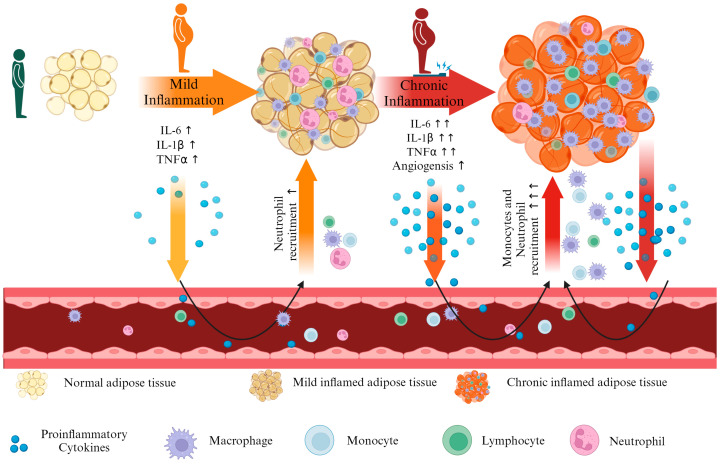
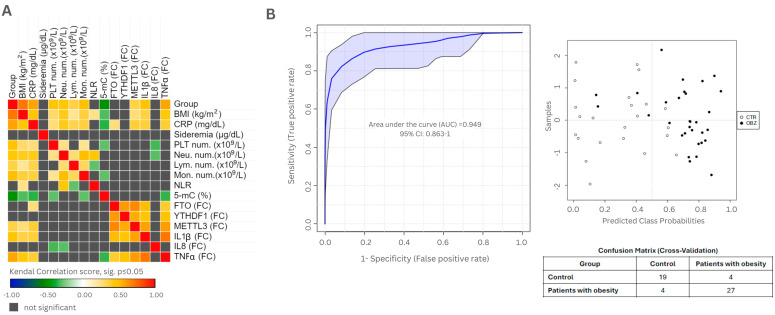
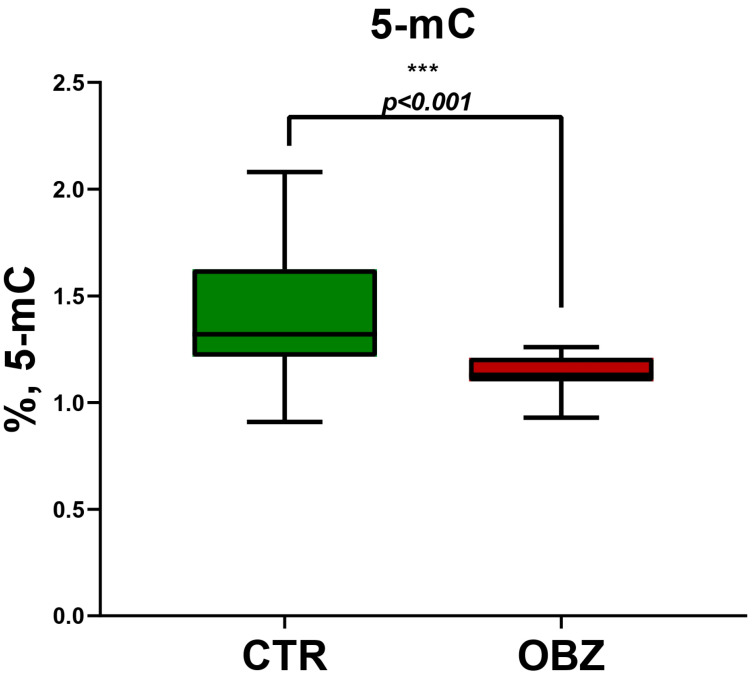
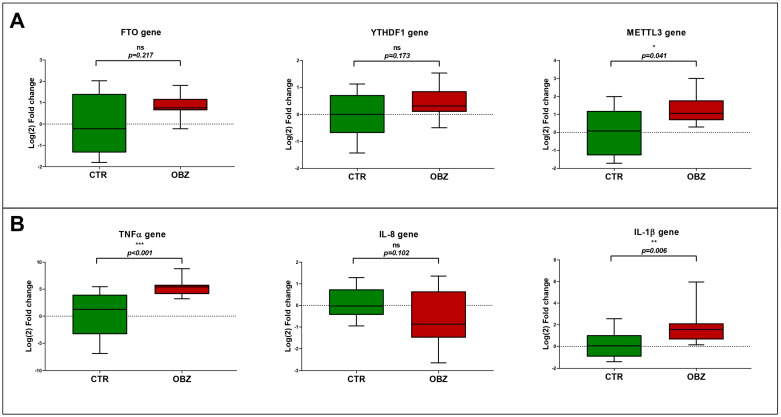
Obesity is marked by excessive fat accumulation in the adipose tissue, which disrupts metabolic processes and causes chronic systemic inflammation. Commonly, body mass index (BMI) is used to assess obesity-related risks, predicting potential metabolic disorders. However, for a better clustering of obese patients, we must consider molecular and epigenetic changes which may be responsible for inflammation and metabolic changes. Our study involved two groups of patients, obese and healthy donors, on which routine analysis were performed, focused on BMI, leukocytes count, and C-reactive protein (CRP) and completed with global DNA methylation and gene expression analysis for genes involved in inflammation and adipogenesis. Our results indicate that obese patients exhibited elevated leukocytes levels, along with increased BMI and CRP. The obese group revealed a global hypomethylation and upregulation of proinflammatory genes, with adipogenesis genes following the same trend of being overexpressed. The study confirms that obesity is linked to systematic inflammation and metabolic dysfunction through epigenetic and molecular alterations. The CRP was correlated with the hypomethylation status in obese patients, and this fact may contribute to a better understanding of the roles of specific genes in adipogenesis and inflammation, leading to a better personalized therapy.
肥胖的特征是脂肪组织中脂肪过度积累,这会扰乱代谢过程并引发慢性全身炎症。通常,体重指数(BMI)用于评估肥胖相关风险,预测潜在的代谢紊乱。然而,为了更好地对肥胖患者进行分类,我们必须考虑可能导致炎症和代谢变化的分子和表观遗传变化。我们的研究涉及两组患者,肥胖患者和健康捐赠者,对他们进行了常规分析,重点关注BMI、白细胞计数和C反应蛋白(CRP),并完成了对参与炎症和脂肪生成的基因的全基因组DNA甲基化和基因表达分析。我们的结果表明,肥胖患者的白细胞水平升高,同时BMI和CRP也增加。肥胖组显示出全基因组低甲基化以及促炎基因的上调,脂肪生成基因也呈现相同的过表达趋势。该研究证实,肥胖通过表观遗传和分子改变与全身炎症和代谢功能障碍有关。CRP与肥胖患者的低甲基化状态相关,这一事实可能有助于更好地理解特定基因在脂肪生成和炎症中的作用,从而实现更好的个性化治疗。