Center for Immunology and Cellular Biotechnology, Immanuel Kant Baltic Federal University, 236001 Kaliningrad, Russia.
Laboratory of Cellular and Microfluidic Technologies, Siberian State Medical University, 2, Moskovskii Trakt, 634050 Tomsk, Russia.
Int J Mol Sci. 2023 Jul 31;24(15):12259. doi: 10.3390/ijms241512259.
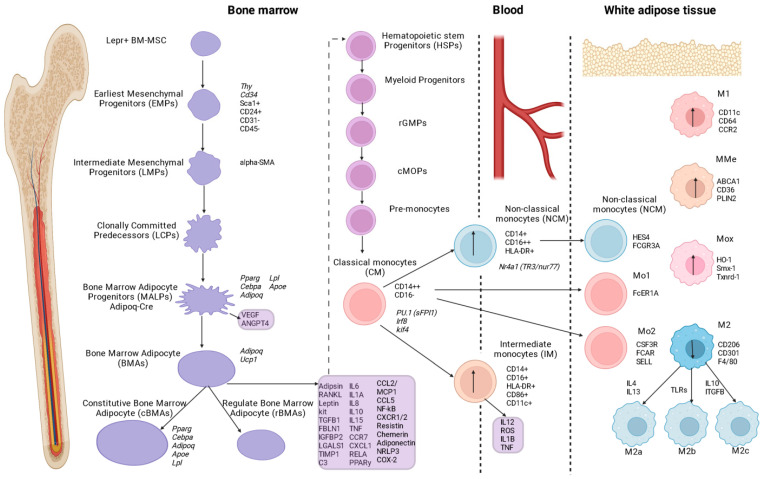
Monocytes play a key role in the development of metabolic syndrome, and especially obesity. Given the complex features of their development from progenitor cells, whose regulation is mediated by their interactions with bone marrow adipocytes, the importance of a detailed study of the heterogeneous composition of monocytes at the molecular and systemic levels becomes clear. Research argues for monocytes as indicators of changes in the body's metabolism and the possibility of developing therapeutic strategies to combat obesity and components of metabolic syndrome based on manipulations of the monocyte compound of the immune response. An in-depth study of the heterogeneity of bone-marrow-derived monocytes and adipocytes could provide answers to many questions about the pathogenesis of obesity and reveal their therapeutic potential.
单核细胞在代谢综合征的发展中起着关键作用,尤其是在肥胖症的发生中。鉴于它们从祖细胞发育的复杂特征,其调节是由它们与骨髓脂肪细胞的相互作用介导的,因此在分子和系统水平上对单核细胞异质性组成进行详细研究变得尤为重要。研究认为单核细胞是机体代谢变化的指标,并且有可能基于对免疫反应中单细胞化合物的操作来制定治疗肥胖症和代谢综合征成分的策略。深入研究骨髓源性单核细胞和脂肪细胞的异质性,可以为肥胖症发病机制的许多问题提供答案,并揭示其治疗潜力。