Rocha Ariane Ribeiro de Freitas, de Morais Nubia de Souza, Azevedo Francilene Maria, Morais Dayane de Castro, Pereira Patrícia Feliciano, Peluzio Maria do Carmo Gouveia, Franceschini Sylvia do Carmo Castro, Priore Silvia Eloiza
Department of Nutrition and Health, Federal University of Viçosa, Viçosa, Brazil.
Front Nutr. 2025 Jul 11;12:1560080. doi: 10.3389/fnut.2025.1560080. eCollection 2025.
Adipose tissue is important in the secretion of inflammatory substances, and may be directly or indirectly associated to the development of cardiovascular and metabolic diseases in adolescence.
To evaluate whether inflammatory markers are associated to body fat percentage in adolescents.
Systematic review conducted following the items of the PRISMA, and registered in PROSPERO. The descriptors adolescent, body fat distribution and cytokines were combined together in the electronic databases: Scopus, PubMed, Embase, Cochrane, Scholar Google and ProQuest, independently by two researchers, in January 2022 and atualized in November 2024. Meta-analysis of the correlation of inflammatory markers with body fat percentage was conducted using the metabin function of the meta package of the RStudio software (4.0.4).
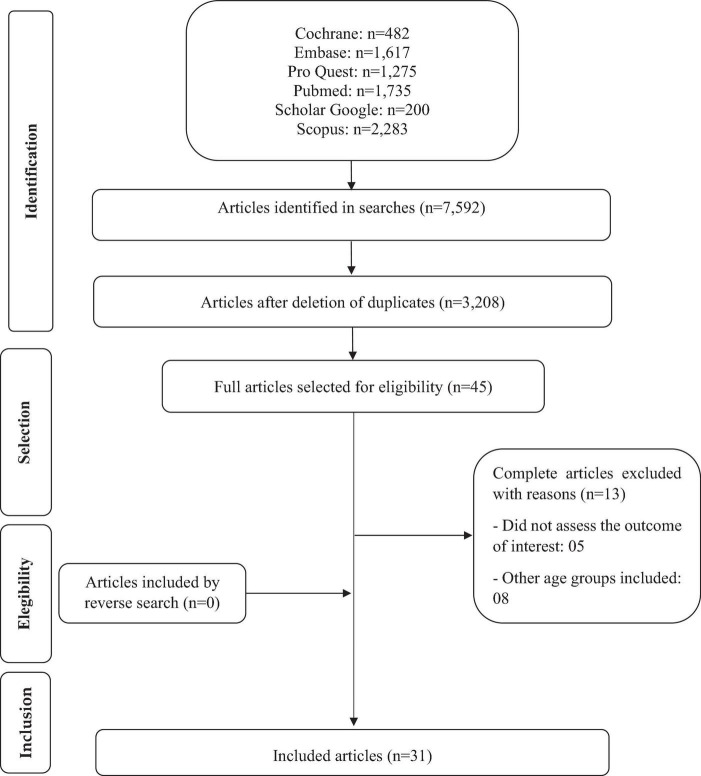
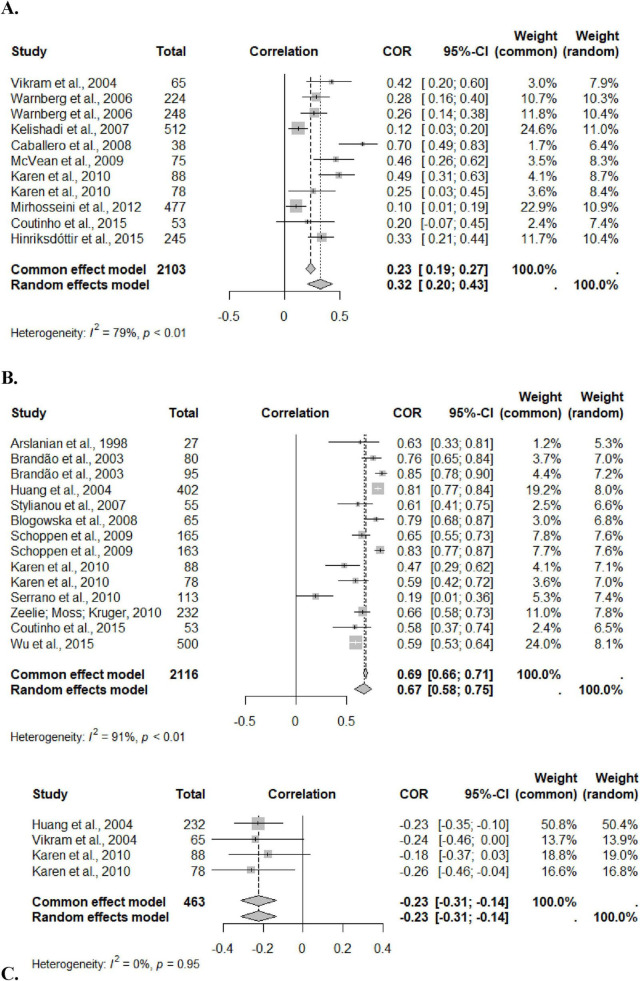
Resulted in 7,592 records, of which 31 articles met the inclusion criteria and were selected for this study. Cross-sectional and prospective cohort observational studies were included. The meta-analysis included 4,682 adolescents, aged 10 to 19 years, of both sexes. The inflammatory markers leptin and C-reactive protein were positively correlated ( = 0.67; = 0.32) and adiponectin was negatively correlated ( = -0.23) with body fat percentage in adolescents of both sexes.
In adolescents, the body fat percentage is related to the inflammatory markers leptin, C-reactive protein and adiponectin. It is important to evaluate the body fat composition of adolescents in clinical practice to identify those with a higher percentage of fat, that may reflect an inflammatory profile, as well as increased cardiometabolic risk that accompanies adolescents into adulthood.
https://www.crd.york.ac.uk/PROSPERO/view/CRD42020208305, identifier PROSPERO: CRD42020208305.
脂肪组织在炎症物质分泌中起重要作用,可能直接或间接与青少年心血管和代谢疾病的发生有关。
评估炎症标志物是否与青少年体脂百分比相关。
按照PRISMA项目进行系统评价,并在PROSPERO中注册。2022年1月由两名研究人员独立在电子数据库Scopus、PubMed、Embase、Cochrane、谷歌学术和ProQuest中组合使用描述词青少年、体脂分布和细胞因子,并于2024年11月更新。使用RStudio软件(4.0.4)的meta包中的metabin函数对炎症标志物与体脂百分比的相关性进行荟萃分析。
共获得7592条记录,其中31篇文章符合纳入标准并被选入本研究。纳入横断面和前瞻性队列观察性研究。荟萃分析纳入了4682名10至19岁的青少年,男女皆有。炎症标志物瘦素和C反应蛋白与青少年体脂百分比呈正相关( = 0.67; = 0.32),脂联素与体脂百分比呈负相关( = -0.23)。
在青少年中,体脂百分比与炎症标志物瘦素、C反应蛋白和脂联素有关。在临床实践中评估青少年的体脂组成很重要,以识别那些体脂百分比较高的人,这可能反映出一种炎症状态,以及伴随青少年进入成年期的心血管代谢风险增加。
https://www.crd.york.ac.uk/PROSPERO/view/CRD42020208305,标识符PROSPERO:CRD42020208305。