Service de Radio-Oncologie du Département de Médecine Spécialisée, Centre Intégré de Cancérologie (CIC), Hôpital de l'Enfant-Jésus, Centre Hospitalier Universitaire (CHU) de Québec-Université Laval, Quebec City, QC G1J 1Z4, Canada.
Service de Physique Médicale et de Radioprotection, CHU de Québec-Université Laval, Quebec City, QC G1J 1Z4, Canada.
Curr Oncol. 2024 Jul 9;31(7):3968-3977. doi: 10.3390/curroncol31070293.
Cystic, sporadic hemangioblastomas (HBLs) represent a unique, therapeutically challenging subset of central nervous system tumors, mainly due to their unpredictable growth patterns and potential for symptomatic progression. This study aims to explore the complexities surrounding the diagnosis, treatment, and long-term management of these lesions.
A comprehensive literature review was performed, and a detailed case study of a 56-year-old patient with a cystic, sporadic cerebellar HBL was produced.
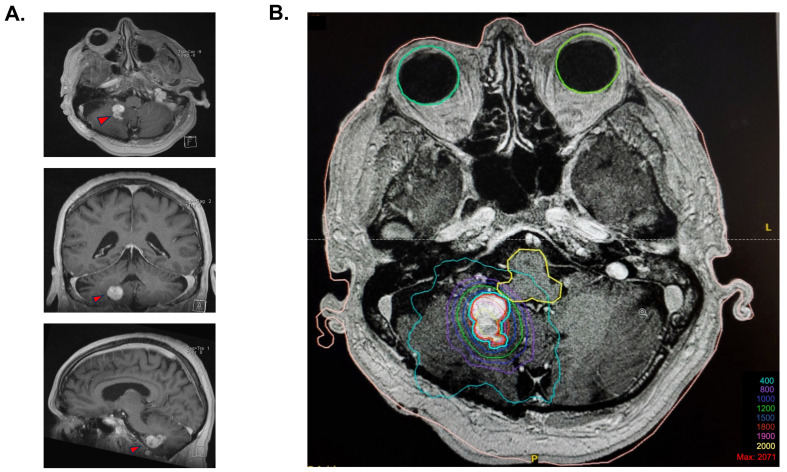
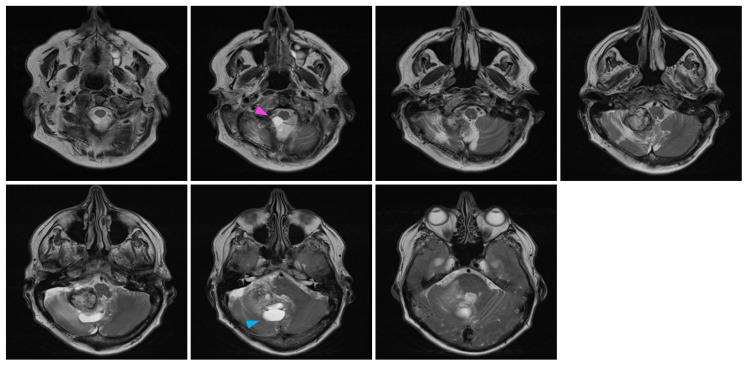
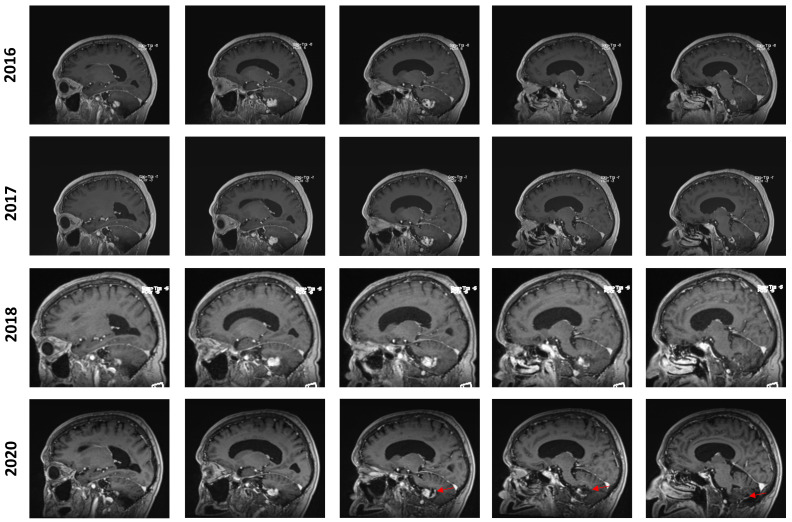
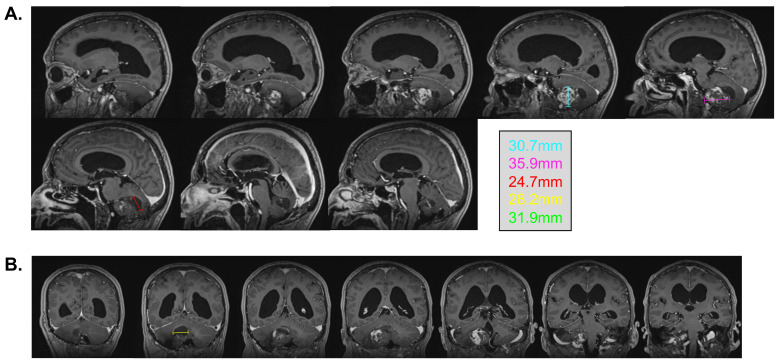
The case highlights the multiphasic growth pattern typical of cystic, sporadic HBLs, characterized by periods of dormancy and subsequent rapid expansion. An initial surgical intervention offered temporary control. Tumor recurrence, mainly through cystic enlargement, was treated by SRS. A subsequent recurrence, again caused by cystic growth, eventually led to the patient's death. The intricacies of treatment modalities, focusing on the transition from surgical resection to stereotactic radiosurgery (SRS) upon recurrence, are discussed. Parameters indicating impending tumor growth, coupled with symptomatic advances, are also explored.
The management of cystic, sporadic cerebellar HBLs requires a strategic approach that can be informed by radiological characteristics and tumoral behavior. This study underscores the importance of a proactive, individualized management plan and suggests guidelines that could inform clinical decision making.
囊性、散发性血管母细胞瘤(HBL)是中枢神经系统肿瘤中一个独特且具有挑战性的治疗亚群,主要归因于其不可预测的生长模式和可能导致症状进展的风险。本研究旨在探讨这些病变的诊断、治疗和长期管理所涉及的复杂性。
进行了全面的文献回顾,并详细介绍了一位 56 岁患者的囊性、散发性小脑 HBL 病例。
该病例突出了囊性、散发性 HBL 的多相生长模式,其特征是休眠期和随后的快速扩张期交替出现。初始手术干预提供了暂时的控制。肿瘤复发主要通过囊肿增大,采用 SRS 进行治疗。随后再次复发,同样是由于囊肿生长导致,最终导致患者死亡。讨论了治疗方式的复杂性,重点是在复发时从手术切除过渡到立体定向放射外科(SRS)。还探讨了预示肿瘤生长的参数以及伴随的症状进展。
囊性、散发性小脑 HBL 的管理需要采用一种策略性方法,可以根据影像学特征和肿瘤行为进行指导。本研究强调了积极主动、个体化管理计划的重要性,并提出了可能指导临床决策的指南。