Hematology and Cell Therapy Department, Cancer Center Clinica Universidad de Navarra, IdiSNA, Pamplona, Spain.
Centro de Investigacion Biomedica en Red de Cancer, Madrid, Spain.
Blood Adv. 2024 Nov 12;8(21):5479-5492. doi: 10.1182/bloodadvances.2023012522.
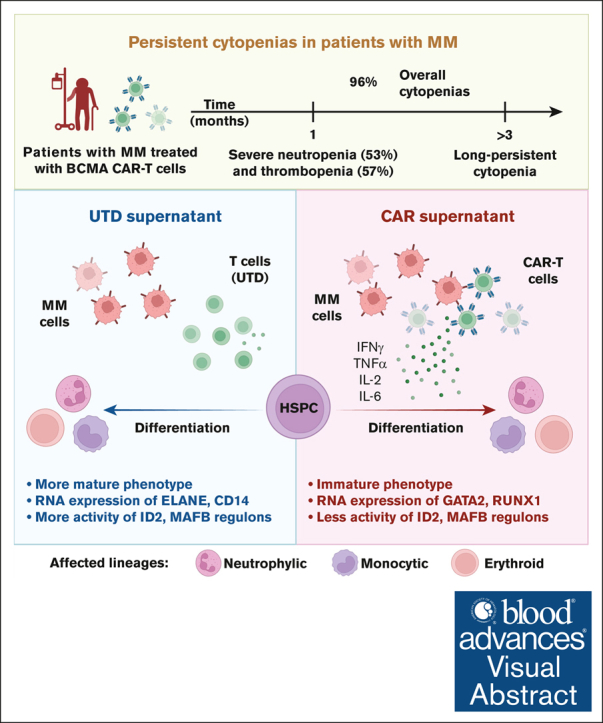
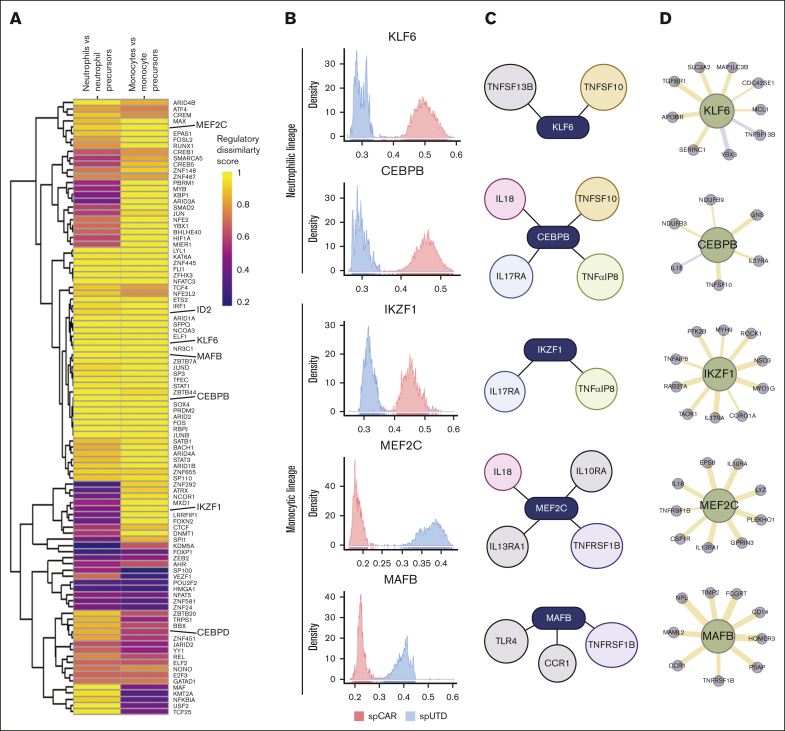
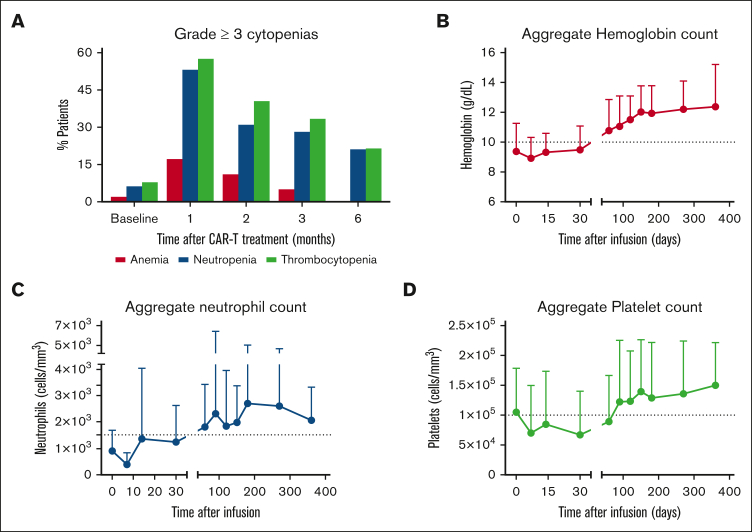
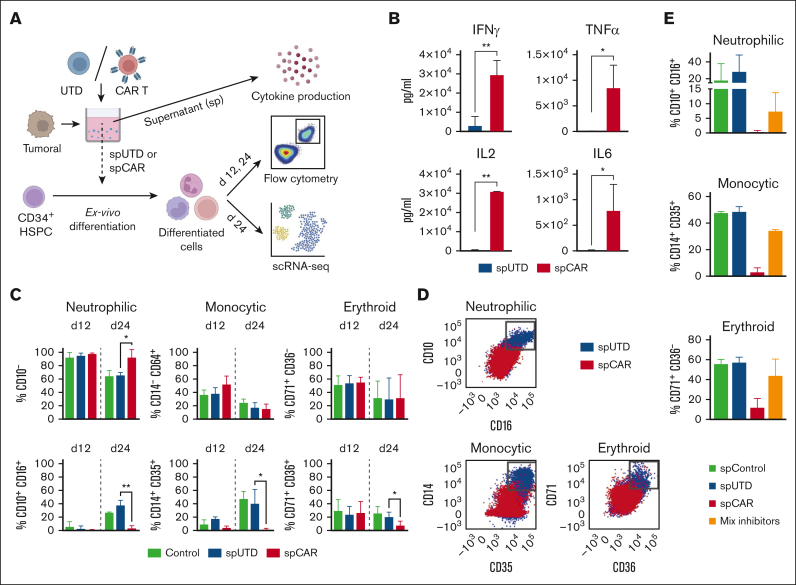
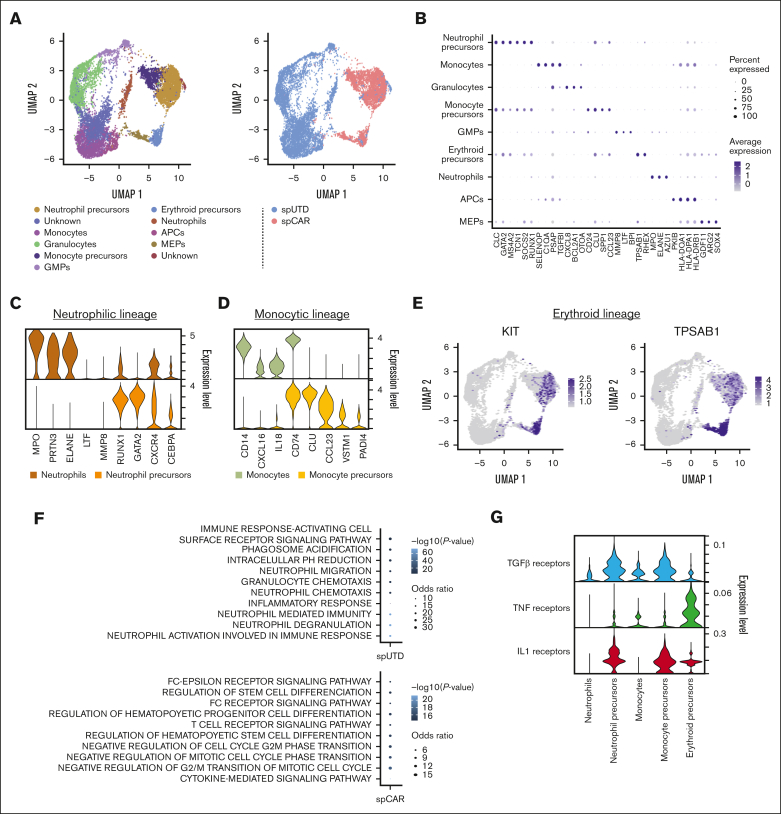
Hematologic toxicity is a common side effect of chimeric antigen receptor T-cell (CAR-T) therapies, being particularly severe among patients with relapsed or refractory multiple myeloma (MM). In this study, we characterized 48 patients treated with B-cell maturation antigen (BCMA) CAR-T cells to understand kinetics of cytopenia, identify predictive factors, and determine potential mechanisms underlying these toxicities. We observed that overall incidence of cytopenia was 95.7%, and grade >3 thrombocytopenia and neutropenia, 1 month after infusion, was observed in 57% and 53% of the patients, respectively, being still present after 1 year in 4 and 3 patients, respectively. Baseline cytopenia and high peak inflammatory markers were highly correlated with cytopenia that persisted up to 3 months. To determine potential mechanisms underlying cytopenias, we evaluated the paracrine effect of BCMA CAR-T cells on hematopoietic stem and progenitor cell (HSPC) differentiation using an ex vivo myeloid differentiation model. Phenotypic analysis showed that supernatants from activated CAR-T cells (spCAR) halted HSPC differentiation, promoting more immature phenotypes, which could be prevented with a combination of interferon γ, tumor necrosis factor α/β, transforming growth factor β, interleukin-6 (IL-6) and IL-17 inhibitors. Single-cell RNA sequencing demonstrated upregulation of transcription factors associated with early stages of hematopoietic differentiation in the presence of spCAR (GATA2, RUNX1, CEBPA) and a decrease in the activity of key regulons involved in neutrophil and monocytic maturation (ID2 and MAFB). These results suggest that CAR-T activation induces HSPC maturation arrest through paracrine effects and provides potential treatments to mitigate the severity of this toxicity.
血液学毒性是嵌合抗原受体 T 细胞(CAR-T)疗法的常见副作用,在复发或难治性多发性骨髓瘤(MM)患者中尤其严重。在这项研究中,我们对 48 名接受 B 细胞成熟抗原(BCMA)CAR-T 细胞治疗的患者进行了特征描述,以了解细胞减少症的动力学,确定预测因素,并确定这些毒性的潜在机制。我们观察到,总体细胞减少症发生率为 95.7%,输注后 1 个月,血小板减少症和中性粒细胞减少症的发生率分别为 57%和 53%,分别有 4 名和 3 名患者在 1 年后仍存在这些情况。基线细胞减少症和高峰炎症标志物高度与持续至 3 个月的细胞减少症相关。为了确定细胞减少症的潜在机制,我们使用体外髓样分化模型评估了 BCMA CAR-T 细胞对造血干细胞和祖细胞(HSPC)分化的旁分泌作用。表型分析表明,激活的 CAR-T 细胞(spCAR)的上清液阻止了 HSPC 分化,促进了更不成熟的表型,这可以通过干扰素 γ、肿瘤坏死因子 α/β、转化生长因子 β、白细胞介素 6(IL-6)和白细胞介素 17(IL-17)抑制剂的组合来预防。单细胞 RNA 测序表明,在 spCAR 存在的情况下,与造血分化早期阶段相关的转录因子上调(GATA2、RUNX1、CEBPA),并且参与中性粒细胞和单核细胞成熟的关键调控因子的活性下降(ID2 和 MAFB)。这些结果表明,CAR-T 激活通过旁分泌作用诱导 HSPC 成熟停滞,并提供了潜在的治疗方法来减轻这种毒性的严重程度。