
Nrf2缺乏加速哮喘小鼠中白细胞介素-17依赖性嗜中性气道炎症
Nrf2 Deficiency Accelerates IL-17-Dependent Neutrophilic Airway Inflammation in Asthmatic Mice.
作者信息
Kuramoto Kenya, Morishima Yuko, Yoshida Kazufumi, Ano Satoshi, Kawashima Kai, Yabuuchi Yuki, Sakai Chio, Matsumura Sosuke, Nishino Kengo, Yazaki Kai, Matsuyama Masashi, Kiwamoto Takumi, Ishii Yukio, Hizawa Nobuyuki
机构信息
Department of Pulmonary Medicine, Institute of Medicine, University of Tsukuba, Tsukuba 305-8575, Japan.
出版信息
Antioxidants (Basel). 2024 Jul 8;13(7):818. doi: 10.3390/antiox13070818.
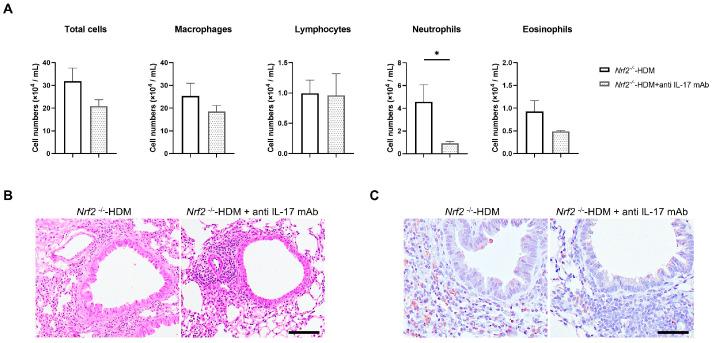
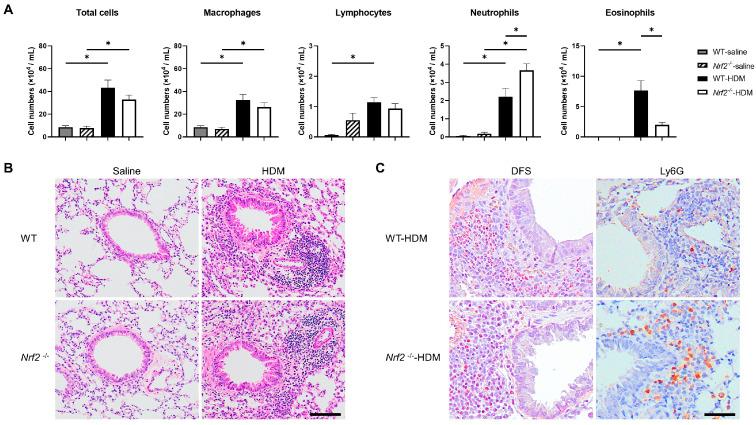
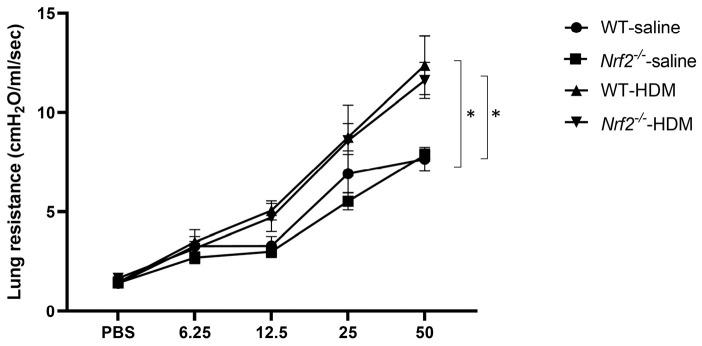
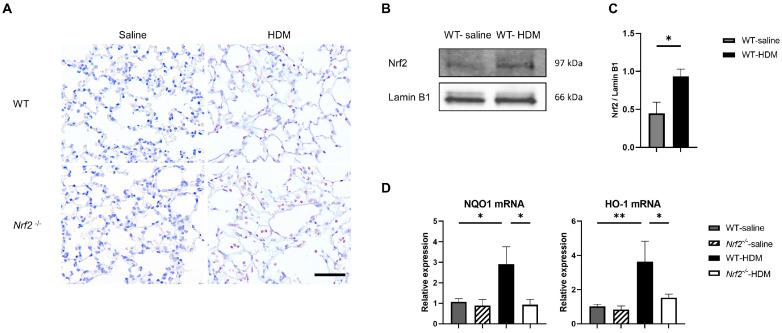
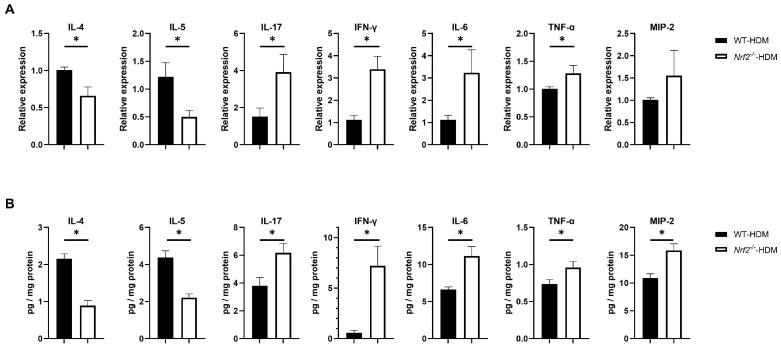
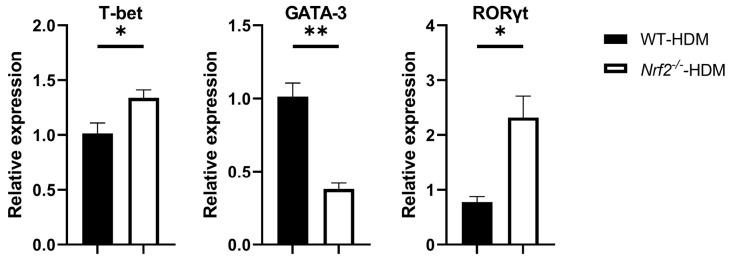
Asthma is a heterogeneous disease that can be broadly classified into type 2, which is primarily steroid-sensitive and eosinophilic, and non-type 2, which is primarily steroid-resistant and neutrophilic. While the mechanisms leading to the development of molecular-targeted therapies for type 2 asthma are being elucidated, much remains to be learned about non-type 2 asthma. To investigate the role of oxidative stress in refractory allergic airway inflammation, we compared asthma models generated by immunizing wild-type and nuclear factor erythroid-2-related factor 2 (Nrf2)-deficient mice with the house dust mite antigen. Both asthma models had similar levels of airway inflammation and hyperresponsiveness, but the Nrf2-deficient mice had increased oxidative stress and exacerbated neutrophilic airway inflammation compared with the wild-type mice. Type 2 cytokines and the expression of GATA3, a transcription factor that is important for Th2 cell differentiation, had decreased in Nrf2-deficient mice compared with the wild-type mice, whereas helper T (Th) 17 cytokines and the expression of RORγt, which is important for Th17 cell differentiation, had increased. Furthermore, the neutrophilic airway inflammation caused by Nrf2 deficiency was ameliorated by interleukin (IL)-17 neutralization. We have concluded that the disruption of the Nrf2-mediated antioxidant defense system contributed to the induction of Th17 differentiation and exacerbated allergic neutrophilic airway inflammation.
哮喘是一种异质性疾病,可大致分为2型(主要对类固醇敏感且嗜酸性粒细胞增多)和非2型(主要对类固醇耐药且中性粒细胞增多)。虽然导致2型哮喘分子靶向治疗发展的机制正在被阐明,但关于非2型哮喘仍有许多有待了解之处。为了研究氧化应激在难治性过敏性气道炎症中的作用,我们比较了用屋尘螨抗原免疫野生型和核因子红细胞2相关因子2(Nrf2)缺陷小鼠所产生的哮喘模型。两种哮喘模型的气道炎症和高反应性水平相似,但与野生型小鼠相比,Nrf2缺陷小鼠的氧化应激增加,中性粒细胞性气道炎症加剧。与野生型小鼠相比,Nrf2缺陷小鼠的2型细胞因子以及对Th2细胞分化很重要的转录因子GATA3的表达降低,而辅助性T(Th)17细胞因子以及对Th17细胞分化很重要的RORγt的表达增加。此外,Nrf2缺乏引起的中性粒细胞性气道炎症通过白细胞介素(IL)-17中和得到改善。我们得出结论,Nrf2介导的抗氧化防御系统的破坏促成了Th17分化的诱导,并加剧了过敏性中性粒细胞性气道炎症。
 Zotero 插件