Lasagni Simone, Critelli Rosina Maria, Milosa Fabiola, Saltini Dario, Schepis Filippo, Romanzi Adriana, Dituri Francesco, Serino Grazia, Di Marco Lorenza, Pivetti Alessandra, Scianò Filippo, Giannelli Gianluigi, Villa Erica
Gastroenterology Unit, Chimomo Department, University of Modena and Reggio Emilia, 41125 Modena, Italy.
Clinical and Experimental Medicine Program, Department of Biomedical, Metabolic and Neural Sciences, University of Modena and Reggio Emilia, 41125 Modena, Italy.
Biomedicines. 2024 Jun 26;12(7):1424. doi: 10.3390/biomedicines12071424.
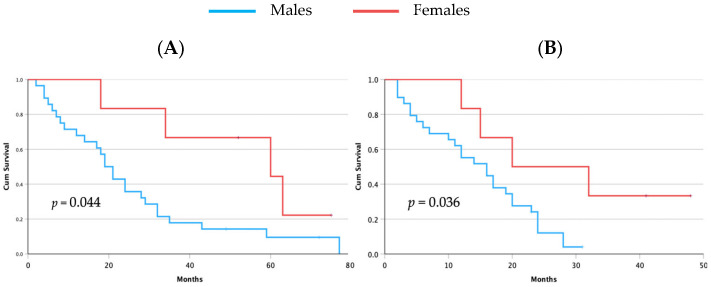
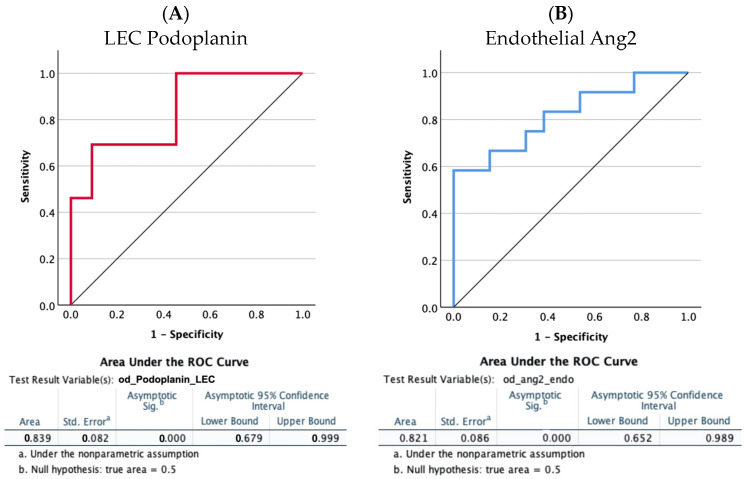
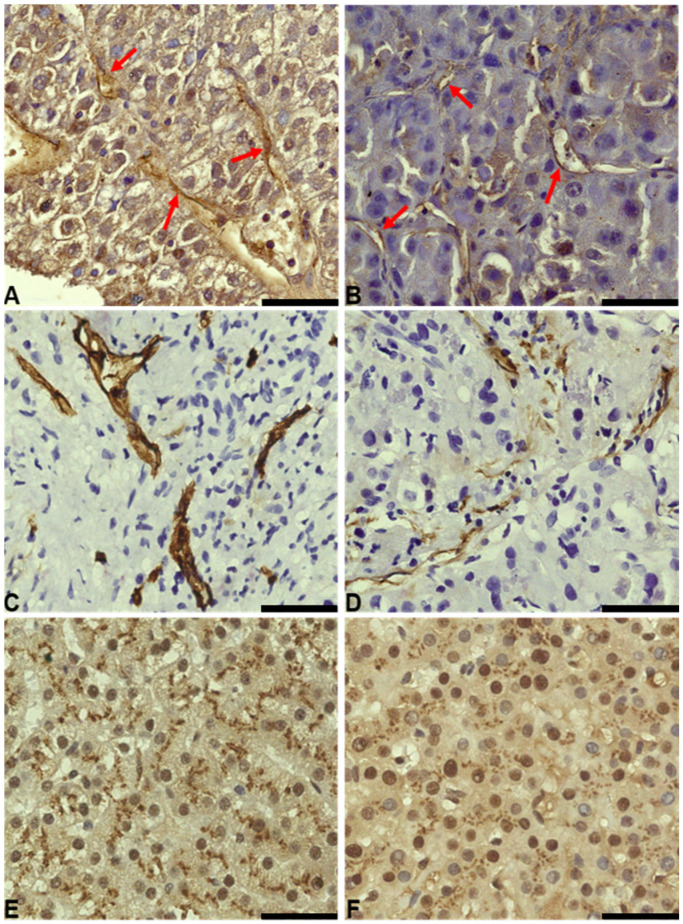
Hepatocellular carcinoma (HCC) is the second leading cause of cancer death worldwide. Curative treatments are available to a minority of patients, as HCC is often diagnosed at an advanced stage. For patients with unresectable and multifocal HCC, tyrosine kinase inhibitor drugs (TKIs) are the only potential treatment option. Despite extensive research, predictors of response to these therapies remain elusive. This study aimed to analyze the biological and histopathological characteristics of HCC patients treated with TKIs, focusing on angiogenesis and lymphangiogenesis. Immunohistochemistry quantified the expression of angiopoietin-2 (Ang2), lymphatic endothelial cells (LEC) podoplanin, and C-type Lectin Domain Family 2 (CLEC-2), key factors in neoangiogenesis and lymphangiogenesis. An increased expression of endothelial Ang2 and LEC podoplanin predicted a lower risk of metastasis. Female patients had significantly longer overall survival and survival on TKIs, associated with higher tumor expression of endothelial Ang2 and LEC podoplanin. Moreover, LEC podoplanin expression and a longer time on TKIs were independently correlated with improved survival on TKI therapy at Cox regression analysis. These findings suggest that endothelial Ang2 and LEC podoplanin could be potential biomarkers for predicting treatment outcomes and guiding therapeutic strategies in HCC patients treated with TKIs.
肝细胞癌(HCC)是全球第二大致癌死亡原因。由于HCC常常在晚期才被诊断出来,只有少数患者能够接受根治性治疗。对于无法切除的多灶性HCC患者,酪氨酸激酶抑制剂药物(TKIs)是唯一可能的治疗选择。尽管进行了广泛的研究,但这些疗法的反应预测指标仍然难以捉摸。本研究旨在分析接受TKIs治疗的HCC患者的生物学和组织病理学特征,重点关注血管生成和淋巴管生成。免疫组织化学定量分析了血管生成素-2(Ang2)、淋巴管内皮细胞(LEC)的血小板内皮细胞黏附分子-1(podoplanin)和C型凝集素结构域家族2(CLEC-2)的表达,这些是新生血管生成和淋巴管生成的关键因素。内皮细胞Ang2和LEC血小板内皮细胞黏附分子-1表达增加预示着转移风险较低。女性患者的总生存期和接受TKIs治疗的生存期明显更长,这与内皮细胞Ang2和LEC血小板内皮细胞黏附分子-1在肿瘤中的高表达有关。此外,在Cox回归分析中,LEC血小板内皮细胞黏附分子-1的表达以及接受TKIs治疗的时间延长与TKIs治疗生存期的改善独立相关。这些发现表明,内皮细胞Ang2和LEC血小板内皮细胞黏附分子-1可能是预测接受TKIs治疗的HCC患者治疗结果和指导治疗策略的潜在生物标志物。