Linardi Daniele, Hallström Seth, Luciani Giovanni Battista, Rungatscher Alessio
Cardiac Surgery Department, University of Verona, 37129 Verona, Italy.
Division of Medicinal Chemistry, Otto Loewi Research Center, Medical University of Graz, 8010 Graz, Austria.
Biomedicines. 2024 Jun 27;12(7):1434. doi: 10.3390/biomedicines12071434.
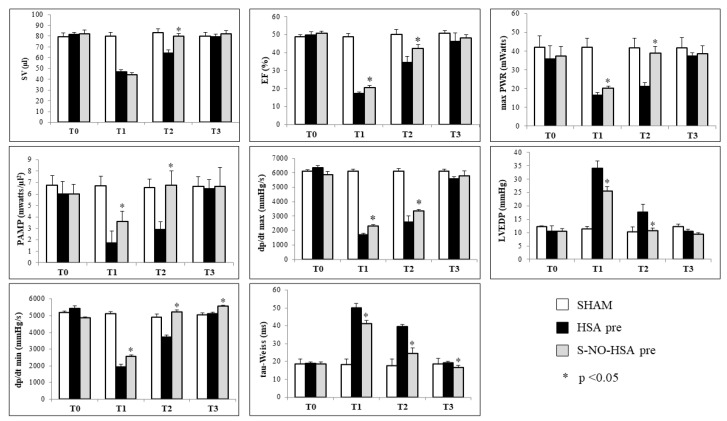
Endothelial nitric oxide (NO) production is crucial in maintaining vascular homeostasis. However, in the context of ischemia-reperfusion (I/R) injury, uncoupled endothelial nitric oxide synthase (eNOS) can exacerbate reactive oxygen species (ROS) generation. Supplementation with S-nitroso human serum albumin (S-NO-HSA) offers a potential solution by mitigating eNOS uncoupling, thereby enhancing NO bioavailability. In a study conducted at the University of Verona, male rats underwent thoracotomy followed by 30 min left anterior descendant coronary (LAD) occlusion and subsequent reperfusion. Hemodynamic parameters were meticulously assessed using a conductance catheter inserted via the carotid artery. The rats were stratified into two main groups based on reperfusion duration and the timing of drug infusion, with the effects of S-NO-HSA evaluated after 2 or 24 h. Remarkably, intravenous administration of S-NO-HSA, initiated before or during ischemia, exhibited notable benefits. It significantly improved left ventricular function, safeguarded energetic substrates such as phosphocreatine and ATP, and sustained glutathione levels akin to basal conditions, indicative of diminished oxidative stress. The data from this study strongly suggest a protective role for S-NO-HSA in mitigating I/R injury induced by LAD artery occlusion, a phenomenon observed at both 2 and 24 h post-reperfusion. These findings underscore the promising therapeutic potential of NO supplementation in alleviating myocardial damage subsequent to ischemic insult.
内皮型一氧化氮(NO)的产生对于维持血管稳态至关重要。然而,在缺血再灌注(I/R)损伤的情况下,解偶联的内皮型一氧化氮合酶(eNOS)会加剧活性氧(ROS)的生成。补充S-亚硝基人血清白蛋白(S-NO-HSA)通过减轻eNOS解偶联提供了一种潜在的解决方案,从而提高NO的生物利用度。在维罗纳大学进行的一项研究中,雄性大鼠接受开胸手术,随后进行30分钟的左前降支冠状动脉(LAD)闭塞及随后的再灌注。使用通过颈动脉插入的电导导管精心评估血流动力学参数。根据再灌注持续时间和药物输注时间将大鼠分为两个主要组,在2或24小时后评估S-NO-HSA的效果。值得注意的是,在缺血前或缺血期间开始静脉注射S-NO-HSA显示出显著益处。它显著改善了左心室功能,保护了诸如磷酸肌酸和ATP等能量底物,并使谷胱甘肽水平维持在接近基础状态,表明氧化应激减轻。这项研究的数据强烈表明S-NO-HSA在减轻LAD动脉闭塞引起的I/R损伤中具有保护作用,这一现象在再灌注后2小时和24小时均观察到。这些发现强调了补充NO在减轻缺血性损伤后心肌损伤方面具有广阔的治疗潜力。