Department of Neurodegeneration Diagnostics, Medical University of Bialystok, 15-269 Bialystok, Poland.
Department of Psychiatry and Neurochemistry, Institute of Neuroscience and Physiology, The Sahlgrenska Academy at the University of Gothenburg, 431 80 Mölndal, Sweden.
Int J Mol Sci. 2024 Jul 9;25(14):7543. doi: 10.3390/ijms25147543.
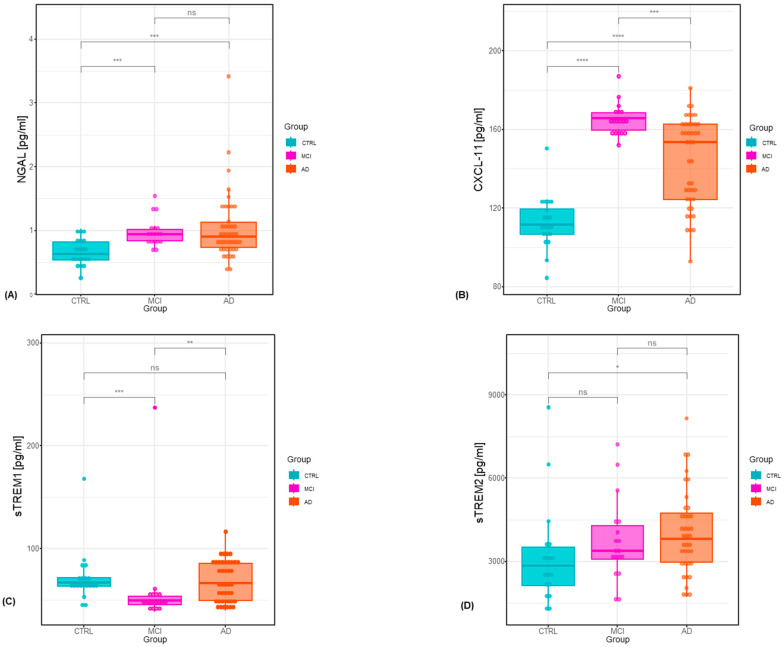
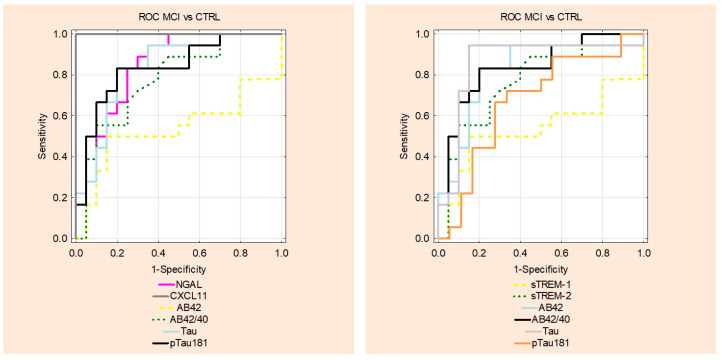
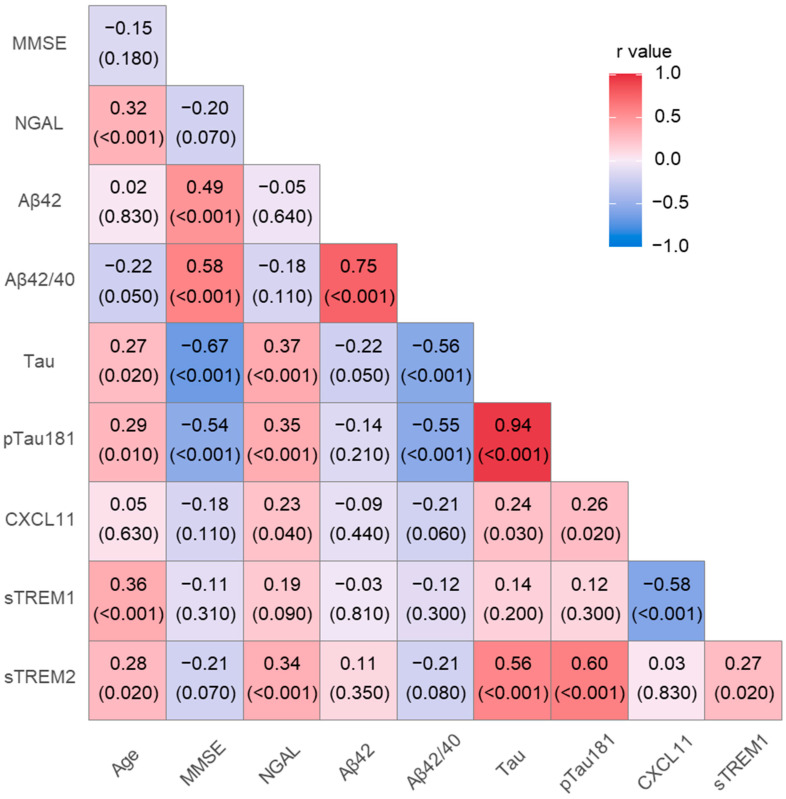
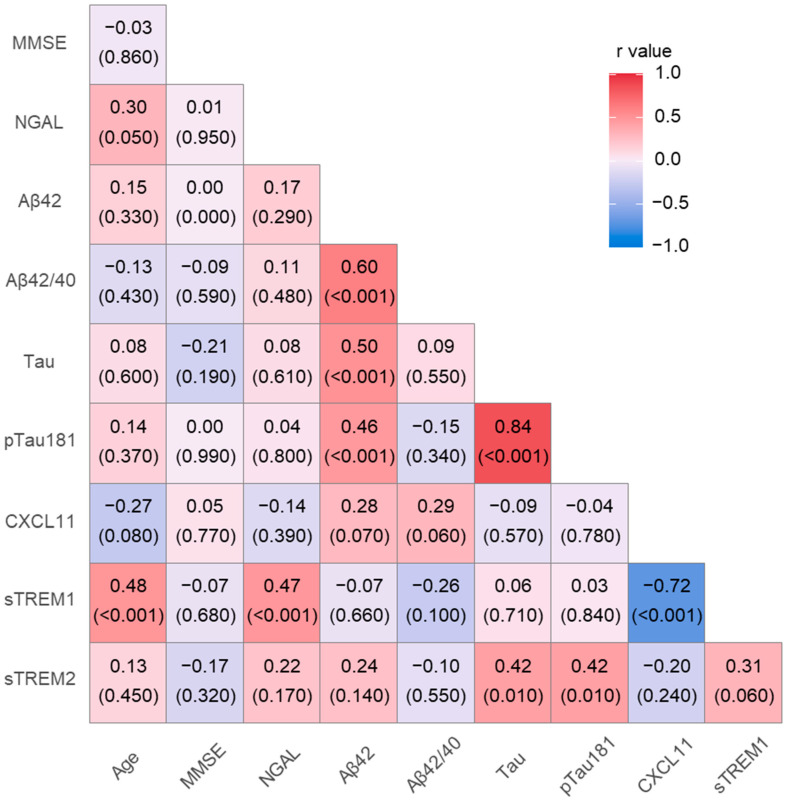
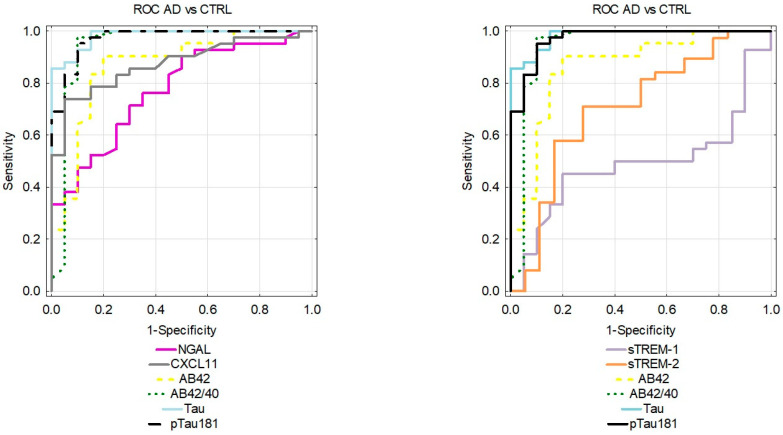
Recent investigations implicate neuroinflammatory changes, including astrocyte and microglia activation, as crucial in the progression of Alzheimer's disease (AD) Thus, we compared selected proteins reflecting neuroinflammatory processes to establish their connection to AD pathologies. Our study, encompassing 80 subjects with ( = 42) AD, ( = 18) mild cognitive impairment (MCI) and ( = 20) non-demented controls compares the clinical potential of tested molecules. Using antibody-based methods, we assessed concentrations of NGAL, CXCL-11, sTREM1, and sTREM2 in cerebrospinal fluid (CSF). Proinflammatory proteins, NGAL, and CXCL-11 reached a peak in the early stage of the disease and allowed for the identification of patients with MCI. Furthermore, the concentration of the anti-inflammatory molecule sTREM2 was highest in the more advanced stage of the disease and permitted differentiation between AD and non-demented controls. Additionally, sTREM2 was biochemically linked to tau and pTau in the AD group. Notably, NGAL demonstrated superior diagnostic performance compared to classical AD biomarkers in discriminating MCI patients from controls. These findings suggest that proteins secreted mainly through microglia dysfunction might play not only a detrimental but also a protective role in the development of AD pathology.
最近的研究表明,神经炎症变化,包括星形胶质细胞和小胶质细胞的激活,在阿尔茨海默病(AD)的进展中起着至关重要的作用。因此,我们比较了反映神经炎症过程的选定蛋白,以确定它们与 AD 病理的关系。我们的研究包括 80 名受试者,其中(=42)患有 AD,(=18)患有轻度认知障碍(MCI),(=20)为非痴呆对照组,比较了测试分子的临床潜力。我们使用基于抗体的方法评估了脑脊液(CSF)中 NGAL、CXCL-11、sTREM1 和 sTREM2 的浓度。促炎蛋白 NGAL 和 CXCL-11 在疾病的早期达到峰值,可用于识别 MCI 患者。此外,在疾病的更晚期,抗炎分子 sTREM2 的浓度最高,可区分 AD 和非痴呆对照组。此外,sTREM2 在 AD 组中与 tau 和 pTau 具有生化联系。值得注意的是,NGAL 在区分 MCI 患者和对照组方面的诊断性能优于经典的 AD 生物标志物。这些发现表明,主要通过小胶质细胞功能障碍分泌的蛋白质可能不仅在 AD 病理的发展中起有害作用,而且起保护作用。