Chemical Insights Research Institute, UL Research Institutes, Marietta, GA, United States.
School of Health Sciences, Purdue University, West Lafayette, IN, United States.
Front Public Health. 2024 Jul 12;12:1408842. doi: 10.3389/fpubh.2024.1408842. eCollection 2024.
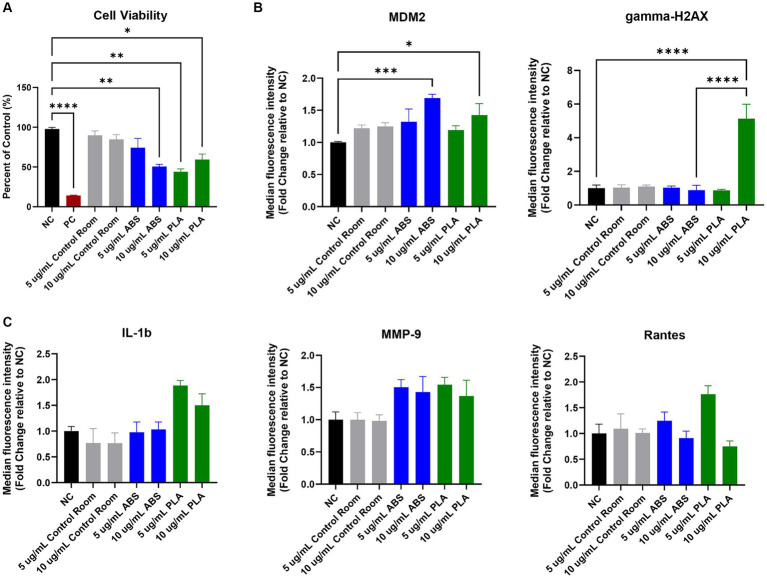
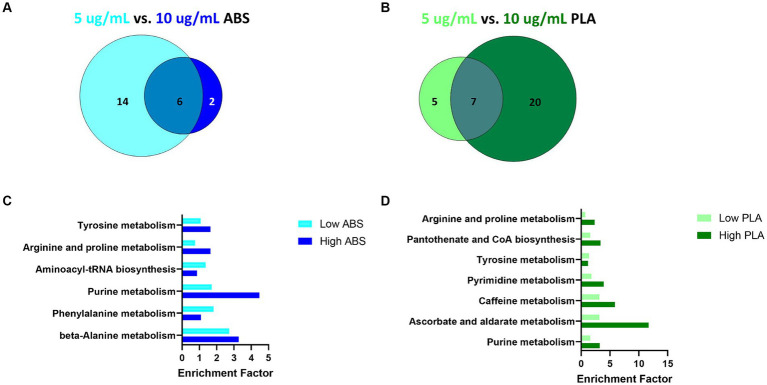
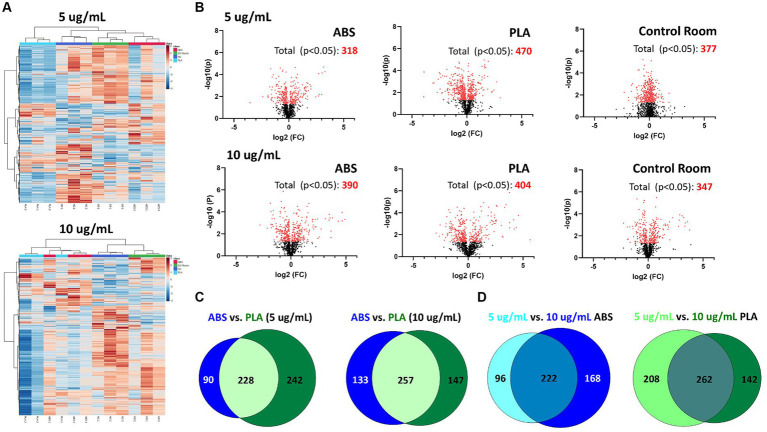
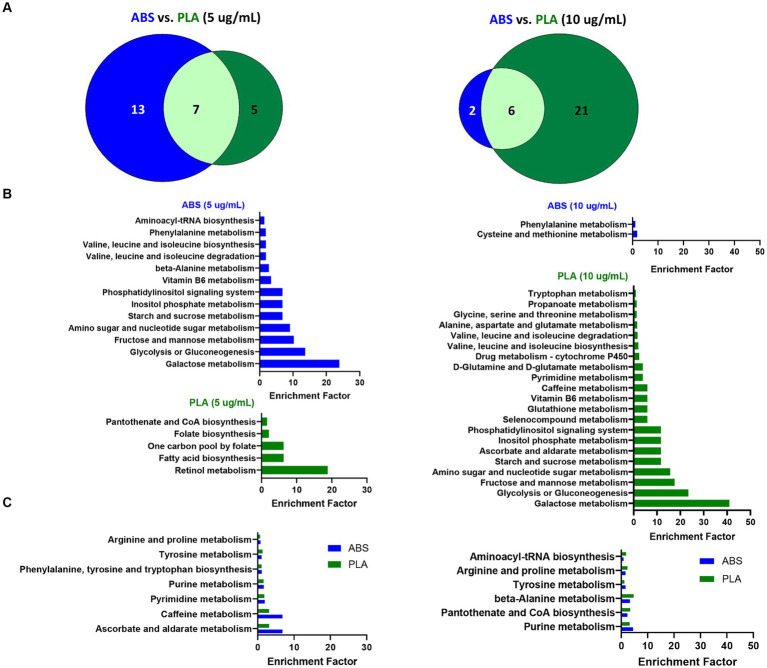
Three-dimensional (3D) printers have become popular educational tools in secondary and post-secondary STEM curriculum; however, concerns have emerged regarding inhalation exposures and associated health risks. Current evidence suggests that filament materials and site conditions may cause differences in the chemical profiles and toxicological properties of 3D printer emissions; however, few studies have evaluated exposures directly in the classroom. In this study, we monitored and sampled particulate matter (PM) emitted from acrylonitrile-butadiene-styrene (ABS) and polylactic acid (PLA) filaments during a 3-hour 3D printing session in a high school classroom using aerosol monitoring instrumentation and collection media. To evaluate potential inhalation risks, Multiple Path Particle Dosimetry (MPPD) modeling was used to estimate inhaled doses and calculate concentrations based on the observed aerosol data and specific lung and breathing characteristics. Dynamic light scattering was used to evaluate the hydrodynamic diameter, zeta potential, and polydispersity index (PDI) of extracted PM emissions dispersed in cell culture media. Small airway epithelial cells (SAEC) were employed to determine cellular viability, genotoxic, inflammatory, and metabolic responses to each emission exposure using MTS, ELISA, and high-performance liquid chromatography-mass spectrometry (HPLC-MS), respectively. Aerosol monitoring data revealed that emissions from ABS and PLA filaments generated similar PM concentrations within the ultrafine and fine ranges. However, DLS analysis showed differences in the physicochemical properties of ABS and PLA PM, where the hydrodynamic diameter of PLA PM was greater than ABS PM, which may have influenced particle deposition rates and cellular outcomes. While exposure to both ABS and PLA PM reduced cell viability and induced MDM2, an indicator of genomic instability, PLA PM alone increased gamma-H2AX, a marker of double-stranded DNA breaks. ABS and PLA emissions also increased the release of pro-inflammatory cytokines, although this did not reach significance. Furthermore, metabolic profiling via high performance liquid chromatography-mass spectrometry (HPLC-MS) and subsequent pathway analysis revealed filament and dose dependent cellular metabolic alterations. Notably, our metabolomic analysis also revealed key metabolites and pathways implicated in PM-induced oxidative stress, DNA damage, and respiratory disease that were perturbed across both tested doses for a given filament. Taken together, these findings suggest that use of ABS and PLA filaments in 3D printers within school settings may potentially contribute to adverse respiratory responses especially in vulnerable populations.
三维(3D)打印机已成为中学和高等教育 STEM 课程中流行的教育工具;然而,人们对吸入暴露和相关健康风险表示担忧。目前的证据表明,灯丝材料和现场条件可能导致 3D 打印机排放物的化学特征和毒理学特性存在差异;然而,很少有研究直接在课堂上评估暴露情况。在这项研究中,我们使用气溶胶监测仪器和收集介质,在高中教室的 3 小时 3D 打印过程中监测和采样丙烯腈-丁二烯-苯乙烯(ABS)和聚乳酸(PLA)灯丝发出的颗粒物(PM)。为了评估潜在的吸入风险,使用多路径粒子剂量学(MPPD)模型来估计吸入剂量,并根据观察到的气溶胶数据和特定的肺部和呼吸特征计算浓度。动态光散射用于评估提取的 PM 排放物在细胞培养基中的水动力直径、zeta 电位和多分散指数(PDI)。使用 MTS、ELISA 和高效液相色谱-质谱联用(HPLC-MS)分别评估小气道上皮细胞(SAEC)对每种排放物暴露的细胞活力、遗传毒性、炎症和代谢反应。气溶胶监测数据显示,ABS 和 PLA 灯丝的排放物在超细和细范围内产生相似的 PM 浓度。然而,DLS 分析显示 ABS 和 PLA PM 的物理化学性质存在差异,其中 PLA PM 的水动力直径大于 ABS PM,这可能影响了颗粒沉积速率和细胞结果。尽管暴露于 ABS 和 PLA PM 都会降低细胞活力并诱导 MDM2,这是基因组不稳定性的指标,但 PLA PM 单独增加了 γ-H2AX,这是双链 DNA 断裂的标志物。ABS 和 PLA 排放物还增加了促炎细胞因子的释放,尽管这没有达到显著水平。此外,通过高效液相色谱-质谱联用(HPLC-MS)进行代谢物分析,并通过随后的途径分析,揭示了纤维和剂量依赖性的细胞代谢改变。值得注意的是,我们的代谢组学分析还揭示了与 PM 诱导的氧化应激、DNA 损伤和呼吸道疾病相关的关键代谢物和途径,这些代谢物和途径在给定纤维的两个测试剂量下都受到干扰。综上所述,这些发现表明,在学校环境中使用 ABS 和 PLA 灯丝的 3D 打印机可能会导致呼吸不良反应,尤其是在脆弱人群中。