Julian Elaine, Solà-Morales Oriol, Garcia Maria João, Brinkhuis Francine, Pavlovic Mira, Martín-Saborido Carlos, Doeswijk Robin, Giuliani Rosa, Willemsen Anne, Goettsch Wim, Wörmann Bernhard, Dafni Urania, Bucher Heiner C, Pérez-Valderrama Begoña, Bernardini Renato, Gianfrate Fabrizio, Uyl-de Groot Carin A, Ruof Jörg
Secretariat of the European Access Academy (EAA), 4059 Basel, Switzerland.
HiTT Foundation, International University of Catalonia-UIC, 08015 Barcelona, Spain.
J Mark Access Health Policy. 2024 Jun 22;12(3):128-143. doi: 10.3390/jmahp12030011. eCollection 2024 Sep.
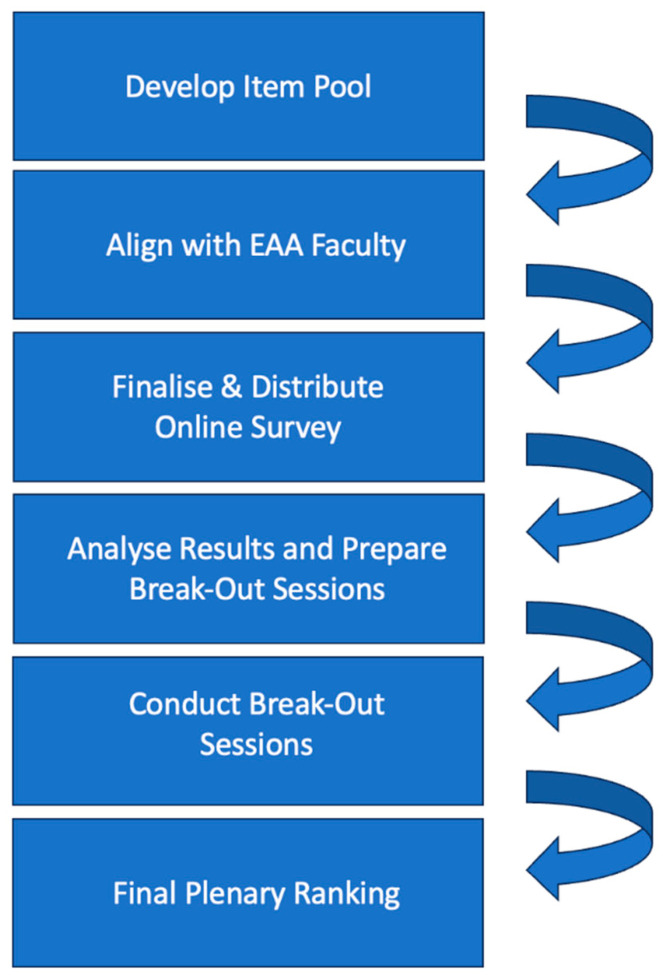
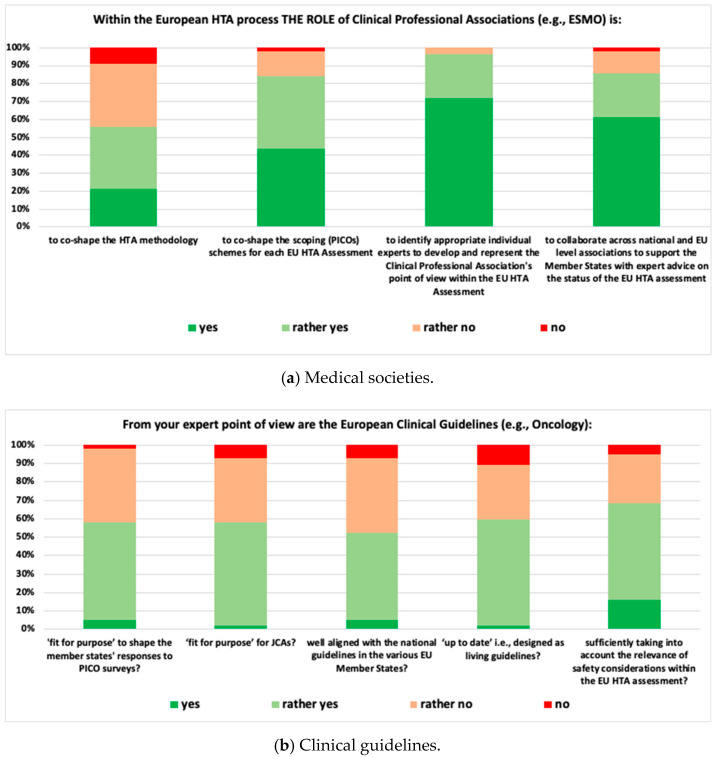
This work aimed to determine the role and action points for the involvement of medical societies in the European Health Technology Assessment (EU HTA) Methods: An online pre-convention survey was developed addressing four areas related to the EU HTA: (i) medical societies' role; (ii) role of clinical guidelines; (iii) interface with the European Society for Medical Oncology Magnitude of Clinical Benefit Scale (ESMO-MCBS); and (iv) approaching 'best-available evidence' (BAE). A descriptive analysis of questionnaire outcomes was conducted to inform the European Access Academy (EAA) Fall Convention 2023. Within the working groups (WGs), action points were identified and prioritised.
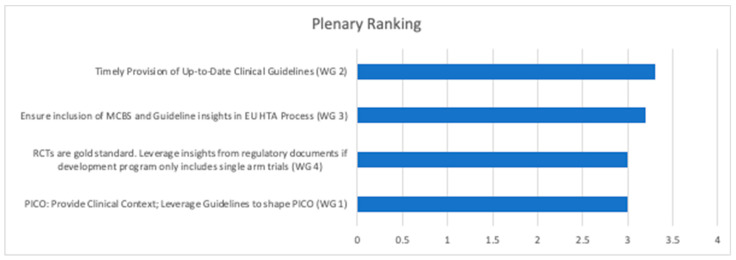
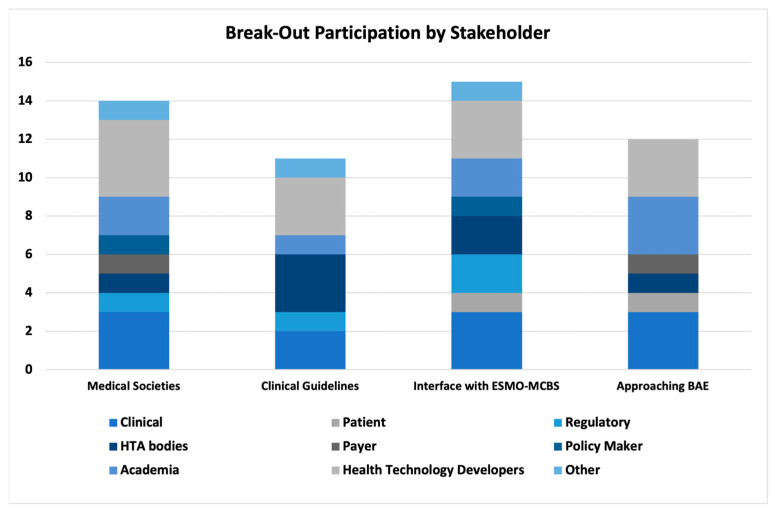
A total of 57 experts from 15 countries responded to the survey. The WGs were attended by (i) 11, (ii) 10, (iii) 12, and (iv) 12 experts, respectively, representing a variety of national backgrounds and stakeholder profiles. The most relevant action points identified were as follows: (i) incorporation of clinical context into population, intervention, comparator, outcomes (PICO) schemes, (ii) timely provision of up-to-date therapeutic guidelines, (iii) ensuring the inclusion of MCBS insights into the EU HTA process, and (iv) considering randomized controlled trials (RCTs) as the gold standard and leveraging regulatory insights if development programs only include single-arm trials.
The involvement of medical societies is a critical success factor for the EU HTA. The identified key action points foster the involvement of patient associations and medical societies.
本研究旨在确定医学协会在欧洲卫生技术评估(EU HTA)中的作用及行动要点。方法:开展了一项会前在线调查,涉及与EU HTA相关的四个领域:(i)医学协会的作用;(ii)临床指南的作用;(iii)与欧洲医学肿瘤学会临床获益量表(ESMO-MCBS)的衔接;(iv)获取“最佳可得证据”(BAE)。对问卷结果进行了描述性分析,以为2023年欧洲准入学会(EAA)秋季会议提供信息。在各工作组(WG)中,确定并优先排列了行动要点。
来自15个国家的57名专家回复了调查。各工作组分别有(i)11名、(ii)10名、(iii)12名和(iv)12名专家参加,他们代表了不同的国家背景和利益相关者概况。确定的最相关行动要点如下:(i)将临床背景纳入人群、干预措施、对照、结局(PICO)方案;(ii)及时提供最新的治疗指南;(iii)确保将MCBS的见解纳入EU HTA流程;(iv)将随机对照试验(RCT)视为金标准,若开发项目仅包括单臂试验,则利用监管见解。
医学协会的参与是EU HTA取得成功的关键因素。确定的关键行动要点促进了患者协会和医学协会的参与。