Julian Elaine, Gianfrate Fabrizio, Sola-Morales Oriol, Mol Peter, Bergmann Jean-François, Salmonson Tomas, Hebborn Ansgar, Grande Mathilde, Ruof Jörg
r-connect ltd, Basel, Switzerland.
University of Ferrara, Ferrara, Italy.
Health Econ Rev. 2022 Jun 2;12(1):30. doi: 10.1186/s13561-022-00379-7.
We conducted a multi-stakeholder survey to determine key areas where a joint European health technology assessment (HTA) could provide 'additional benefit' compared to the status quo of many parallel independent national and subnational assessments.
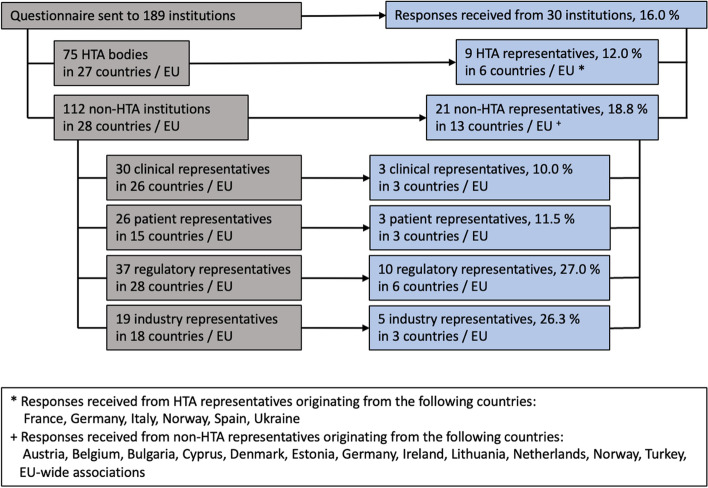
Leveraging three iterative Delphi cycles, a semiquantitative questionnaire was developed covering evidence challenges and heterogeneity of value drivers within HTAs across Europe with a focus on hematology/oncology. The questionnaire consisted of five sections: i) background information; ii) value drivers in HTA assessments today; iii) evolving evidence challenges; iv) heterogeneity of value drivers across Europe; v) impact of Europe's Beating Cancer Plan (EBCP). The questionnaire was circulated across n = 189 stakeholder institutions comprising HTA and regulatory bodies, clinical oncology associations, patient representatives, and industry associations.
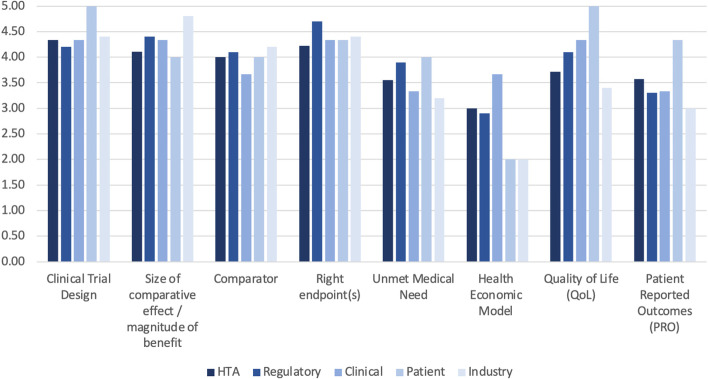
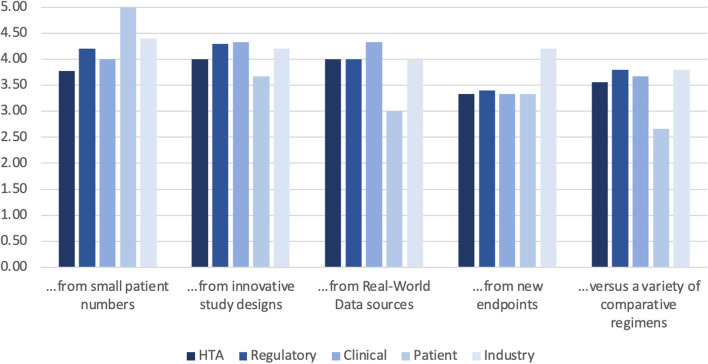
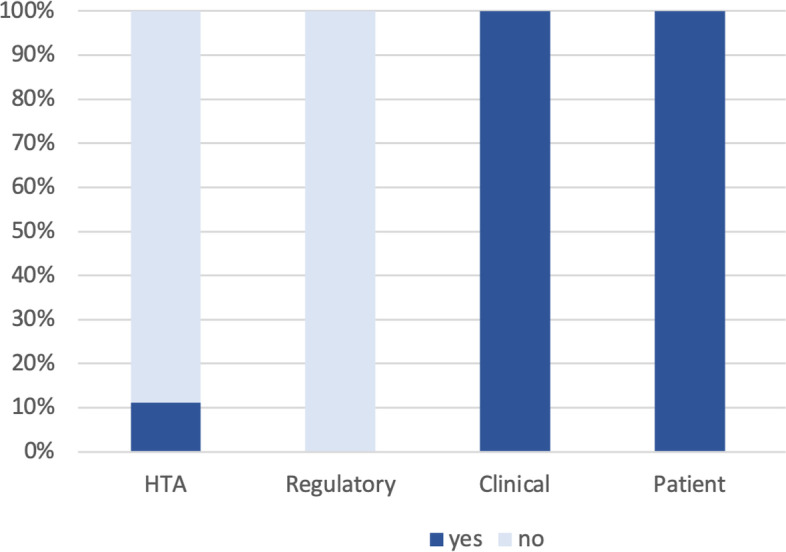
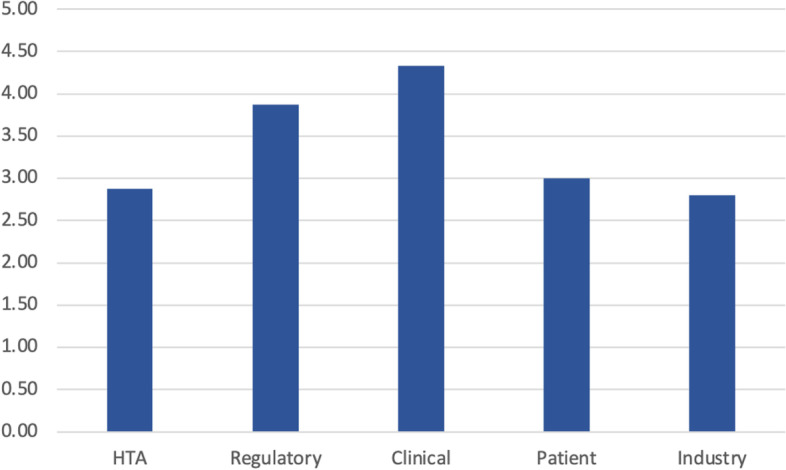
N = 30 responses were received (HTA bodies: 9; regulators: 10; patients' and physicians' associations: 3 each; industry: 5). Overall, 17 countries and EU level institutions were represented in the responses. Consistency across countries and stakeholder groups was high. Most relevant value drivers in HTAs today (scale 1, low to 5, high) were clinical trial design (mean 4.45), right endpoints (mean 4.40), and size of comparative effect (mean 4.33). Small patient numbers (mean 4.28) and innovative study designs (mean 4.1) were considered the most relevant evolving evidence challenges. Heterogeneity between regulatory and HTA evidence requirements and heterogeneity of the various national treatment standards and national HTA evidence requirements was high. All clinical and patient participants stated to have been with EBCP initiatives.
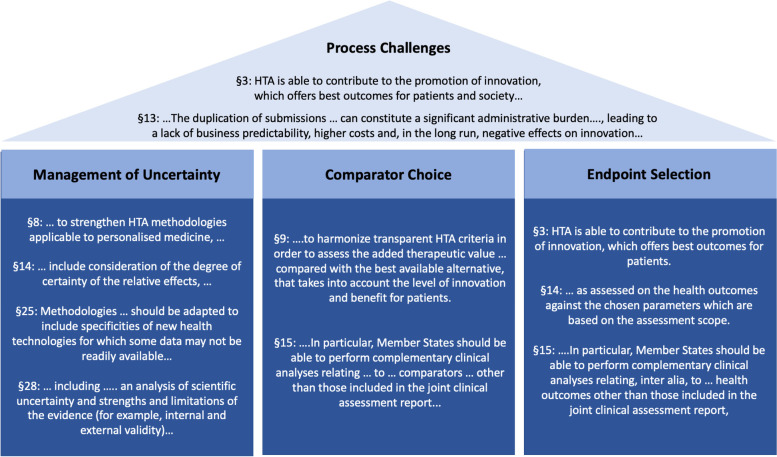
For a European HTA to provide an 'additional benefit' over the multitude of existing national assessments key methodological and process challenges need to be addressed. These include approaches to address uncertainty in clinical development; comparator choice; consistency in approaching patient-relevant endpoints; and a transparent and consistent management of both HTA and regulatory procedures as well as their interface, including all involved stakeholder groups.
我们开展了一项多利益相关方调查,以确定与许多平行的独立国家和次国家级评估的现状相比,联合欧洲卫生技术评估(HTA)能够提供“额外益处”的关键领域。
利用三轮迭代德尔菲法,制定了一份半定量问卷,涵盖欧洲各地卫生技术评估中的证据挑战和价值驱动因素的异质性,重点是血液学/肿瘤学。问卷包括五个部分:i)背景信息;ii)当前卫生技术评估中的价值驱动因素;iii)不断演变的证据挑战;iv)欧洲各地价值驱动因素的异质性;v)欧洲抗癌计划(EBCP)的影响。该问卷在n = 189个利益相关方机构中进行了分发,这些机构包括卫生技术评估和监管机构、临床肿瘤学协会、患者代表和行业协会。
共收到30份回复(卫生技术评估机构:9份;监管机构:10份;患者和医生协会:各3份;行业:5份)。总体而言,回复中代表了17个国家和欧盟层面的机构。国家和利益相关方群体之间的一致性很高。当前卫生技术评估中最相关的价值驱动因素(1分表示低,5分表示高)是临床试验设计(平均4.45分)、正确的终点指标(平均4.40分)和比较效应大小(平均4.33分)。患者数量少(平均4.28分)和创新的研究设计(平均4.1分)被认为是最相关的不断演变的证据挑战。监管和卫生技术评估证据要求之间的异质性以及各国不同治疗标准和国家卫生技术评估证据要求的异质性很高。所有临床和患者参与者均表示参与了欧洲抗癌计划的相关举措。
为使欧洲卫生技术评估比众多现有的国家评估提供“额外益处”,需要解决关键的方法和流程挑战。这些挑战包括应对临床开发中不确定性的方法;对照选择;处理与患者相关终点的一致性;以及对卫生技术评估和监管程序及其接口进行透明和一致的管理,包括所有相关利益方群体。