Department of Internal Medicine, School of Medicine, Ali-Ibn Abi-Talib Hospital, Rafsanjan University of Medical Sciences, Rafsanjan, Iran.
Department of Immunology, School of Medicine, Rafsanjan University of Medical Sciences, Rafsanjan, Iran.
Front Immunol. 2024 Jul 15;15:1387651. doi: 10.3389/fimmu.2024.1387651. eCollection 2024.
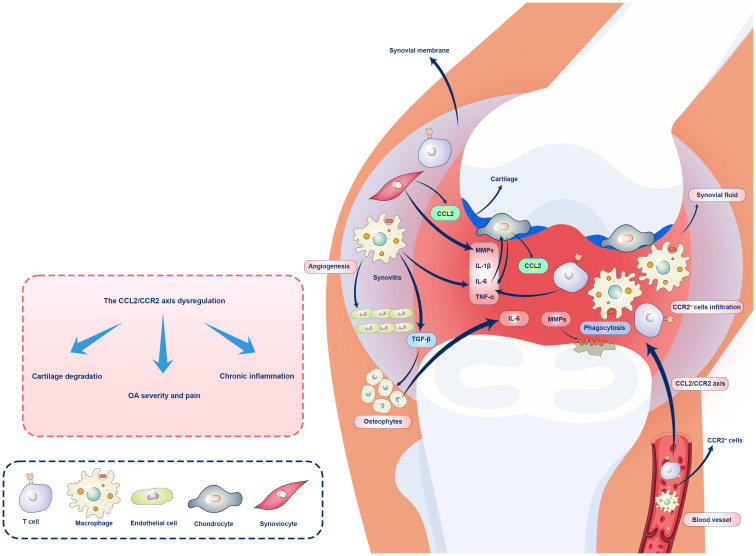
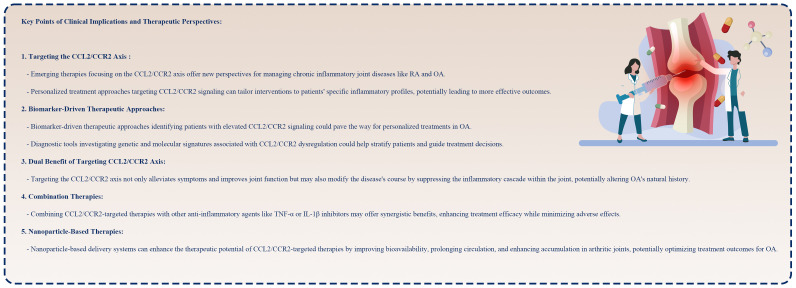
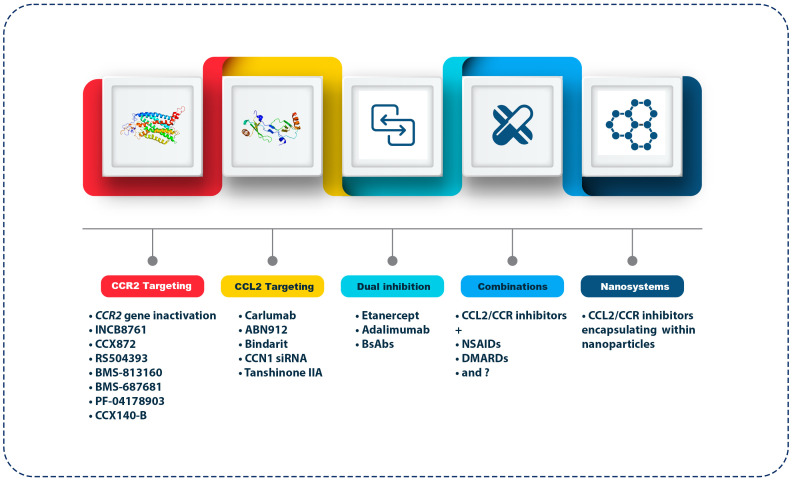
Osteoarthritis (OA) is characterized by a complex interplay of molecular signals orchestrated by the CCL2/CCR2 axis. The pathogenesis of OA has been revealed to be influenced by a multifaceted effect of CCL2/CCR2 signaling on inflammation, cartilage degradation, and joint homeostasis. The CCL2/CCR2 axis promotes immune cell recruitment and tips the balance toward degeneration by influencing chondrocyte behavior. Insights into these intricate pathways will offer novel therapeutic approaches, paving the way for targeted interventions that may redefine OA management in the future. This review article explores the molecular symphony through the lens of the CCL2/CCR2 axis, providing a harmonious blend of current knowledge and future directions on OA treatment. Furthermore, in this study, through a meticulous review of recent research, the key players and molecular mechanisms that amplify the catabolic cascade within the joint microenvironment are identified, and therapeutic approaches to targeting the CCL2/CCR axis are discussed.
骨关节炎(OA)的特征是分子信号的复杂相互作用,由 CCL2/CCR2 轴协调。OA 的发病机制已被揭示受到 CCL2/CCR2 信号对炎症、软骨降解和关节动态平衡的多方面影响。CCL2/CCR2 轴通过影响软骨细胞行为促进免疫细胞募集,并使平衡向退化倾斜。深入了解这些复杂的途径将提供新的治疗方法,为未来可能重新定义 OA 管理的靶向干预铺平道路。本文通过 CCL2/CCR2 轴的视角探索了分子交响乐,提供了 OA 治疗方面当前知识和未来方向的和谐融合。此外,在这项研究中,通过对最近研究的细致回顾,确定了在关节微环境中放大分解代谢级联的关键参与者和分子机制,并讨论了针对 CCL2/CCR 轴的治疗方法。