Institute for Molecular and Translational Cardiology (IMTC), IRCCS Policlinico San Donato, Piazza Malan, 2, 20097 San Donato Milanese, Milan, Italy.
School of Medicine, University Vita-Salute San Raffaele, Via Olgettina, 58, 20132 Milan, Italy.
Eur Heart J. 2024 Oct 21;45(40):4336-4348. doi: 10.1093/eurheartj/ehae480.
Patients suffering from Brugada syndrome (BrS) are predisposed to life-threatening cardiac arrhythmias. Diagnosis is challenging due to the elusive electrocardiographic (ECG) signature that often requires unconventional ECG lead placement and drug challenges to be detected. Although NaV1.5 sodium channel dysfunction is a recognized pathophysiological mechanism in BrS, only 25% of patients have detectable SCN5A variants. Given the emerging role of autoimmunity in cardiac ion channel function, this study explores the presence and potential impact of anti-NaV1.5 autoantibodies in BrS patients.
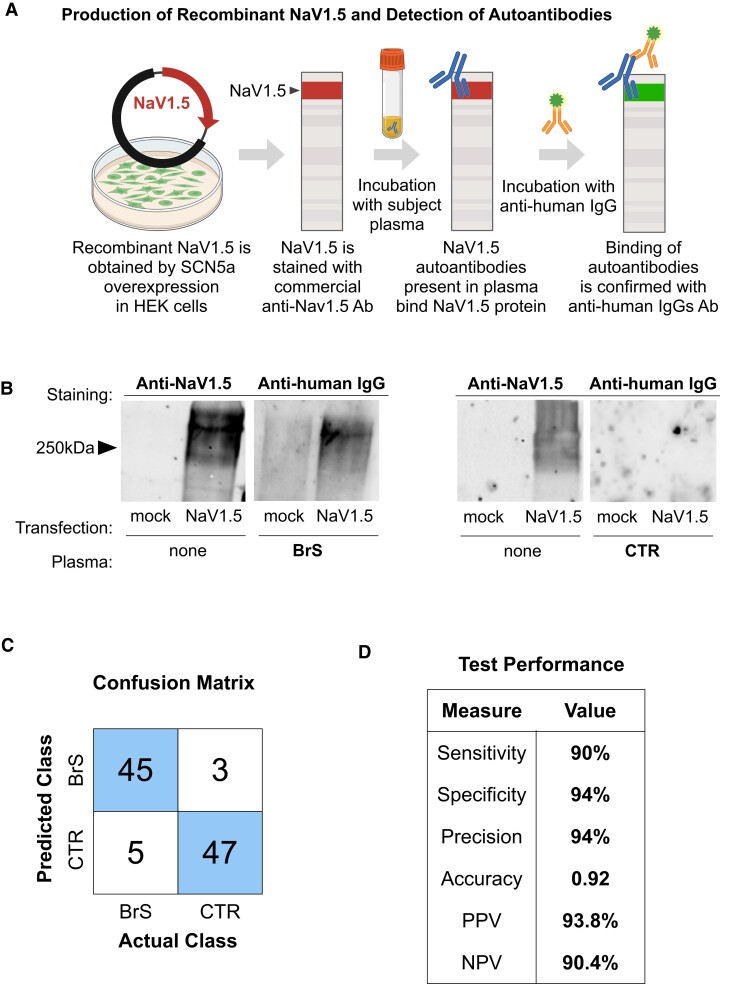
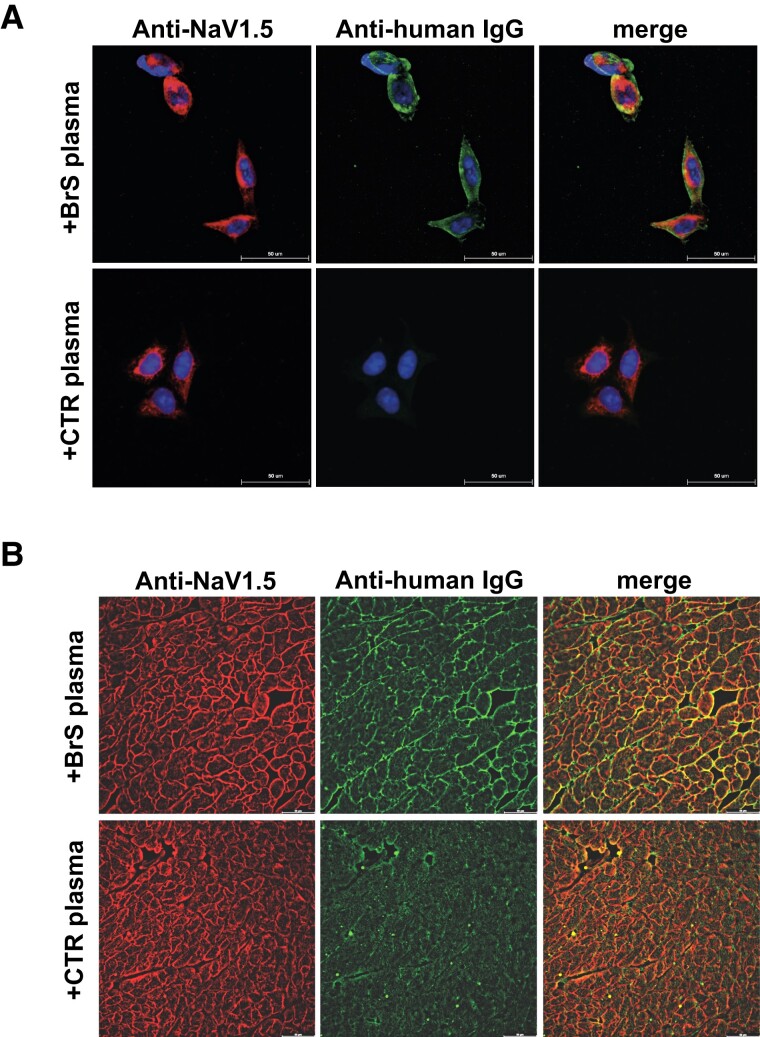
Using engineered HEK293A cells expressing recombinant NaV1.5 protein, plasma from 50 BrS patients and 50 controls was screened for anti-NaV1.5 autoantibodies via western blot, with specificity confirmed by immunoprecipitation and immunofluorescence. The impact of these autoantibodies on sodium current density and their pathophysiological effects were assessed in cellular models and through plasma injection in wild-type mice.
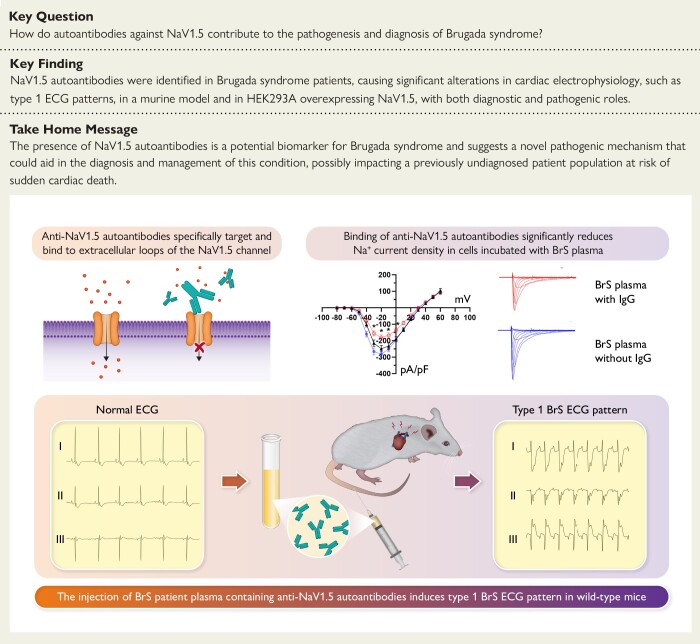
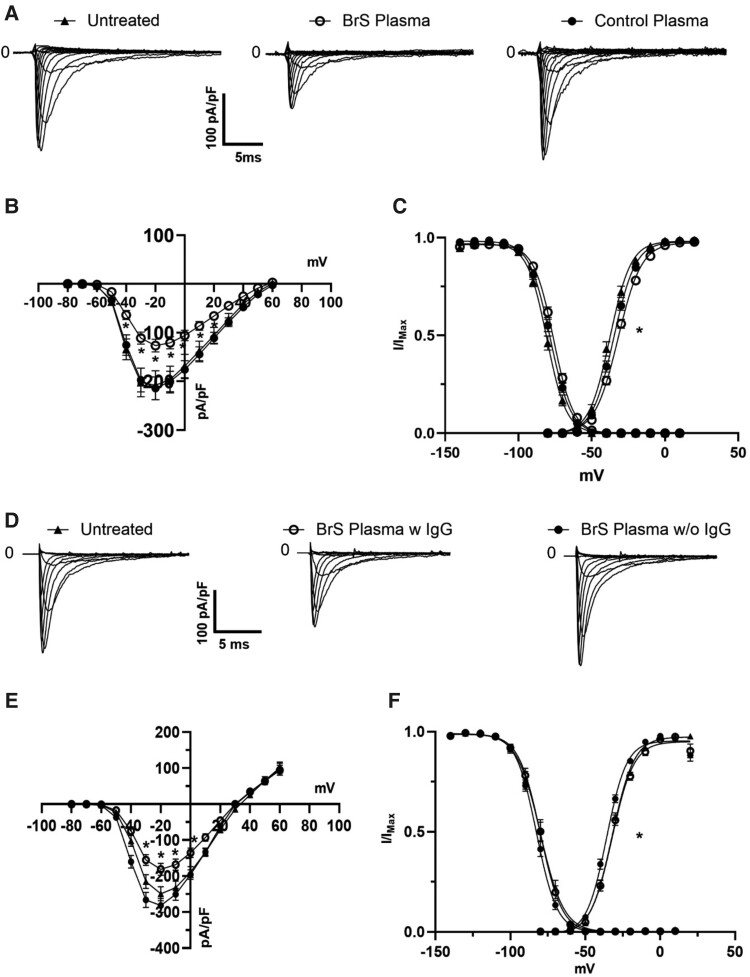
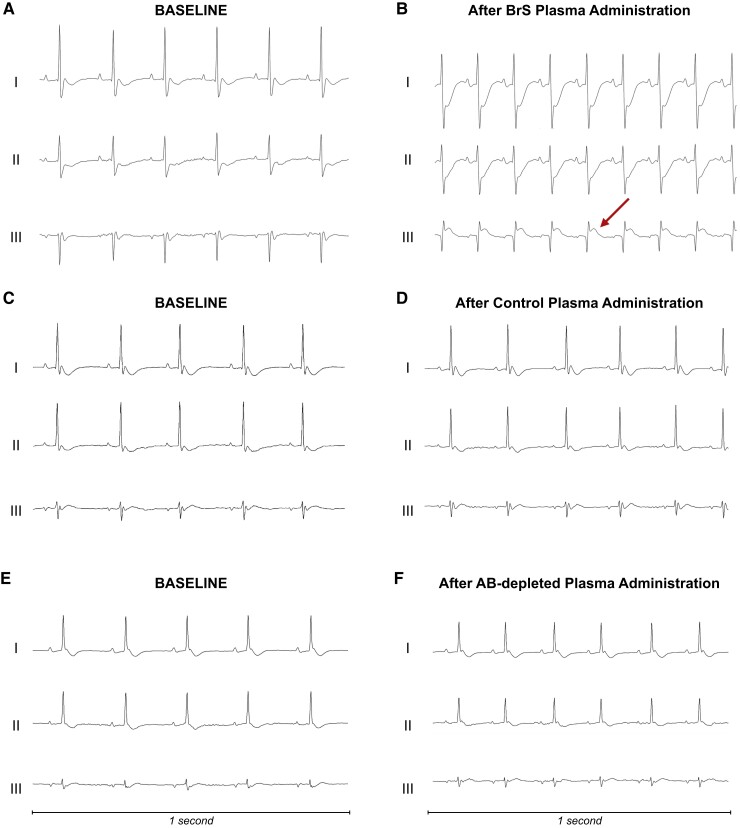
Anti-NaV1.5 autoantibodies were detected in 90% of BrS patients vs. 6% of controls, yielding a diagnostic area under the curve of .92, with 94% specificity and 90% sensitivity. These findings were consistent across varying patient demographics and independent of SCN5A mutation status. Electrophysiological studies demonstrated a significant reduction specifically in sodium current density. Notably, mice injected with BrS plasma showed Brugada-like ECG abnormalities, supporting the pathogenic role of these autoantibodies.
The study demonstrates the presence of anti-NaV1.5 autoantibodies in the majority of BrS patients, suggesting an immunopathogenic component of the syndrome beyond genetic predispositions. These autoantibodies, which could serve as additional diagnostic markers, also prompt reconsideration of the underlying mechanisms of BrS, as evidenced by their role in inducing the ECG signature of the syndrome in wild-type mice. These findings encourage a more comprehensive diagnostic approach and point to new avenues for therapeutic research.
患有布鲁加达综合征(BrS)的患者易发生危及生命的心律失常。由于隐匿性的心电图(ECG)特征,诊断具有挑战性,通常需要非常规的 ECG 导联放置和药物挑战来检测。尽管钠离子通道 NaV1.5 功能障碍是 BrS 的一种公认的病理生理机制,但只有 25%的患者可检测到 SCN5A 变体。鉴于自身免疫在心脏离子通道功能中的新兴作用,本研究探讨了 BrS 患者中抗 NaV1.5 自身抗体的存在及其潜在影响。
使用表达重组 NaV1.5 蛋白的工程化 HEK293A 细胞,通过 Western blot 筛选 50 名 BrS 患者和 50 名对照者的血浆中的抗 NaV1.5 自身抗体,通过免疫沉淀和免疫荧光确认其特异性。通过在细胞模型中以及通过向野生型小鼠注射血浆来评估这些自身抗体对钠电流密度的影响及其病理生理作用。
90%的 BrS 患者检测到抗 NaV1.5 自身抗体,而对照组为 6%,诊断曲线下面积为.92,特异性为 94%,敏感性为 90%。这些发现与不同的患者人群和 SCN5A 突变状态无关。电生理研究表明,钠电流密度显著降低。值得注意的是,注射 BrS 血浆的小鼠出现 Brugada 样 ECG 异常,支持这些自身抗体的致病性作用。
该研究表明,大多数 BrS 患者存在抗 NaV1.5 自身抗体,提示该综合征存在除遗传易感性以外的免疫病理成分。这些自身抗体可作为额外的诊断标志物,也促使重新考虑 BrS 的潜在机制,因为它们在诱导野生型小鼠综合征的 ECG 特征方面发挥了作用。这些发现鼓励采取更全面的诊断方法,并为治疗研究指明了新的方向。