Shanghai Key Laboratory of Health Identification and Assessment/Laboratory of TCM Four Diagnostic Information, Shanghai University of Traditional Chinese Medicine, 1200 Cailun Road, Pudong New Area, Shanghai, 201203, China.
Longhua Hospital Shanghai University of Traditional Chinese Medicine, 725 South Wanping Road, Shanghai, China.
Sci Rep. 2024 Jul 30;14(1):17574. doi: 10.1038/s41598-024-68261-6.
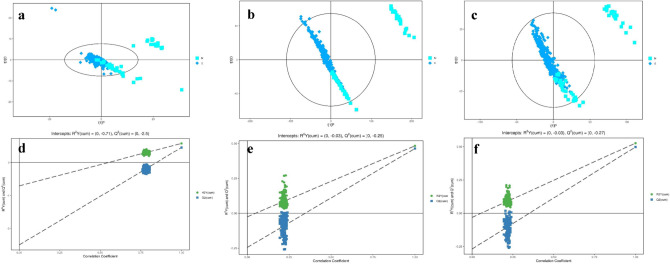
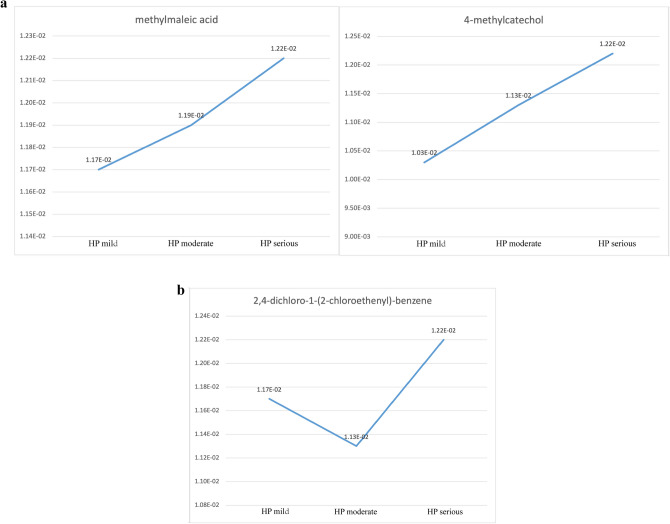
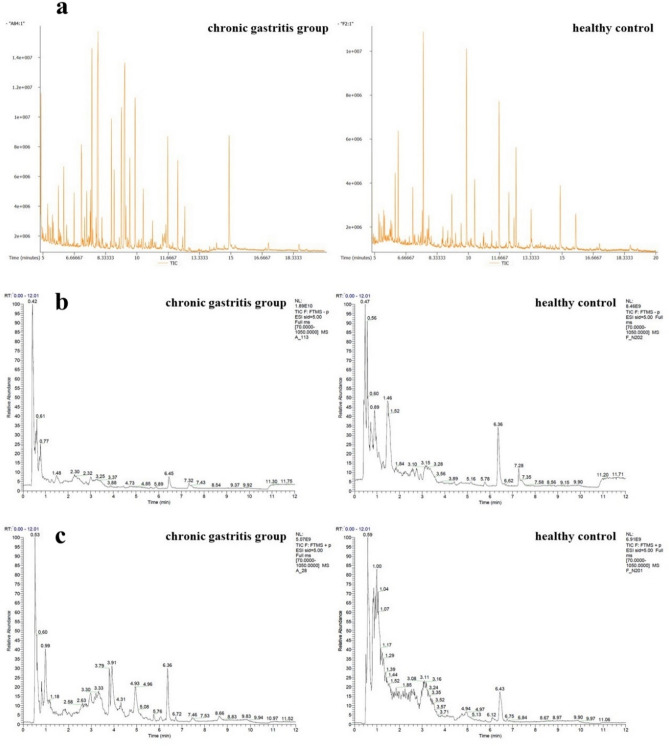
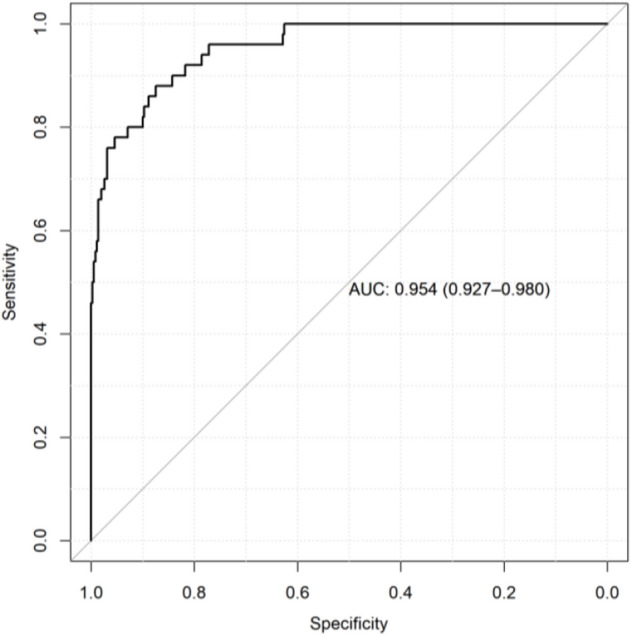
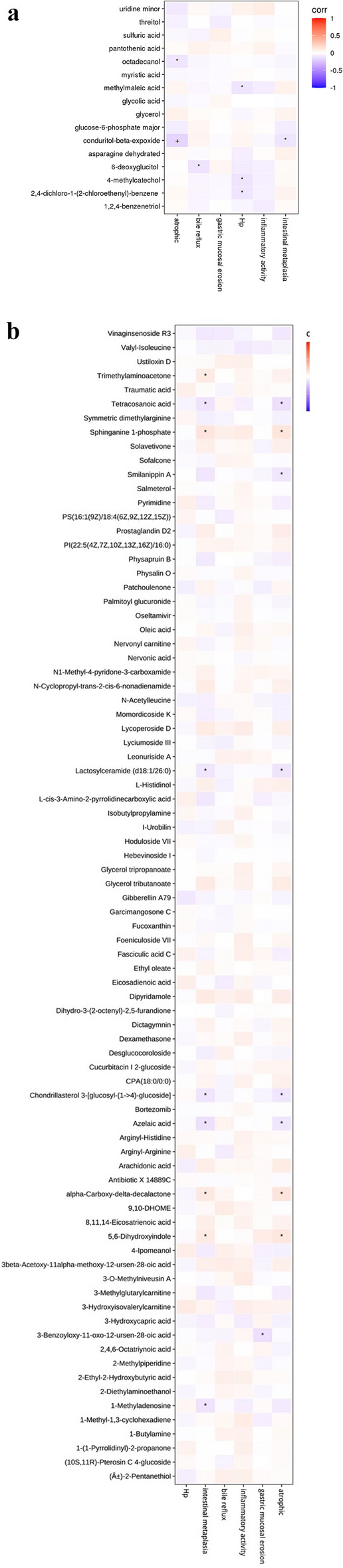
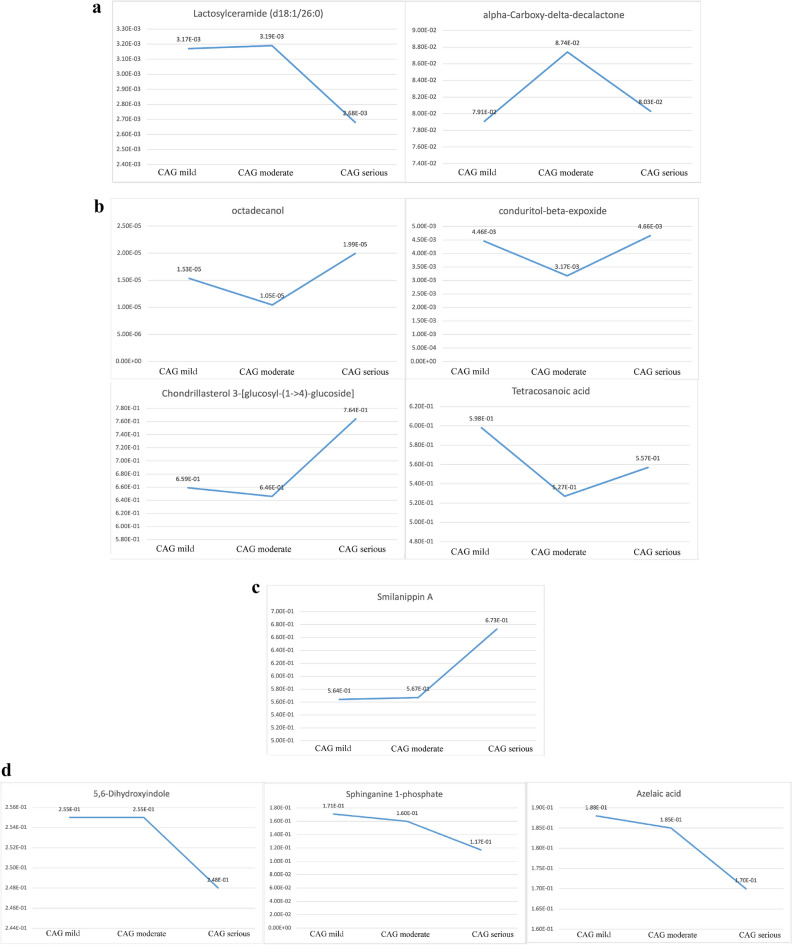
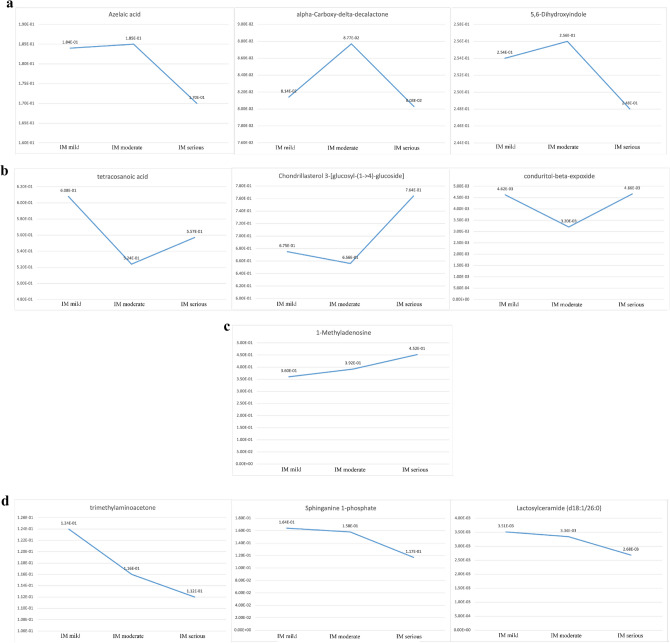
The changes in tongue coating metabolites in patients with chronic gastritis (CG) under different gastroscopy indicators were analyzed, and these metabolites were screened for potential non-invasive biomarkers to assist in the diagnosis of chronic gastritis. The technology of gas chromatography and liquid chromatography combined with mass spectrometry has been used to more comprehensively detect tongue coating metabolites of 350 CG patients. Spearman correlation analysis and random forest algorithm were used to screen metabolites that can serve as potential biomarkers. Compared with healthy individuals, CG group showed significant changes in the content of 101 metabolites, with an increase in the content of 54 metabolites and a decrease in the content of 47 metabolites. These differential metabolites are mainly composed of 47 lipids and lipid like substances. 1 metabolite was associated with bile reflux, 1 metabolite was associated with gastric mucosal erosion, 10 metabolites were associated with atrophy, 10 metabolites were associated with intestinal metaplasia, and 3 metabolites were associated with Helicobacter pylori infection. The ROC model composed of 5 metabolites can distinguish between CG group and healthy individuals, with an accuracy of 95.4%. The ROC model composed of 5,6-Dihydroxyindole can distinguish between chronic superficial gastritis group and chronic atrophic gastritis group, with an accuracy of 75.3%. The lipids and lipid like metabolites were the main abnormal metabolites in patients with chronic gastritis. It was worth noting that the content of Sphinganine 1-phase, 4-Ipomenol, and Nervonic acid in tongue coating increased, and the content of 1-Methyladenosine and 3-Hydroxycapric acid decreased, which helped to identify CG patients. The decrease in the content of 5,6-dihydroxyindole reminded patients that the development trend of CG was shifting from superficial to atrophic or even intestinal metaplasia. The detection of these metabolic markers of tongue coating was expected to be developed as a non-invasive and convenient technology in the future to assist us in monitoring and diagnosing the occurrence and development of CG.
分析了不同胃镜指标下慢性胃病(CG)患者舌涂层代谢物的变化,筛选这些代谢物作为潜在的非侵入性生物标志物,辅助慢性胃病的诊断。采用气相色谱和液相色谱与质谱联用技术,对 350 例 CG 患者的舌涂层代谢物进行了更全面的检测。采用 Spearman 相关分析和随机森林算法筛选潜在的生物标志物。与健康个体相比,CG 组的 101 种代谢物含量发生了显著变化,其中 54 种代谢物含量增加,47 种代谢物含量减少。这些差异代谢物主要由 47 种脂质和类脂物质组成。1 种代谢物与胆汁反流有关,1 种代谢物与胃黏膜糜烂有关,10 种代谢物与萎缩有关,10 种代谢物与肠化生有关,3 种代谢物与幽门螺杆菌感染有关。由 5 种代谢物组成的 ROC 模型可区分 CG 组和健康个体,准确率为 95.4%。由 5,6-二羟吲哚组成的 ROC 模型可区分慢性浅表性胃炎组和慢性萎缩性胃炎组,准确率为 75.3%。脂质和类脂代谢物是慢性胃病患者的主要异常代谢物。值得注意的是,舌涂层中 Sphinganine 1-phase、4-Ipomenol 和神经酸的含量增加,1-甲基腺苷和 3-羟基辛酸的含量减少,有助于识别 CG 患者。5,6-二羟吲哚含量的减少提醒患者 CG 的发展趋势正在从浅表性向萎缩性甚至肠化生转变。这些舌涂层代谢标志物的检测有望在未来开发为一种非侵入性和方便的技术,以协助我们监测和诊断 CG 的发生和发展。