Deng Jialin, Dai Shixuan, Liu Shi, Tu Liping, Cui Ji, Hu Xiaojuan, Qiu Xipeng, Lu Hao, Jiang Tao, Xu Jiatuo
Department of College of Traditional Chinese Medicine, Shanghai University of Traditional Chinese Medicine, Shanghai, 201203, China.
School of Computer Science, Fudan University, 1200 Cailun Road, Pudong New Area, Shanghai, 201203, China.
Chin Med. 2025 May 29;20(1):78. doi: 10.1186/s13020-025-01118-w.
This study aimed to analyze the tongue image features and oral microbial markers in different TCM syndromes related to metabolic dysfunction-associated steatotic liver disease (MASLD).
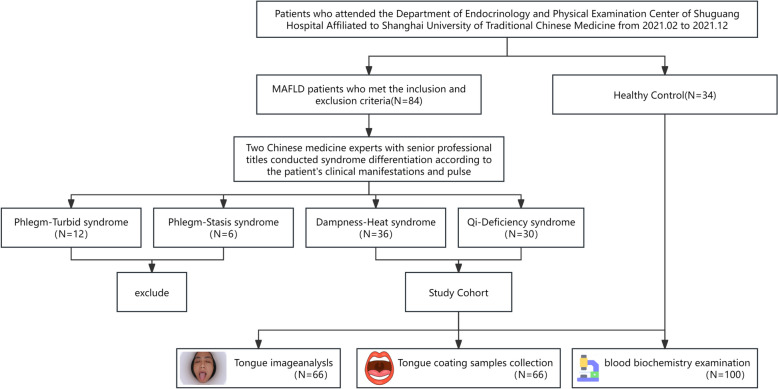
This study involved 34 healthy volunteers and 66 MASLD patients [36 with Dampness-Heat (DH) and 30 with Qi-Deficiency (QD) syndrome]. Oral microbiome analysis was conducted through 16S rRNA sequencing. Tongue image feature extraction used the Uncertainty Augmented Context Attention Network (UACANet), while syndrome classification was performed using five different machine learning methods based on tongue features and oral microbiota.
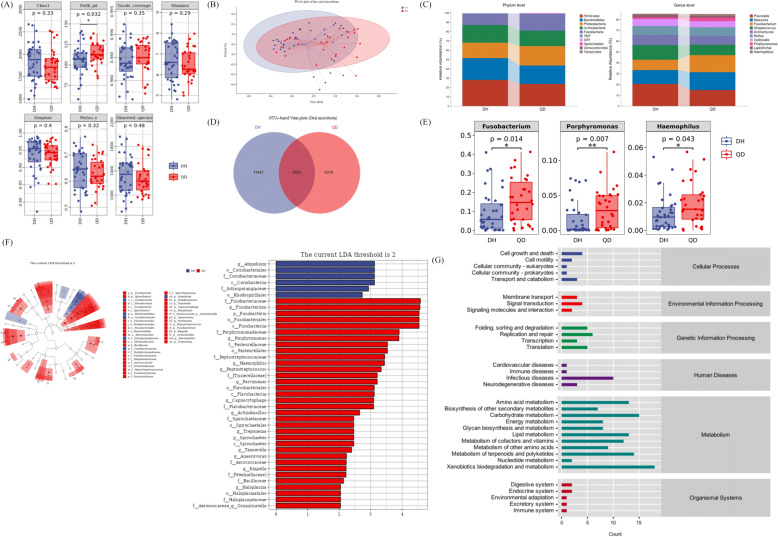
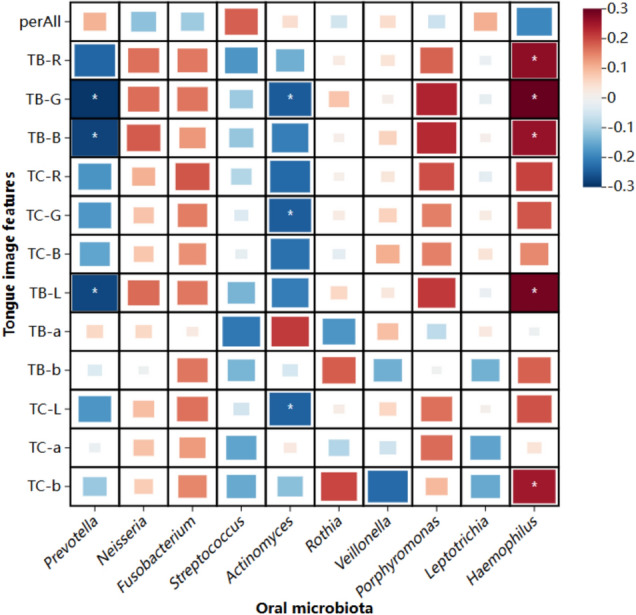
Significant differences in tongue color, coating, and oral microbiota were noted between DH band QD syndromes in MASLD patients. DH patients exhibited a red-crimson tongue color with a greasy coating and enriched Streptococcus and Rothia on the tongue. In contrast, QD patients displayed a pale tongue with higher abundances of Neisseria, Fusobacterium, Porphyromonas and Haemophilus. Combining tongue image characteristics with oral microbiota differentiated DH and QD syndromes with an AUC of 0.939 and an accuracy of 85%.
This study suggests that tongue characteristics are related to microbial metabolism, and different MASLD syndromes possess distinct biomarkers, supporting syndrome classification.
本研究旨在分析与代谢功能障碍相关脂肪性肝病(MASLD)不同中医证型的舌象特征及口腔微生物标志物。
本研究纳入34名健康志愿者和66名MASLD患者[36例湿热(DH)证和30例气虚(QD)证]。通过16S rRNA测序进行口腔微生物组分析。舌象特征提取采用不确定性增强上下文注意力网络(UACANet),而证型分类则基于舌象特征和口腔微生物群,使用五种不同的机器学习方法进行。
MASLD患者中,DH证和QD证在舌色、舌苔及口腔微生物群方面存在显著差异。DH证患者表现为舌质红绛、苔腻,舌面链球菌和罗氏菌富集。相比之下,QD证患者舌质淡,奈瑟菌、梭杆菌、卟啉单胞菌和嗜血杆菌丰度较高。结合舌象特征与口腔微生物群对DH证和QD证进行鉴别,曲线下面积(AUC)为0.939,准确率为85%。
本研究表明舌象特征与微生物代谢相关,不同的MASLD证型具有独特的生物标志物,支持证型分类。