Shenzhen Stomatology Hospital (Pingshan), Southern Medical University, Shenzhen, China.
Key Laboratory of Shaanxi Province for Craniofacial Precision Medicine Research, Laboratory Center of Stomatology, Department of Paediatric Dentistry, College of Stomatology, Xi'an Jiaotong University, Xi'an, China.
Int J Oral Sci. 2024 Aug 1;16(1):53. doi: 10.1038/s41368-024-00313-z.
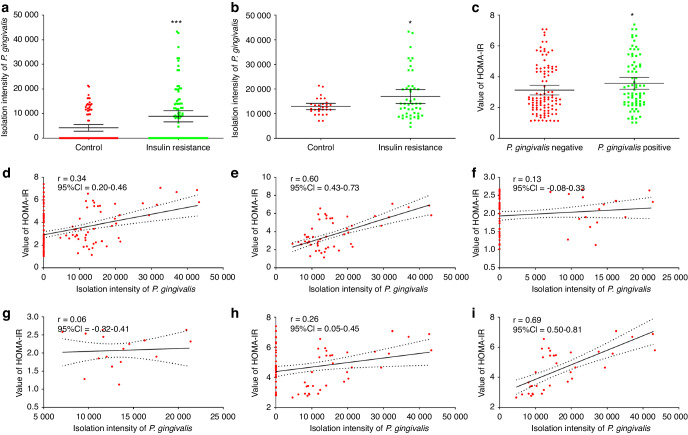
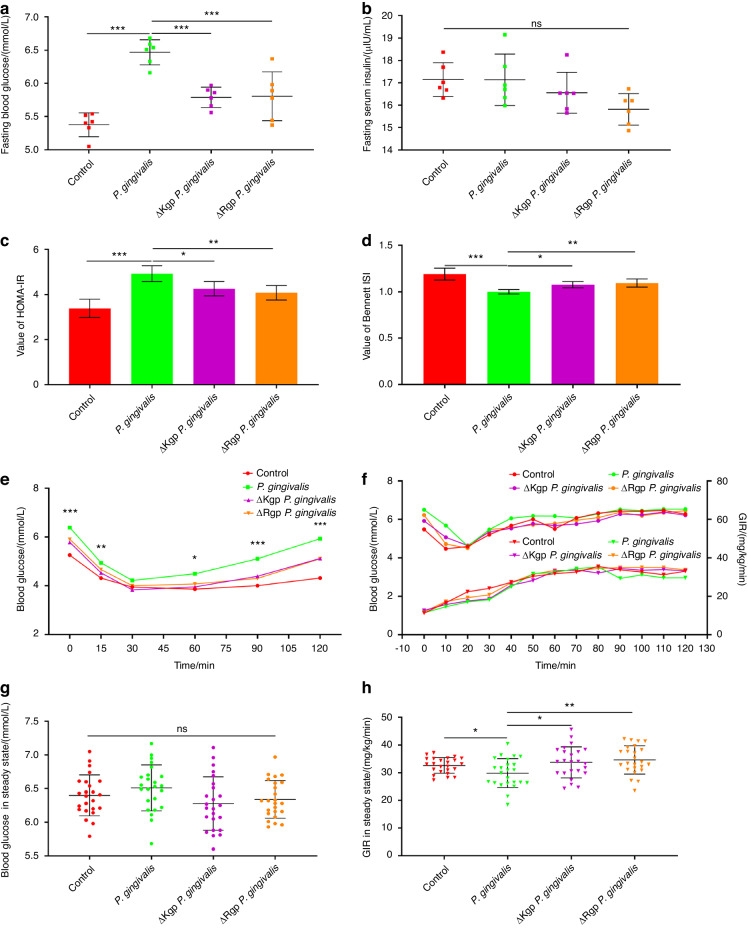
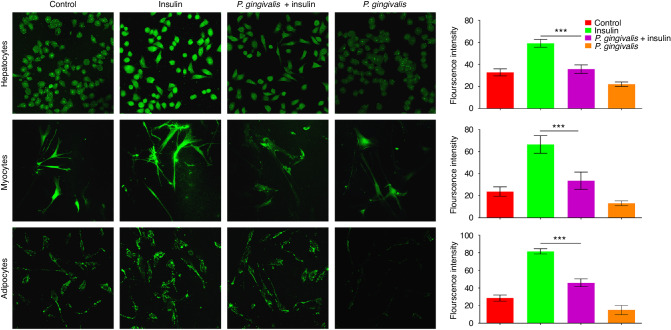
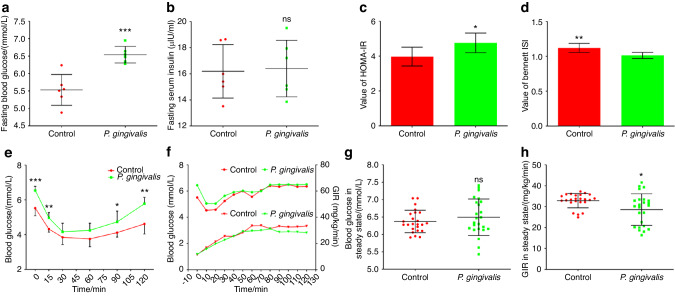
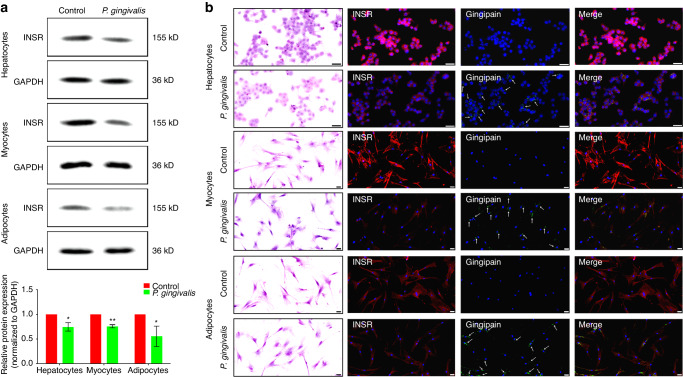
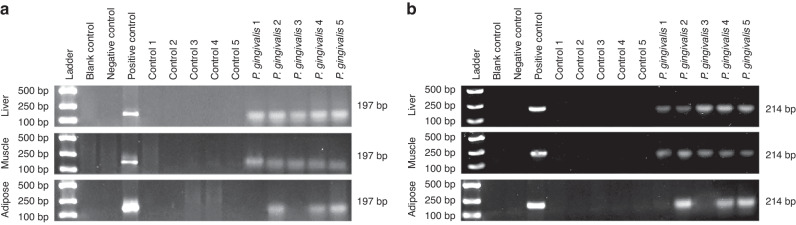
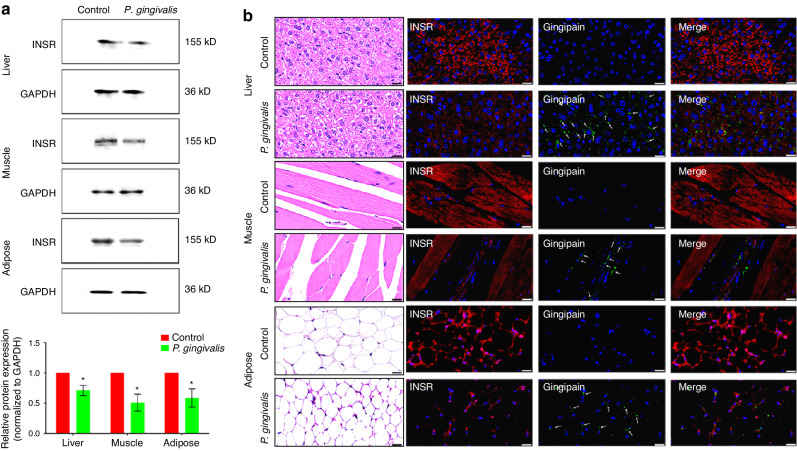
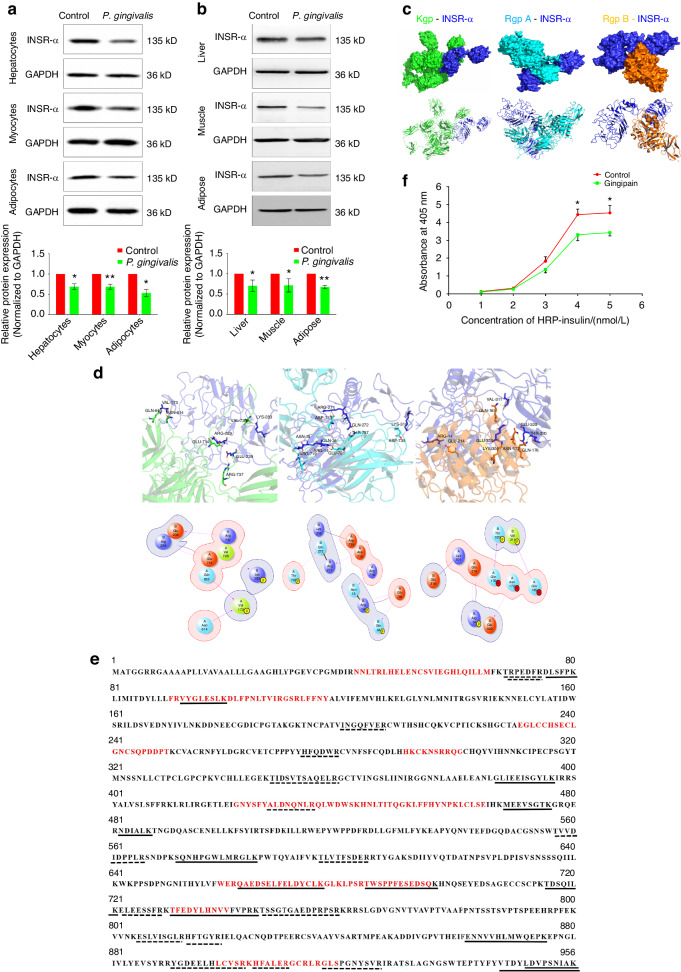
Periodontitis is a critical risk factor for the occurrence and development of diabetes. Porphyromonas gingivalis may participate in insulin resistance (IR) caused by periodontal inflammation, but the functional role and specific mechanisms of P. gingivalis in IR remain unclear. In the present study, clinical samples were analysed to determine the statistical correlation between P. gingivalis and IR occurrence. Through culturing of hepatocytes, myocytes, and adipocytes, and feeding mice P. gingivalis orally, the functional correlation between P. gingivalis and IR occurrence was further studied both in vitro and in vivo. Clinical data suggested that the amount of P. gingivalis isolated was correlated with the Homeostatic Model Assessment for IR score. In vitro studies suggested that coculture with P. gingivalis decreased glucose uptake and insulin receptor (INSR) protein expression in hepatocytes, myocytes, and adipocytes. Mice fed P. gingivalis tended to undergo IR. P. gingivalis was detectable in the liver, skeletal muscle, and adipose tissue of experimental mice. The distribution sites of gingipain coincided with the downregulation of INSR. Gingipain proteolysed the functional insulin-binding region of INSR. Coculture with P. gingivalis significantly decreased the INSR-insulin binding ability. Knocking out gingipain from P. gingivalis alleviated the negative effects of P. gingivalis on IR in vivo. Taken together, these findings indicate that distantly migrated P. gingivalis may directly proteolytically degrade INSR through gingipain, thereby leading to IR. The results provide a new strategy for preventing diabetes by targeting periodontal pathogens and provide new ideas for exploring novel mechanisms by which periodontal inflammation affects the systemic metabolic state.
牙周炎是糖尿病发生和发展的关键危险因素。牙龈卟啉单胞菌可能参与牙周炎引起的胰岛素抵抗(IR),但牙龈卟啉单胞菌在 IR 中的功能作用和具体机制尚不清楚。本研究通过分析临床样本,确定牙龈卟啉单胞菌与 IR 发生之间的统计学相关性。通过体外培养肝细胞、肌细胞和脂肪细胞,并经口给小鼠喂食牙龈卟啉单胞菌,进一步研究了牙龈卟啉单胞菌与 IR 发生之间的功能相关性。临床数据表明,分离出的牙龈卟啉单胞菌数量与胰岛素抵抗评估的稳态模型评估(HOMA-IR)评分相关。体外研究表明,与牙龈卟啉单胞菌共培养会降低肝细胞、肌细胞和脂肪细胞中的葡萄糖摄取和胰岛素受体(INSR)蛋白表达。喂食牙龈卟啉单胞菌的小鼠倾向于发生 IR。实验小鼠的肝脏、骨骼肌和脂肪组织中可检测到牙龈卟啉单胞菌。牙龈蛋白酶的分布部位与 INSR 的下调相吻合。牙龈蛋白酶蛋白水解 INSR 的功能性胰岛素结合区。与牙龈卟啉单胞菌共培养显著降低了 INSR-胰岛素的结合能力。从牙龈卟啉单胞菌中敲除牙龈蛋白酶减轻了牙龈卟啉单胞菌对体内 IR 的负面影响。综上所述,这些发现表明,远距离迁移的牙龈卟啉单胞菌可能通过牙龈蛋白酶直接蛋白水解降解 INSR,从而导致 IR。研究结果为通过靶向牙周病原体预防糖尿病提供了新策略,并为探索牙周炎炎症影响全身代谢状态的新机制提供了新思路。