Saunders Thomas E, Manning Lee-Anne M, Avila Gonzalo A, Holwell Gregory I, Park Kye Chung
Te Kura Mātauranga Koiora, School of Biological Sciences, Waipapa Taumata Rau, University of Auckland, Private Bag 92019, Auckland, New Zealand.
The New Zealand Institute for Plant & Food Research Limited, Auckland, New Zealand.
J Chem Ecol. 2024 Dec;50(12):1056-1066. doi: 10.1007/s10886-024-01533-7. Epub 2024 Aug 3.
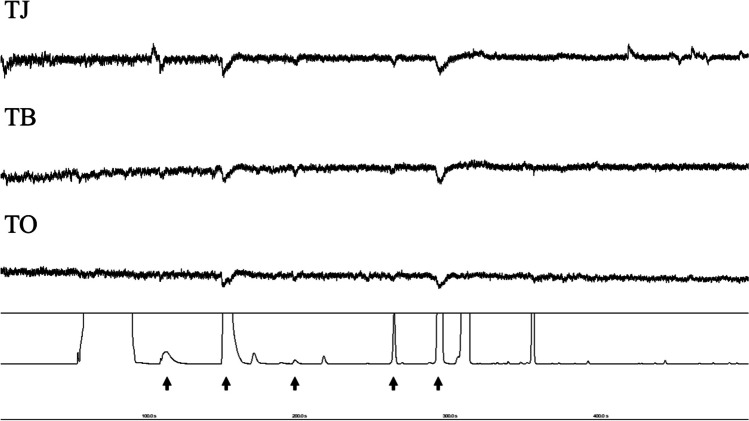
Parasitoid biological control agents rely heavily on olfaction to locate their hosts. Chemical cues associated with hosts and non-hosts are known to influence the expression of host preferences and host-specificity. A better understanding of how and why parasitoids attack some species and not others, based on volatile organic compounds associated with potential hosts, can provide key information on the parasitoid's host preferences, which could be applied to pre-release risk assessments for classical biological control agents. Electrophysiological techniques such as electroantennography (EAG) and GC-EAD (gas chromatography coupled with electroantennographic detection) are widely used to identify bioactive semiochemicals. But the application of these techniques to understanding how chemical ecological cues mediate parasitoid host specificity has not been as thoroughly explored. We conducted GC-EAD and EAG studies to identify olfactory-active compounds associated with adult females of nine stink bug species from Aotearoa/New Zealand on the antennae of three closely related parasitoid species: Trissolcus japonicus Ashmead, a pre-emptively (= proactively) approved biocontrol agent against brown marmorated stink bug; T. basalis (Wollaston), a biocontrol agent introduced against Nezara viridula L. in 1949; and T. oenone Johnson, a native Australasian pentatomid parasitoid. Eight compounds associated with stink bugs elicited antennal responses from all three parasitoids, and we were able to identify seven of these. (E)-2-hexenal, (E)-4-oxo-2-hexenal, (E)-2-octenal and (E)-2-decenal generally elicited stronger responses in the three parasitoids, while n-tridecane, n-dodecane, and (E)-2-decenyl acetate elicited weaker responses. We discuss how and why the results from electrophysiological experiments can be applied to non-target risk assessments within biological control programmes.
寄生性生物防治剂在很大程度上依赖嗅觉来定位宿主。已知与宿主和非宿主相关的化学线索会影响宿主偏好和宿主特异性的表达。基于与潜在宿主相关的挥发性有机化合物,更好地理解寄生性生物防治剂如何以及为何攻击某些物种而不攻击其他物种,可为寄生性生物防治剂的宿主偏好提供关键信息,这可应用于经典生物防治剂的释放前风险评估。诸如触角电位(EAG)和气相色谱 - 触角电位检测联用(GC - EAD)等电生理技术被广泛用于鉴定具有生物活性的信息素。但这些技术在理解化学生态线索如何介导寄生性生物防治剂的宿主特异性方面的应用尚未得到充分探索。我们进行了GC - EAD和EAG研究,以鉴定与来自新西兰的九种椿象成虫雌性相关的嗅觉活性化合物,这些化合物存在于三种近缘寄生性物种的触角上:日本卵蜂Trissolcus japonicus Ashmead,一种已被预先(=主动)批准用于防治褐边绿刺蛾的生物防治剂;基底卵蜂T. basalis(沃拉斯顿),1949年引入用于防治稻绿蝽Nezara viridula L.的生物防治剂;以及澳大拉西亚本地蝽象寄生蜂T. oenone Johnson。与椿象相关的八种化合物引起了所有三种寄生性物种的触角反应,我们能够鉴定出其中七种。(E)-2 - 己烯醛、(E)-4 - 氧代 - 2 - 己烯醛、(E)-2 - 辛烯醛和(E)-2 - 癸烯醛通常在这三种寄生性物种中引起更强的反应,而正十三烷、正十二烷和(E)-2 - 癸烯基乙酸酯引起的反应较弱。我们讨论了电生理实验结果如何以及为何可应用于生物防治计划中的非靶标风险评估。