Department of Liver Surgery and Transplantation, Liver Cancer Institute, Zhongshan Hospital, Fudan University, Key Laboratory of Carcinogenesis and Cancer Invasion (Fudan University), Ministry of Education, 136 Yi Xue Yuan Road, Shanghai, 200032, China.
Shanghai Key Laboratory of Organ Transplantation, Zhongshan Hospital, Fudan University, Shanghai, 200032, China.
Mol Cancer. 2024 Aug 2;23(1):157. doi: 10.1186/s12943-024-02062-3.
Tumor heterogeneity presents a formidable challenge in understanding the mechanisms driving tumor progression and metastasis. The heterogeneity of hepatocellular carcinoma (HCC) in cellular level is not clear.
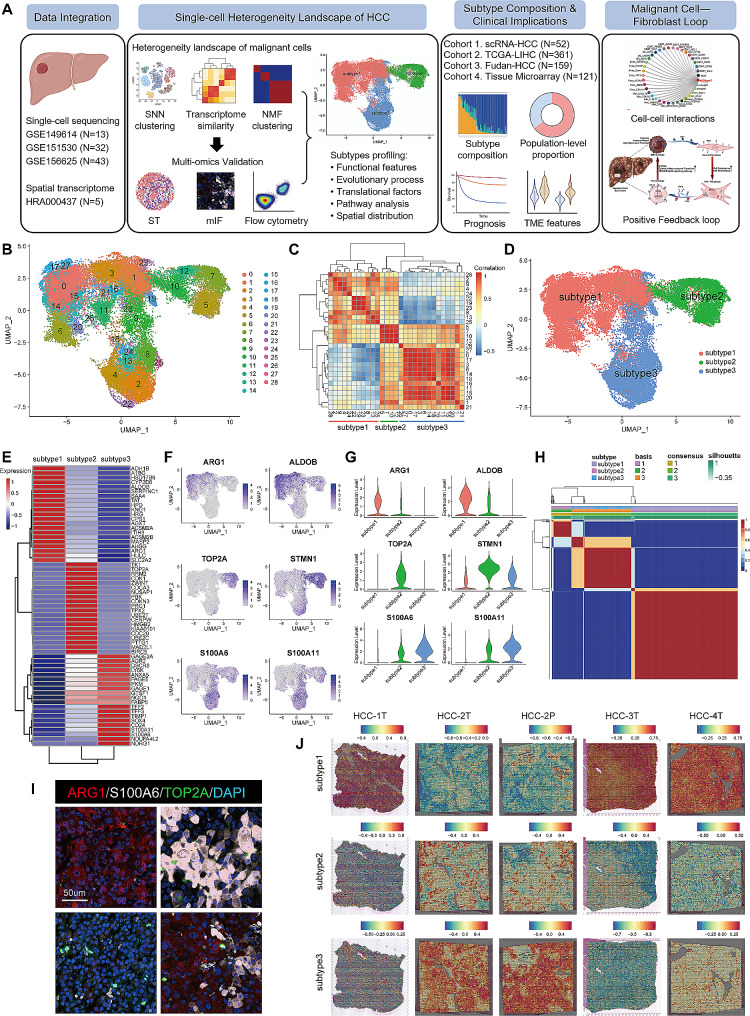
Integration analysis of single-cell RNA sequencing data and spatial transcriptomics data was performed. Multiple methods were applied to investigate the subtype of HCC tumor cells. The functional characteristics, translation factors, clinical implications and microenvironment associations of different subtypes of tumor cells were analyzed. The interaction of subtype and fibroblasts were analyzed.
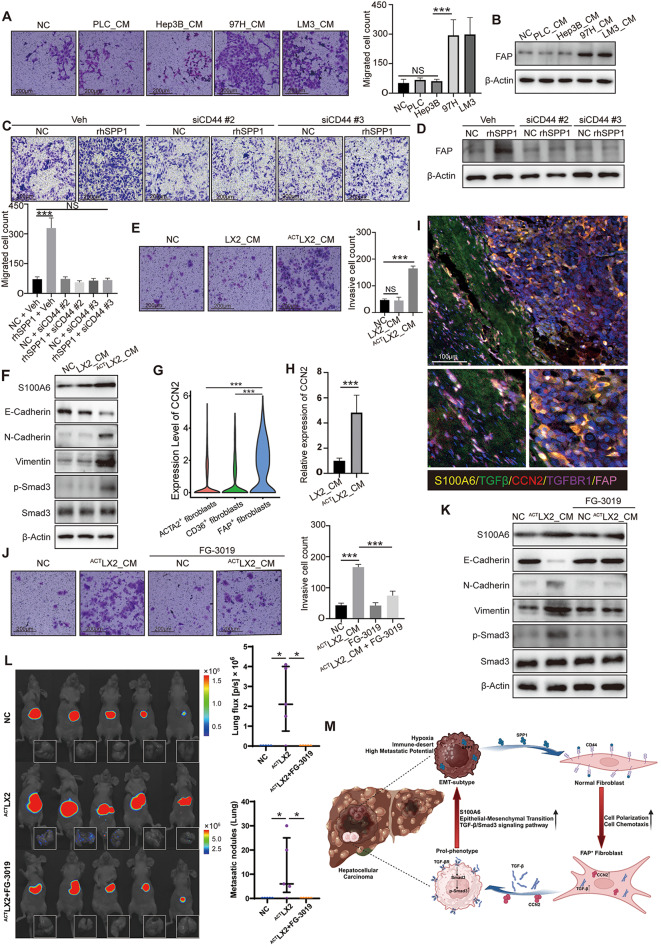
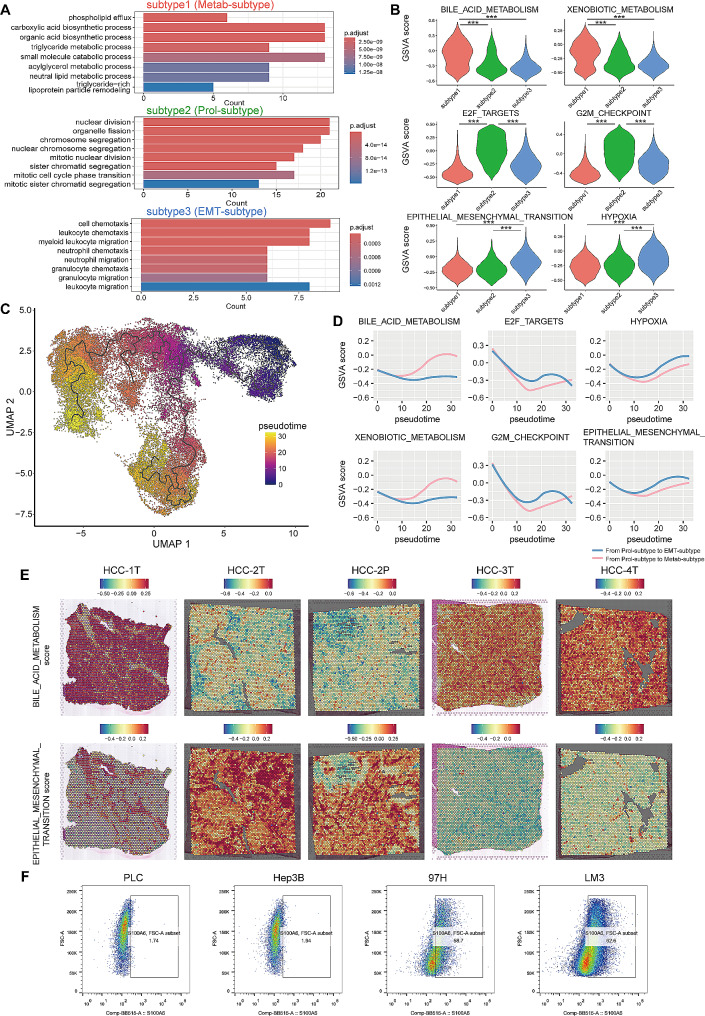
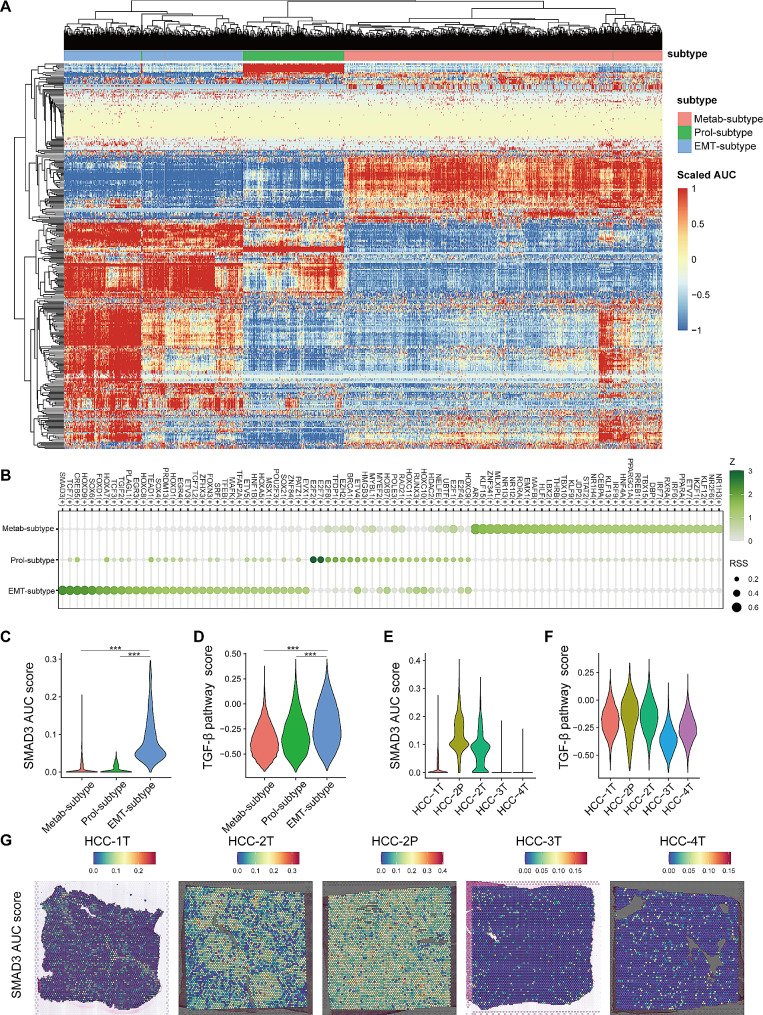
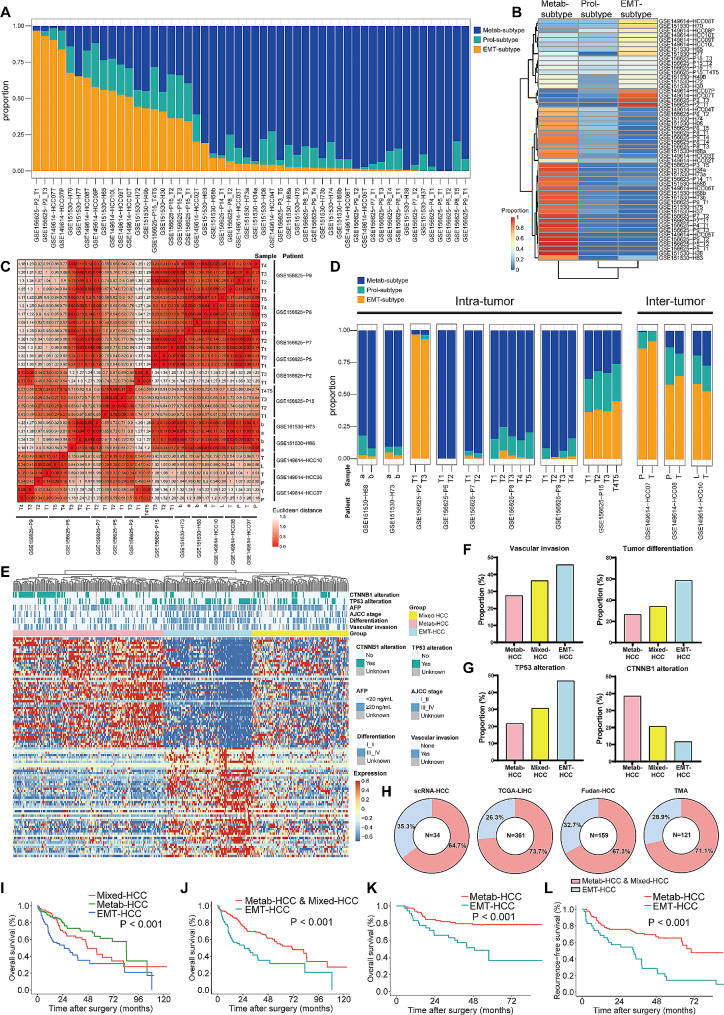
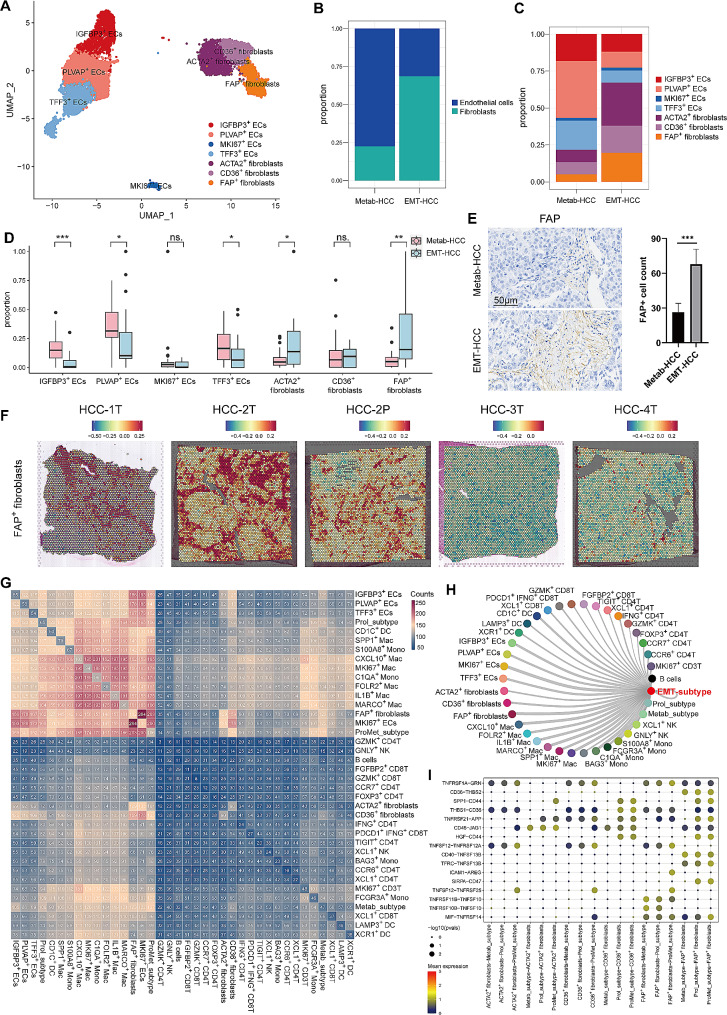
We established a heterogeneity landscape of HCC malignant cells by integrated 52 single-cell RNA sequencing data and 5 spatial transcriptomics data. We identified three subtypes in tumor cells, including ARG1 metabolism subtype (Metab-subtype), TOP2A proliferation phenotype (Prol-phenotype), and S100A6 pro-metastatic subtype (EMT-subtype). Enrichment analysis found that the three subtypes harbored different features, that is metabolism, proliferating, and epithelial-mesenchymal transition. Trajectory analysis revealed that both Metab-subtype and EMT-subtype originated from the Prol-phenotype. Translation factor analysis found that EMT-subtype showed exclusive activation of SMAD3 and TGF-β signaling pathway. HCC dominated by EMT-subtype cells harbored an unfavorable prognosis and a deserted microenvironment. We uncovered a positive loop between tumor cells and fibroblasts mediated by SPP1-CD44 and CCN2/TGF-β-TGFBR1 interaction pairs. Inhibiting CCN2 disrupted the loop, mitigated the transformation to EMT-subtype, and suppressed metastasis.
By establishing a heterogeneity landscape of malignant cells, we identified a three-subtype classification in HCC. Among them, S100A6 tumor cells play a crucial role in metastasis. Targeting the feedback loop between tumor cells and fibroblasts is a promising anti-metastatic strategy.
肿瘤异质性是理解肿瘤进展和转移机制的一个巨大挑战。肝细胞癌(HCC)在细胞水平上的异质性尚不清楚。
对单细胞 RNA 测序数据和空间转录组学数据进行整合分析。应用多种方法研究 HCC 肿瘤细胞的亚型。分析不同亚型肿瘤细胞的功能特征、翻译因子、临床意义和微环境相关性。分析亚型与成纤维细胞的相互作用。
我们通过整合 52 个单细胞 RNA 测序数据和 5 个空间转录组学数据,建立了 HCC 恶性细胞的异质性图谱。我们在肿瘤细胞中鉴定出三个亚型,包括 ARG1 代谢亚型(Metab-亚型)、TOP2A 增殖表型(Prol-表型)和 S100A6 促转移亚型(EMT-亚型)。富集分析发现这三个亚型具有不同的特征,即代谢、增殖和上皮间质转化。轨迹分析表明,Metab-亚型和 EMT-亚型均起源于 Prol-表型。翻译因子分析发现,EMT-亚型表现出 SMAD3 和 TGF-β 信号通路的独特激活。以 EMT-亚型为主的 HCC 细胞具有不良预后和荒芜的微环境。我们揭示了肿瘤细胞和成纤维细胞之间由 SPP1-CD44 和 CCN2/TGF-β-TGFBR1 相互作用对介导的正反馈环。抑制 CCN2 破坏了该环路,减轻了向 EMT-亚型的转化,并抑制了转移。
通过建立恶性细胞的异质性图谱,我们在 HCC 中鉴定出了三种亚型分类。其中,S100A6 肿瘤细胞在转移中起着关键作用。靶向肿瘤细胞和成纤维细胞之间的反馈环是一种有前途的抗转移策略。