Iron Biology Research Group, Research Institute for Medical and Health Sciences, University of Sharjah, Sharjah, United Arab Emirates.
Department of Basic Medical Sciences, College of Medicine, University of Sharjah, Sharjah, United Arab Emirates.
Cell Biochem Biophys. 2024 Dec;82(4):3763-3780. doi: 10.1007/s12013-024-01463-x. Epub 2024 Aug 4.
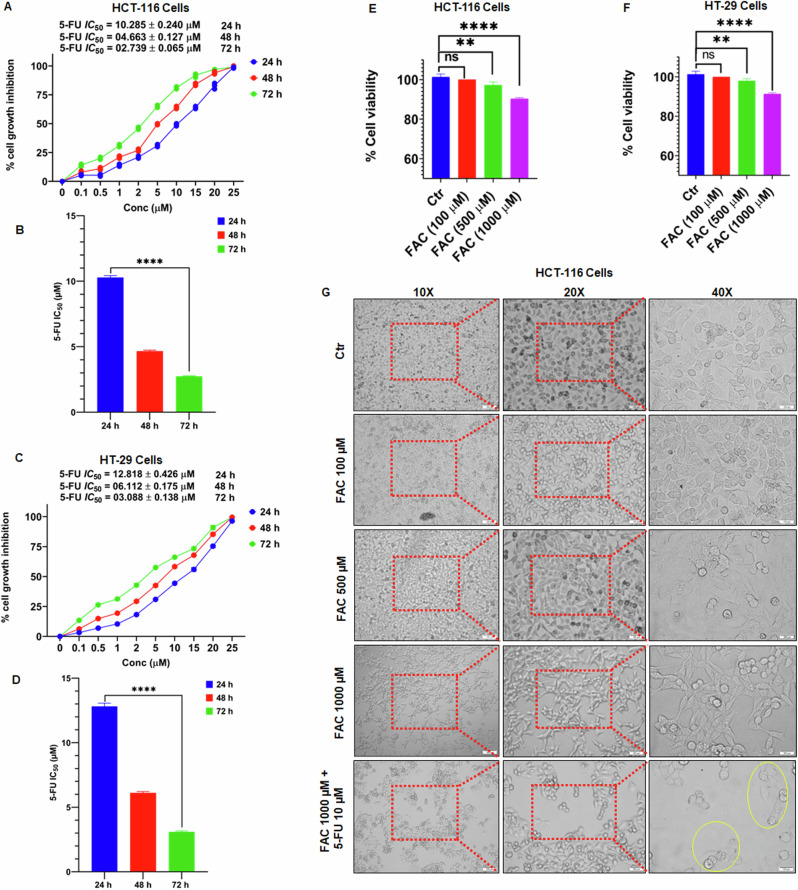
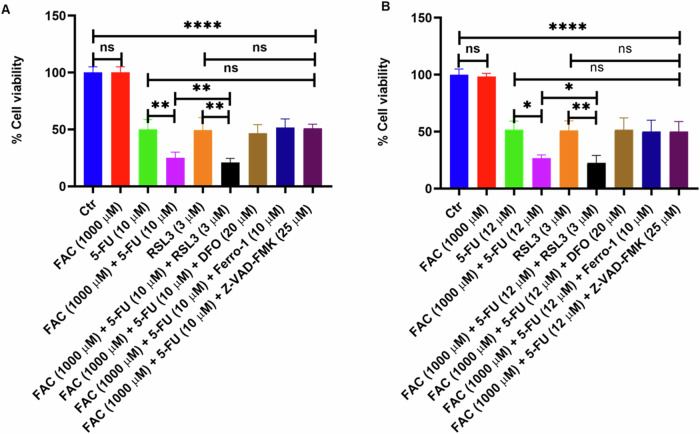
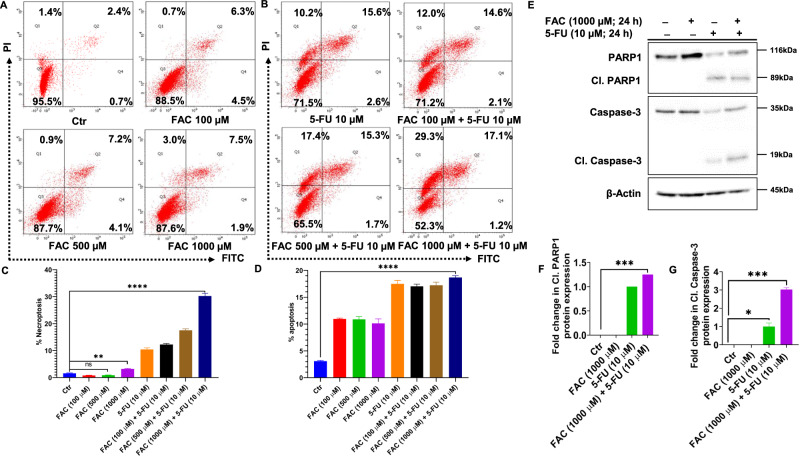
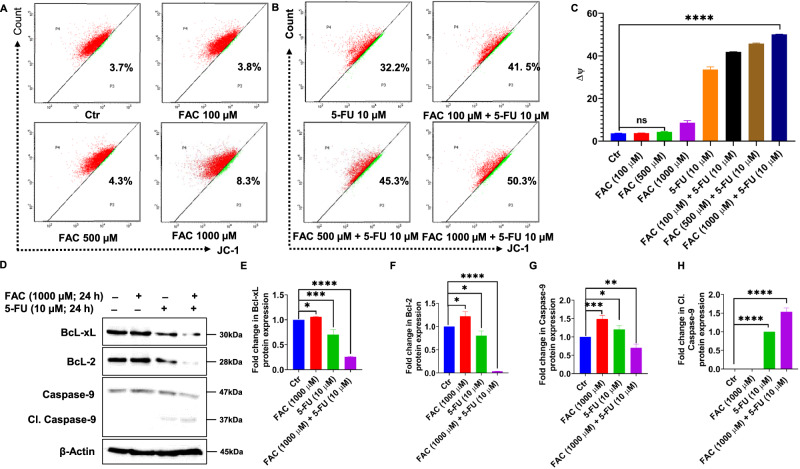
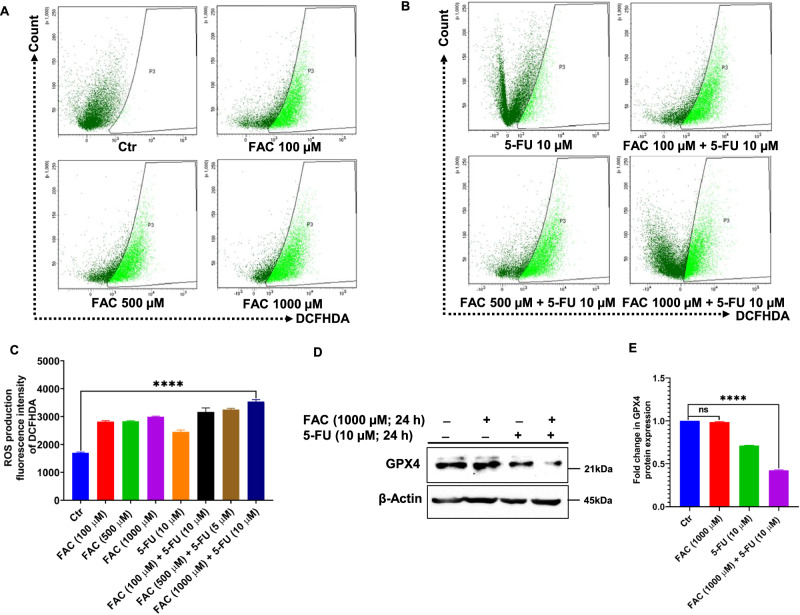
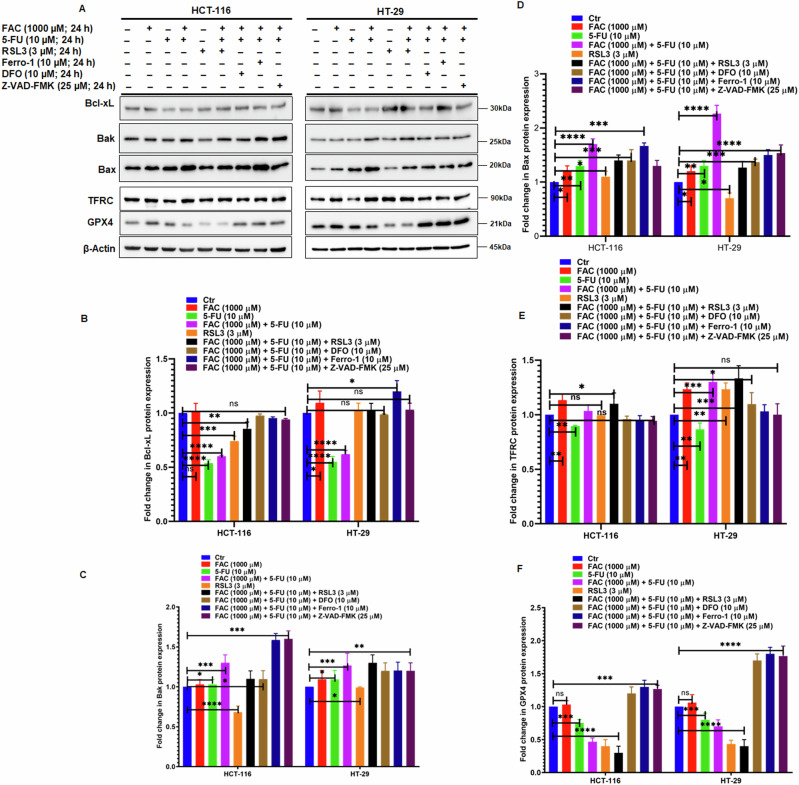
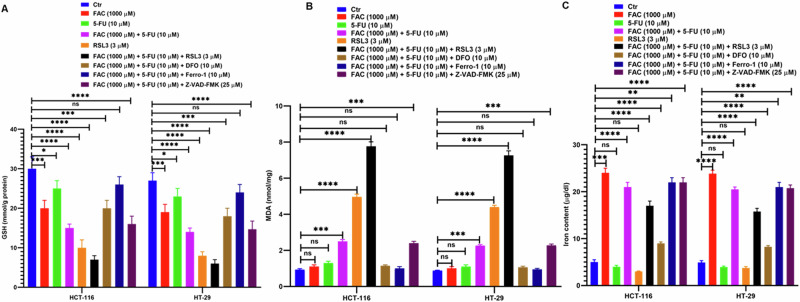
Resistance to 5-fluorouracil (5-FU) remains a significant challenge in colorectal cancer (CRC) treatment. Ferric ammonium citrate (FAC) is commonly used as an iron supplement due to its food-fortification properties; however, its potential role as a chemosensitizer in cancer therapy has not been studied. In this study, we explored the ability of FAC to sensitize CRC cells and increase their susceptibility to 5-FU-mediated anticancer effects. We assessed cell viability, cell cycle progression, apoptosis, mitochondrial membrane potential (MMP), reactive oxygen species (ROS) levels, ferroptosis, and iron metabolism-related protein expression using two CRC cell lines. Additionally, we conducted in silico analyses to compare iron markers in normal colon and CRC tumor tissues. Compared to controls, CRC cells pretreated with FAC and then treated with 5-FU exhibited significantly reduced growth and viability, along with increased ROS-mediated ferroptosis. Mechanistically, FAC-pretreated then 5-FU-treated CRC cells showed enhanced apoptosis, increased Bak/Bax expression, MMP depolarization, and decreased antiapoptotic protein levels (Bcl-2 and Bcl-xL). This combined treatment also led to G2/M cell cycle arrest, upregulation of p21 and p27, and downregulation of cyclin D1, c-Myc, survivin, and GPX4. Analysis of human colon tumor tissue revealed decreased expression of IRP-1, HMOX-1, and FTH1 but increased HAMP expression. In contrast, FAC-pretreated/5-FU-treated CRC cells exhibited a reverse pattern, suggesting that FAC-induced chemosensitization enhances 5-FU-mediated anticancer activity in CRC by disrupting iron homeostasis. These findings highlight the potential of iron overload as a chemosensitization strategy for improving CRC chemotherapy.
氟尿嘧啶(5-FU)耐药性仍然是结直肠癌(CRC)治疗的一个重大挑战。柠檬酸铁铵(FAC)因其具有食品强化特性而被广泛用作铁补充剂;然而,其作为癌症治疗化疗增敏剂的潜力尚未得到研究。在这项研究中,我们探讨了 FAC 使 CRC 细胞敏感并增加其对 5-FU 介导的抗癌作用敏感性的能力。我们使用两种 CRC 细胞系评估了细胞活力、细胞周期进程、细胞凋亡、线粒体膜电位(MMP)、活性氧(ROS)水平、铁死亡、铁代谢相关蛋白表达。此外,我们进行了计算分析以比较正常结肠和 CRC 肿瘤组织中的铁标记物。与对照组相比,FAC 预处理然后用 5-FU 处理的 CRC 细胞显示出明显减少的生长和活力,以及增加的 ROS 介导的铁死亡。从机制上讲,FAC 预处理然后用 5-FU 处理的 CRC 细胞显示出增强的细胞凋亡、Bak/Bax 表达增加、MMP 去极化和抗凋亡蛋白水平(Bcl-2 和 Bcl-xL)降低。这种联合治疗还导致 G2/M 细胞周期停滞、p21 和 p27 上调以及细胞周期蛋白 D1、c-Myc、survivin 和 GPX4 下调。对人结肠肿瘤组织的分析显示 IRP-1、HMOX-1 和 FTH1 的表达减少,但 HAMP 的表达增加。相比之下,FAC 预处理/5-FU 处理的 CRC 细胞表现出相反的模式,表明 FAC 诱导的化疗增敏通过破坏铁稳态增强了 5-FU 对 CRC 的抗癌活性。这些发现强调了铁过载作为改善 CRC 化疗的化疗增敏策略的潜力。