El Zarif Talal, Yibirin Marcel, De Oliveira-Gomes Diana, Machaalani Marc, Nawfal Rashad, Bittar Gianfranco, Bahmad Hisham F, Bitar Nizar
Faculty of Medicine, Lebanese University, Beirut 1003, Lebanon.
Internal Medicine Residency Program, Department of Medicine, Boston University Medical Center, Boston, MA 02218, USA.
Cancers (Basel). 2022 Apr 23;14(9):2105. doi: 10.3390/cancers14092105.
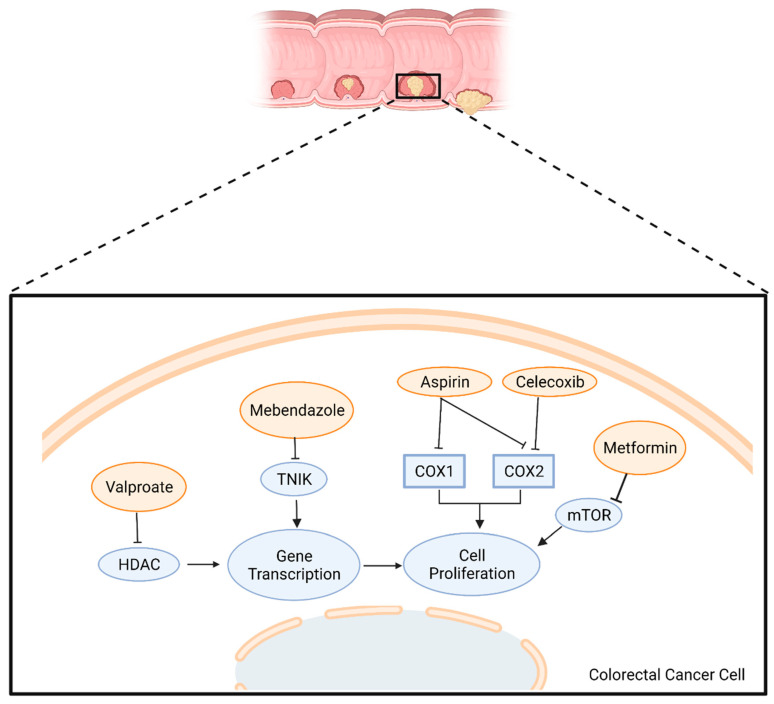
Colorectal cancer (CRC) is the third most common cancer in the world. Despite improvement in standardized screening methods and the development of promising therapies, the 5-year survival rates are as low as 10% in the metastatic setting. The increasing life expectancy of the general population, higher rates of obesity, poor diet, and comorbidities contribute to the increasing trends in incidence. Drug repurposing offers an affordable solution to achieve new indications for previously approved drugs that could play a protagonist or adjuvant role in the treatment of CRC with the advantage of treating underlying comorbidities and decreasing chemotherapy toxicity. This review elaborates on the current data that supports drug repurposing as a feasible option for patients with CRC with a focus on the evidence and mechanism of action promising repurposed candidates that are widely used, including but not limited to anti-malarial, anti-helminthic, anti-inflammatory, anti-hypertensive, anti-hyperlipidemic, and anti-diabetic agents.
结直肠癌(CRC)是全球第三大常见癌症。尽管标准化筛查方法有所改进,且有前景的治疗方法不断发展,但在转移性情况下,5年生存率低至10%。普通人群预期寿命的增加、肥胖率上升、不良饮食和合并症导致发病率呈上升趋势。药物重新利用为已批准药物实现新适应症提供了一种经济实惠的解决方案,这些药物可能在CRC治疗中起主要或辅助作用,其优势在于治疗潜在合并症并降低化疗毒性。本综述阐述了支持药物重新利用作为CRC患者可行选择的当前数据,重点关注有前景的重新利用候选药物的证据和作用机制,这些候选药物被广泛使用,包括但不限于抗疟疾、抗蠕虫、抗炎、抗高血压、抗高脂血症和抗糖尿病药物。