Laboratory of Cellular and Structural Biology, The Rockefeller University, New York, New York, USA.
Laboratory of Brain Development and Repair, The Rockefeller University, New York, New York, USA; Department of Biochemistry, Weill Cornell Medicine, New York, New York, USA.
J Biol Chem. 2024 Sep;300(9):107623. doi: 10.1016/j.jbc.2024.107623. Epub 2024 Aug 2.
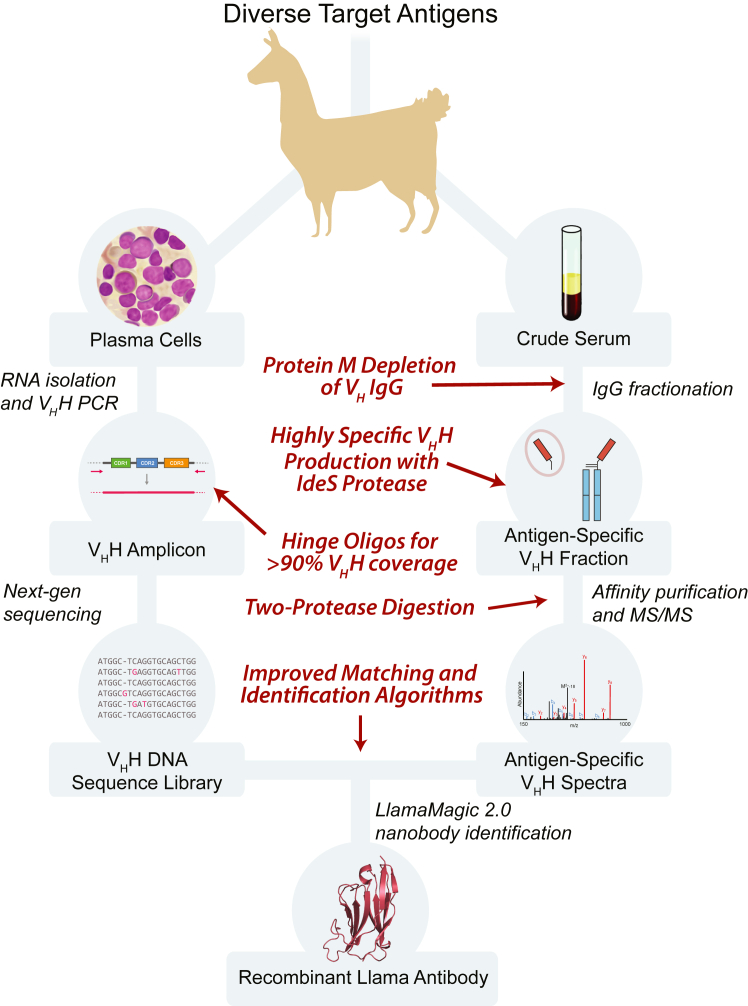
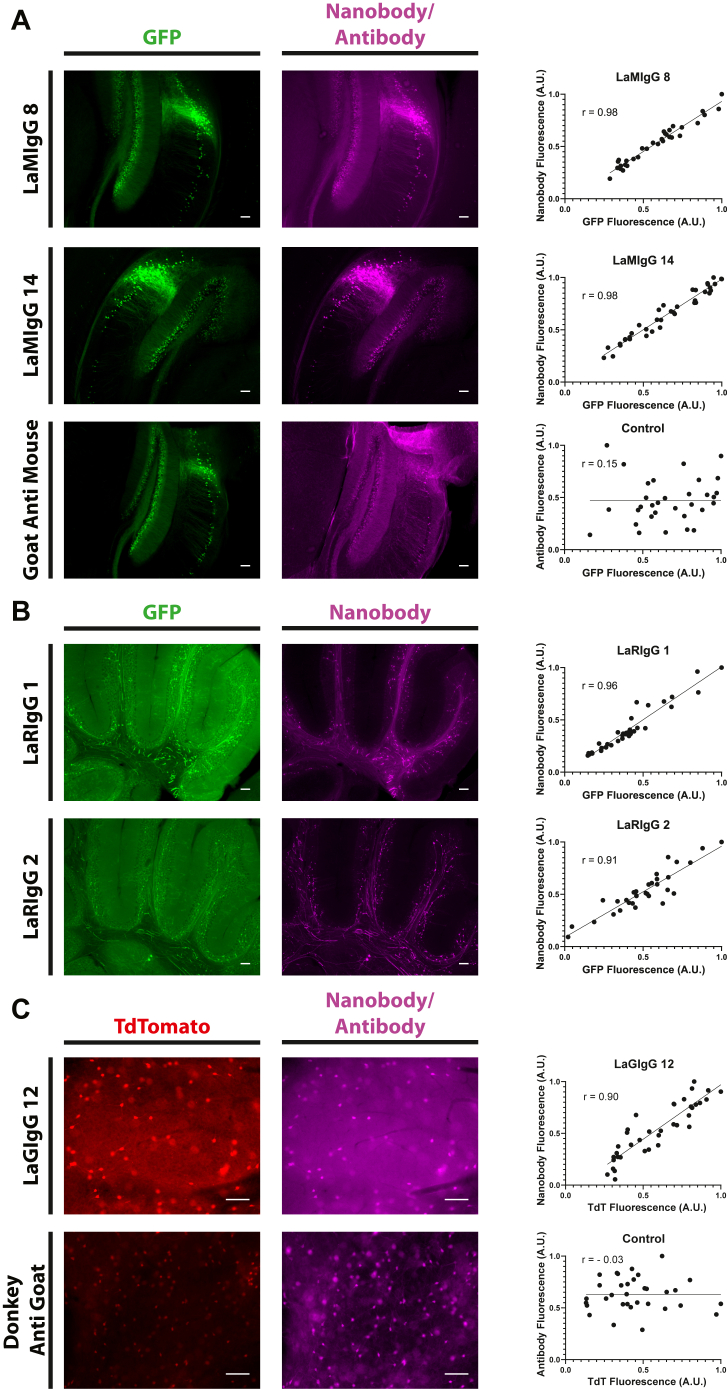
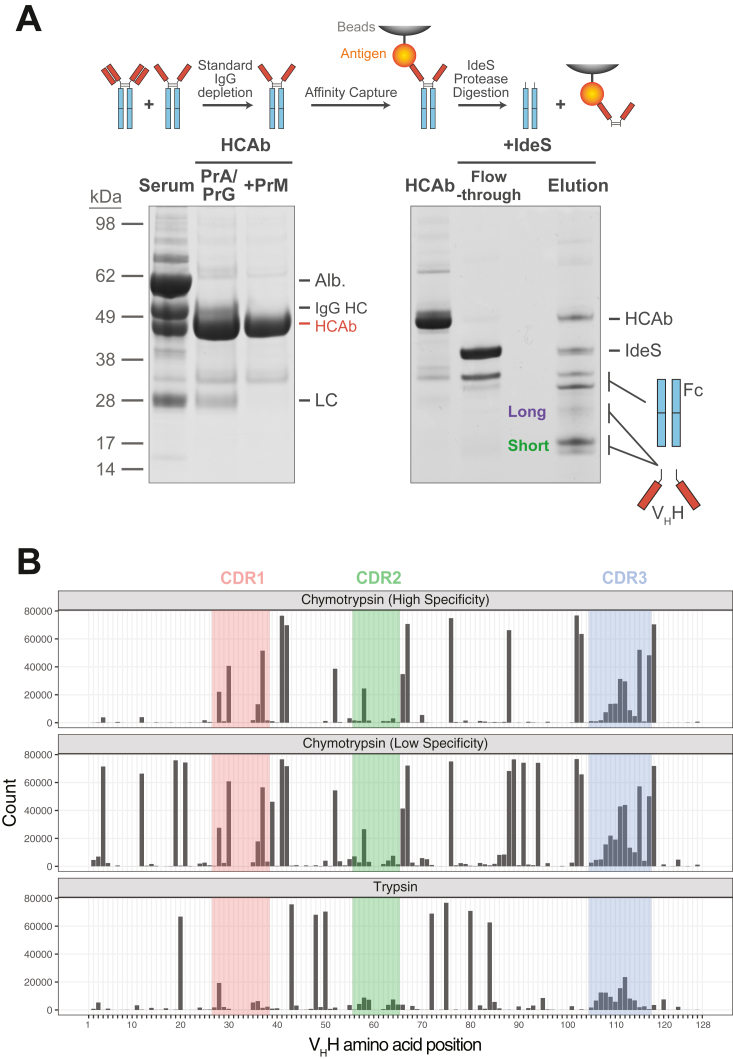
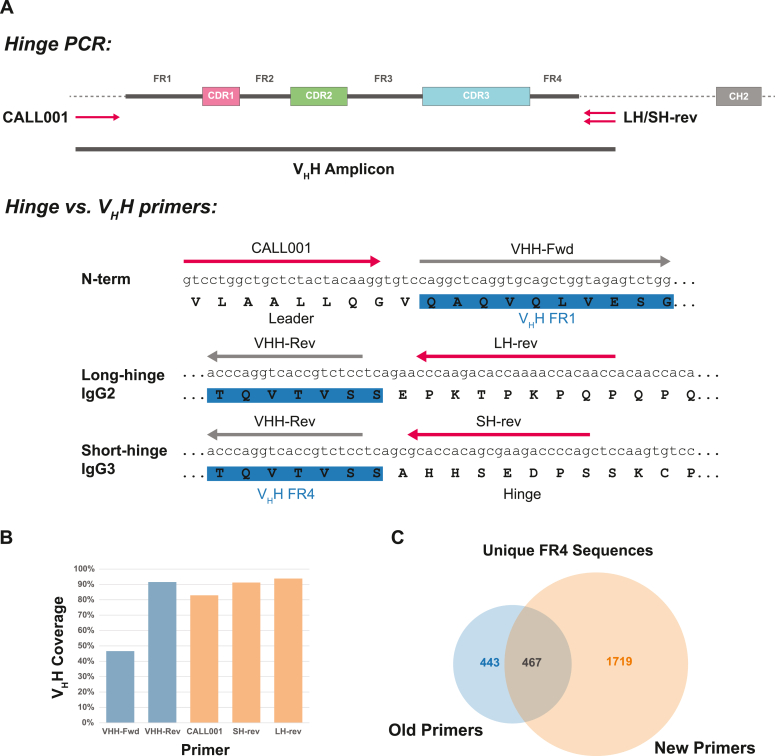
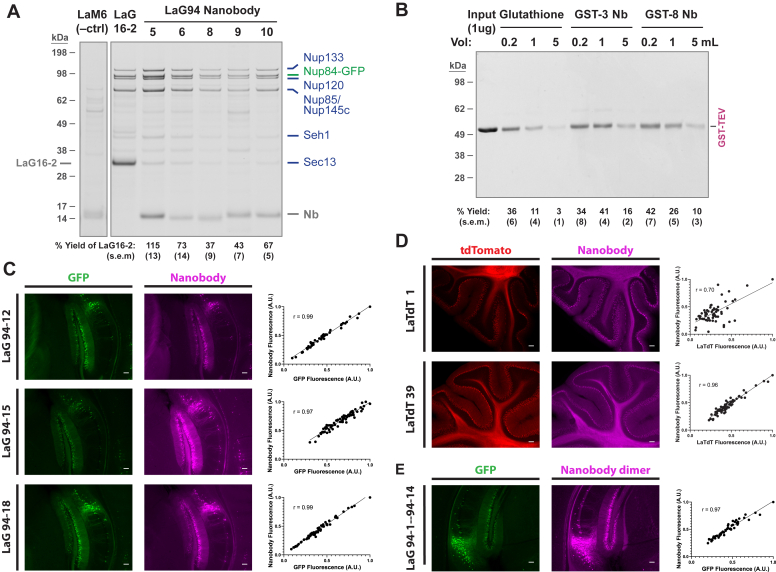
Single-domain antibodies ("nanobodies") derived from the variable region of camelid heavy-chain only antibody variants have proven to be widely useful tools for research, therapeutic, and diagnostic applications. In addition to traditional display techniques, methods to generate nanobodies using direct detection by mass spectrometry and DNA sequencing have been highly effective. However, certain technical challenges have limited widespread application. We have optimized a new pipeline for this approach that greatly improves screening sensitivity, depth of antibody coverage, antigen compatibility, and overall hit rate and affinity. We have applied this improved methodology to generate significantly higher affinity nanobody repertoires against widely used targets in biological research-i.e., GFP, tdTomato, GST, and mouse, rabbit, and goat immunoglobulin G. We have characterized these reagents in affinity isolations and tissue immunofluorescence microscopy, identifying those that are optimal for these particularly demanding applications, and engineering dimeric constructs for ultra-high affinity. This study thus provides new nanobody tools directly applicable to a wide variety of research problems, and improved techniques enabling future nanobody development against diverse targets.
单域抗体(“纳米抗体”)来源于骆驼重链抗体的可变区,已被证明是研究、治疗和诊断应用的广泛有用工具。除了传统的展示技术外,使用质谱和 DNA 测序直接检测生成纳米抗体的方法也非常有效。然而,某些技术挑战限制了其广泛应用。我们为此方法优化了一个新的流水线,极大地提高了筛选灵敏度、抗体覆盖深度、抗原兼容性以及整体命中率和亲和力。我们已将此改进方法应用于生成针对生物研究中广泛使用的靶标(即 GFP、tdTomato、GST 和小鼠、兔和山羊免疫球蛋白 G)的具有更高亲和力的纳米抗体库。我们已在亲和分离和组织免疫荧光显微镜中对这些试剂进行了表征,确定了那些特别适合这些高要求应用的试剂,并构建了二聚体以实现超高亲和力。因此,本研究提供了可直接应用于各种研究问题的新型纳米抗体工具,以及改进的技术,为针对各种靶标的未来纳米抗体开发奠定了基础。