Li Yin, Xiong Yu, Fan Wenxin, Wang Kai, Yu Qingqing, Si Liping, van der Smagt Patrick, Tang Jun, Chen Nutan
Department of Otorhinolaryngology, The First People's Hospital of Foshan, Foshan, China.
Department of Otorhinolaryngology, The Second Affiliated Hospital of Guizhou University of Traditional Chinese Medicine, Guiyang, China.
Front Pharmacol. 2024 Jul 19;15:1371504. doi: 10.3389/fphar.2024.1371504. eCollection 2024.
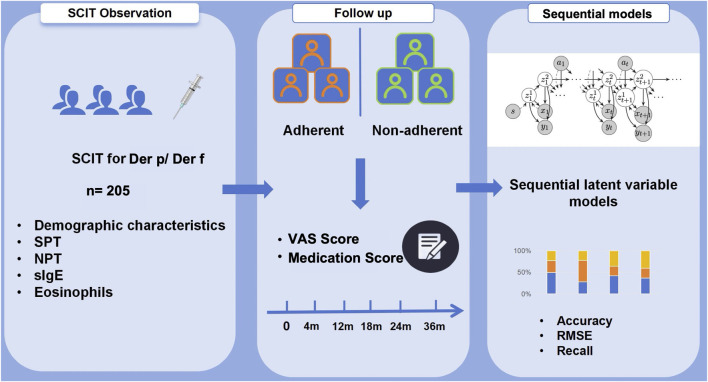
Subcutaneous Immunotherapy (SCIT) is the long-lasting causal treatment of allergic rhinitis (AR). How to enhance the adherence of patients to maximize the benefit of allergen immunotherapy (AIT) plays a crucial role in the management of AIT. This study aims to leverage novel machine learning models to precisely predict the risk of non-adherence of AR patients and related local symptom scores in 3 years SCIT.
The research develops and analyzes two models, sequential latent-variable model (SLVM) of Stochastic Latent Actor-Critic (SLAC) and Long Short-Term Memory (LSTM). SLVM is a probabilistic model that captures the dynamics of patient adherence, while LSTM is a type of recurrent neural network designed to handle time-series data by maintaining long-term dependencies. These models were evaluated based on scoring and adherence prediction capabilities.
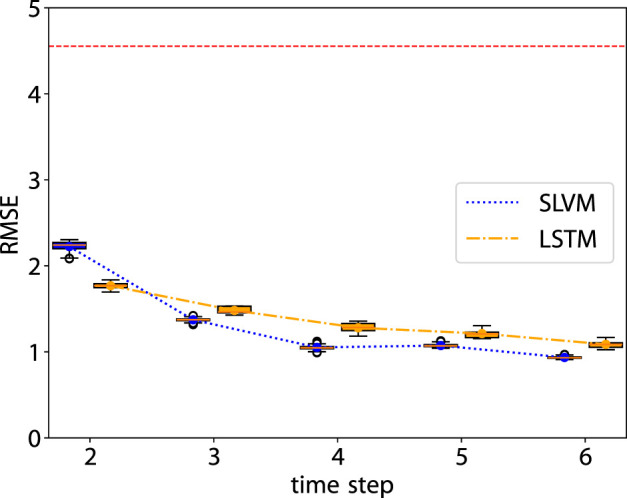
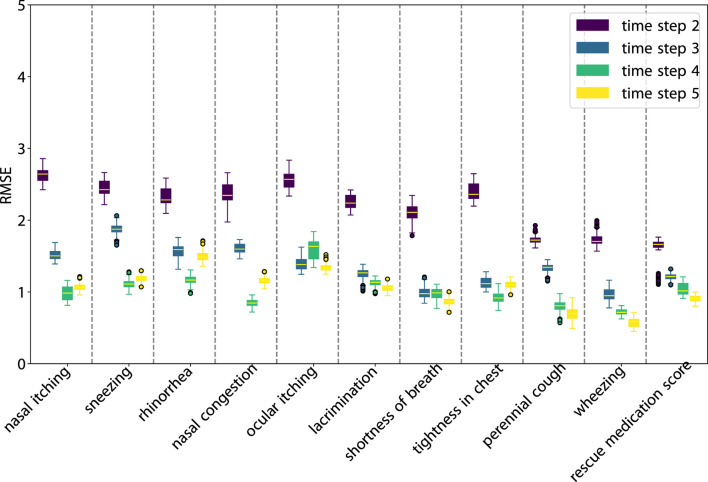
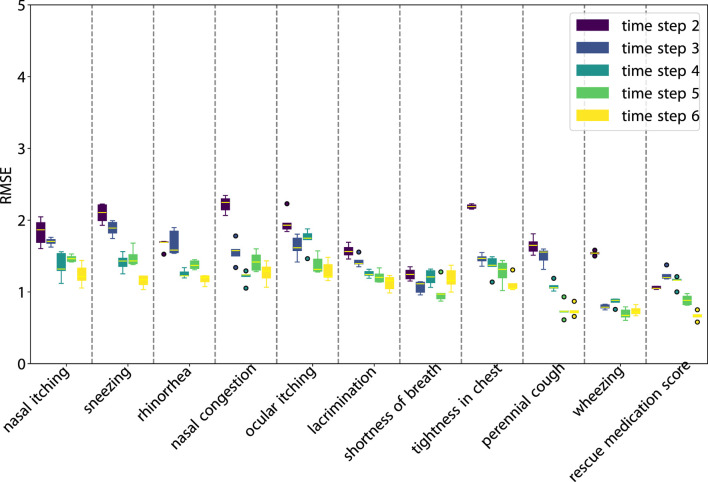
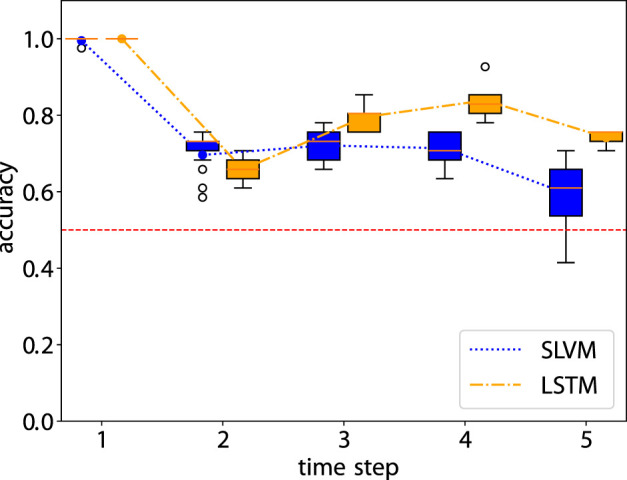
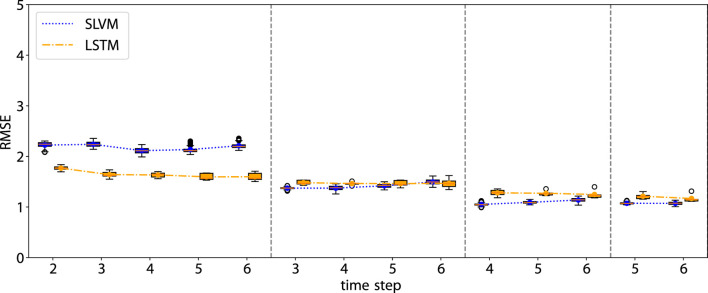
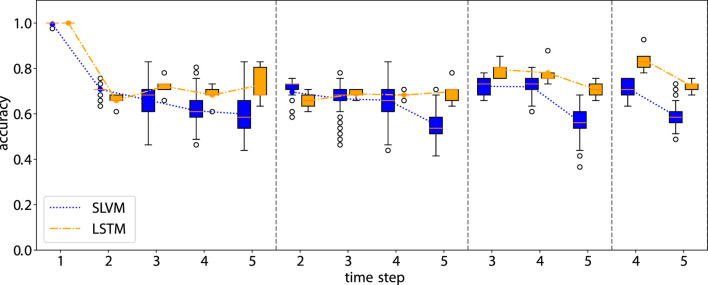
Excluding the biased samples at the first time step, the predictive adherence accuracy of the SLAC models is from 60% to 72%, and for LSTM models, it is 66%-84%, varying according to the time steps. The range of Root Mean Square Error (RMSE) for SLAC models is between 0.93 and 2.22, while for LSTM models it is between 1.09 and 1.77. Notably, these RMSEs are significantly lower than the random prediction error of 4.55.
We creatively apply sequential models in the long-term management of SCIT with promising accuracy in the prediction of SCIT nonadherence in AR patients. While LSTM outperforms SLAC in adherence prediction, SLAC excels in score prediction for patients undergoing SCIT for AR. The state-action-based SLAC adds flexibility, presenting a novel and effective approach for managing long-term AIT.
皮下免疫疗法(SCIT)是变应性鼻炎(AR)的长期病因治疗方法。如何提高患者的依从性以最大化变应原免疫疗法(AIT)的益处,在AIT的管理中起着至关重要的作用。本研究旨在利用新型机器学习模型精确预测AR患者在3年SCIT中的不依从风险及相关局部症状评分。
本研究开发并分析了两种模型,即随机潜在行为者-评论者(SLAC)的序列潜在变量模型(SLVM)和长短期记忆(LSTM)模型。SLVM是一种概率模型,可捕捉患者依从性的动态变化,而LSTM是一种循环神经网络,旨在通过维持长期依赖关系来处理时间序列数据。这些模型基于评分和依从性预测能力进行评估。
在排除第一步有偏差的样本后,SLAC模型的预测依从性准确率在60%至72%之间,LSTM模型的预测依从性准确率在66%至84%之间,具体数值因时间步长而异。SLAC模型的均方根误差(RMSE)范围在0.93至2.22之间,而LSTM模型的RMSE范围在1.09至1.77之间。值得注意的是,这些RMSE显著低于随机预测误差4.55。
我们创新性地将序列模型应用于SCIT的长期管理中,在预测AR患者的SCIT不依从性方面具有有前景的准确性。虽然LSTM在依从性预测方面优于SLAC,但SLAC在AR患者SCIT的评分预测方面表现出色。基于状态-行为的SLAC增加了灵活性,为长期AIT管理提供了一种新颖有效的方法。