Department of Health Information Technology, School of Allied Medical Science, Ahvaz Jundishapur University of Medical Sciences, Ahvaz, Iran.
Nutrition and Metabolic Diseases Research Center, Clinical Sciences Research Institute, Ahvaz Jundishapur University of Medical Sciences, Ahvaz, Iran.
Sci Rep. 2022 Jul 19;12(1):12340. doi: 10.1038/s41598-022-16680-8.
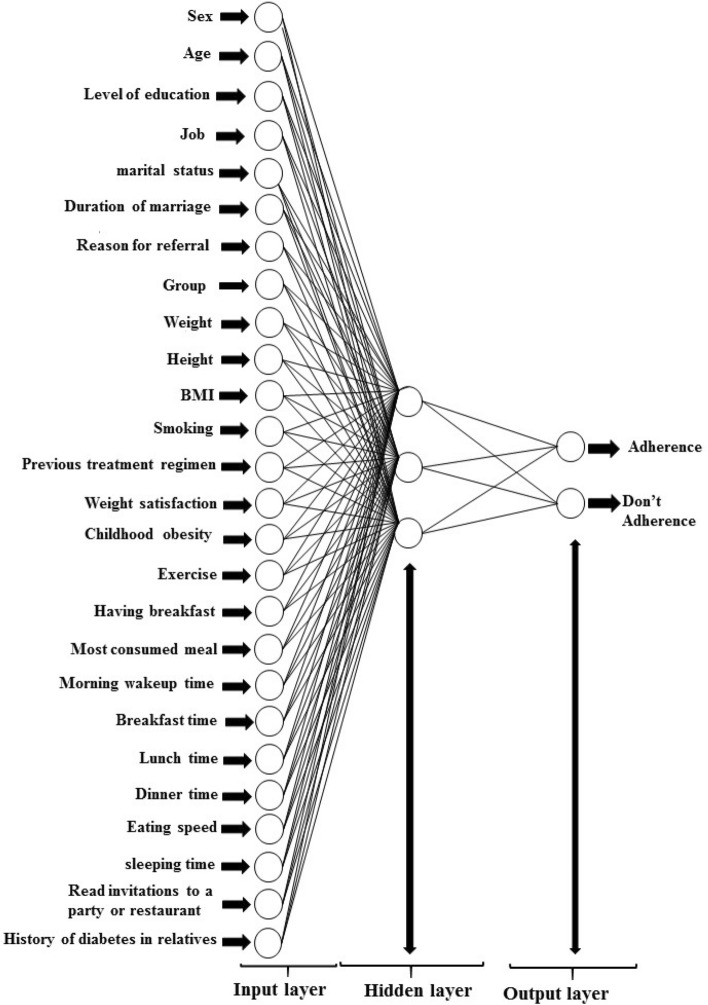
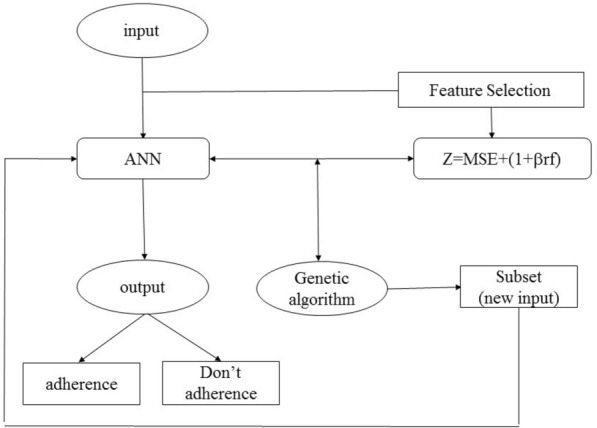
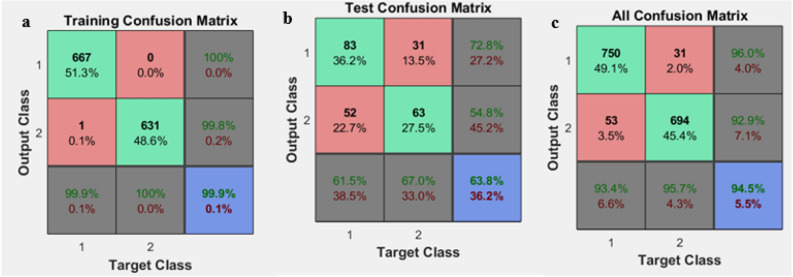
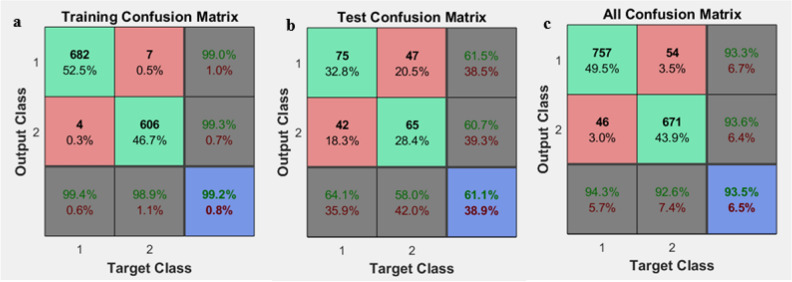
Adhering to a healthy diet plays an essential role in preventing many nutrition-related diseases, such as obesity, diabetes, high blood pressure, and other cardiovascular diseases. This study aimed to predict adherence to the prescribed diets using a hybrid model of artificial neural networks (ANNs) and the genetic algorithm (GA). In this study, 26 factors affecting diet adherence were modeled using ANN and GA(ANGA). A dataset of 1528 patients, including 1116 females and 412 males, referred to a private clinic was applied. SPSS Ver.25 and MATLAB toolbox 2017 were employed to make the model and analyze the data. The results showed that the accuracy of the proposed ANN and ANGA models for predicting diet adherence was 93.22% and 93.51%, respectively. Also, the Pearson coefficient showed a significant relationship among the factors. The developed model showed the proper performance for predicting adherence to the diet. Moreover, the most effective factors were selected using GA. Some important factors that affect diet adherence include the duration of the marriage, the reason for referring to the clinic, weight, body mass index (BMI), weight satisfaction, lunch and dinner times, and sleep time. Therefore, applying the proposed model can help dietitians identify people who need more support to adhere to the diet.
坚持健康饮食对于预防许多与营养相关的疾病至关重要,如肥胖、糖尿病、高血压和其他心血管疾病。本研究旨在使用人工神经网络 (ANNs) 和遗传算法 (GA) 的混合模型来预测饮食依从性。在这项研究中,使用 ANN 和 GA(ANGA)对影响饮食依从性的 26 个因素进行建模。该研究应用了一个包括 1116 名女性和 412 名男性在内的 1528 名患者的数据集,这些患者被转介到一家私人诊所。使用 SPSS Ver.25 和 MATLAB 工具箱 2017 来建立模型和分析数据。结果表明,所提出的 ANN 和 ANGA 模型预测饮食依从性的准确率分别为 93.22%和 93.51%。此外,Pearson 系数表明各因素之间存在显著关系。所开发的模型在预测饮食依从性方面表现出了适当的性能。此外,还使用 GA 选择了最有效的因素。一些影响饮食依从性的重要因素包括婚姻持续时间、就诊原因、体重、体重指数 (BMI)、体重满意度、午餐和晚餐时间以及睡眠时间。因此,应用所提出的模型可以帮助营养师识别需要更多支持来坚持饮食的人。