Wang Guoqiao, Li Yan, Xiong Chengjie, Cao Yuchen, Schindler Suzanne E, McDade Eric, Blennow Kaj, Hansson Oskar, Dage Jeffrey L, Jack Clifford R, Teunissen Charlotte E, Shaw Leslie M, Zetterberg Henrik, Laura Ibanez, Timsina Jigyasha, Carlos Cruchaga, Bateman Randall J
Department of Neurology, Washington University, School of Medicine, St. Louis, MO, USA.
Division of Biostatistics, Washington University, School of Medicine, St. Louis, MO, USA.
medRxiv. 2024 Jul 27:2024.07.25.24311002. doi: 10.1101/2024.07.25.24311002.
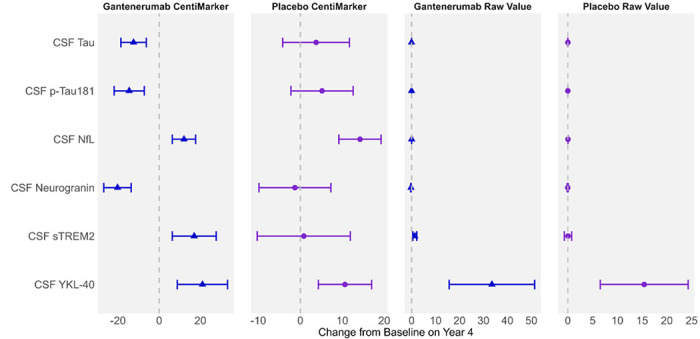
Biomarkers have been essential to understanding Alzheimer's disease (AD) pathogenesis, pathophysiology, progression, and treatment effects. However, each biomarker measure is a representation of the biological target, the assay used to measure it, and the variance of the assay. Thus, biomarker measures are difficult to compare without standardization, and the units and magnitude of effect relative to the disease are difficult to appreciate, even for experts. To facilitate quantitative comparisons of AD biomarkers in the context of biologic and treatment effects, we propose a biomarker standardization approach between normal ranges and maximum abnormal AD ranges, which we refer to as CentiMarker, similar to the Centiloid approach used in PET.
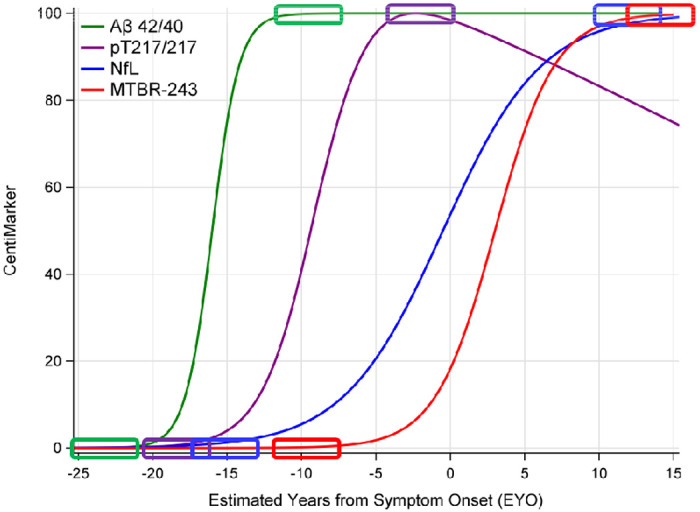
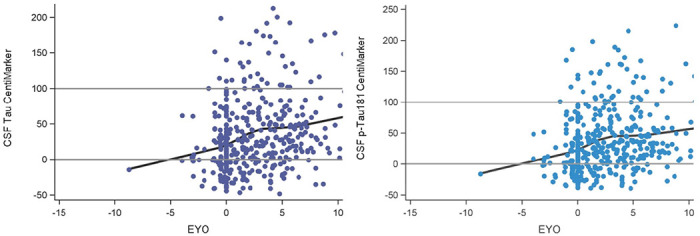
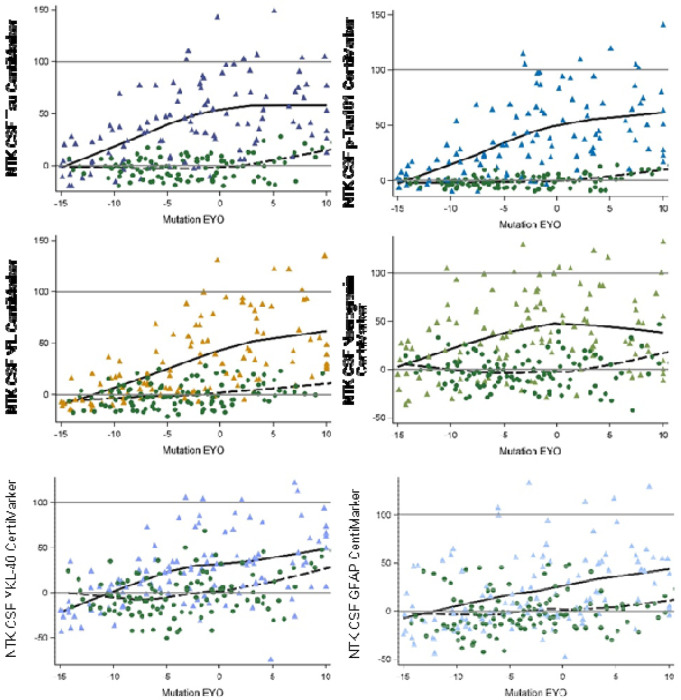
We developed a standardization scale that creates percentile values ranging from 0 for a normal population to 100 for the most abnormal measures across disease stages. We applied this scale to CSF and plasma biomarkers in autosomal dominant AD, assessing the distribution by estimated years from symptom onset, between biomarkers, and across cohorts. We then validated this approach in a large national sporadic AD cohort.
We found the CentiMarker scale provided an easily interpretable metric of disease abnormality. The biologic changes, range, and distribution of several AD fluid biomarkers including amyloid-β, phospho-tau and other biomarkers, were comparable across disease stages in both early onset autosomal dominant and sporadic late onset AD.
The CentiMarker scale offers a robust and versatile framework for the standardized biological comparison of AD biomarkers. Its broader adoption could facilitate biomarker reporting, allowing for more informed cross-study comparisons and contributing to accelerated therapeutic development.
生物标志物对于理解阿尔茨海默病(AD)的发病机制、病理生理学、疾病进展及治疗效果至关重要。然而,每项生物标志物测量结果都代表了生物靶点、用于测量它的检测方法以及该检测方法的变异性。因此,未经标准化的生物标志物测量结果难以比较,即使对于专家而言,相对于疾病的效应单位和大小也难以理解。为便于在生物学和治疗效果背景下对AD生物标志物进行定量比较,我们提出了一种在正常范围和最大异常AD范围之间的生物标志物标准化方法,我们将其称为“百分生物标志物”(CentiMarker),类似于PET中使用的百分位数方法(Centiloid)。
我们开发了一种标准化量表,该量表可创建百分位数值,范围从正常人群的0到疾病各阶段最异常测量值的100。我们将此量表应用于常染色体显性AD的脑脊液和血浆生物标志物,按症状出现后的估计年份评估其分布情况,包括生物标志物之间以及不同队列之间的分布。然后,我们在一个大型全国性散发性AD队列中验证了该方法。
我们发现“百分生物标志物”量表提供了一种易于解释的疾病异常度量。包括淀粉样蛋白-β、磷酸化tau蛋白和其他生物标志物在内的几种AD体液生物标志物的生物学变化、范围和分布,在早发性常染色体显性AD和散发性晚发性AD的疾病各阶段均具有可比性。
“百分生物标志物”量表为AD生物标志物的标准化生物学比较提供了一个强大且通用的框架。更广泛地采用该量表可促进生物标志物报告,实现更明智的跨研究比较,并有助于加速治疗开发。