Acharya Nischal, Kurtz Joshua S, Callan Kylie T, Hovis Gabrielle E A, Mar Scarlett R K, Lopez Alexander, Chan Alvin Y, Wu Hao-Hua, Hashmi Sohaib Z, Bhatia Nitin N, Oh Michael Y
Department of Neurological Surgery, University of California, Irvine Medical Center, Orange, CA, USA.
Department of Orthopaedic Surgery, University of California, Irvine Medical Center, Orange, CA, USA.
Brain Spine. 2024 Jun 28;4:102854. doi: 10.1016/j.bas.2024.102854. eCollection 2024.
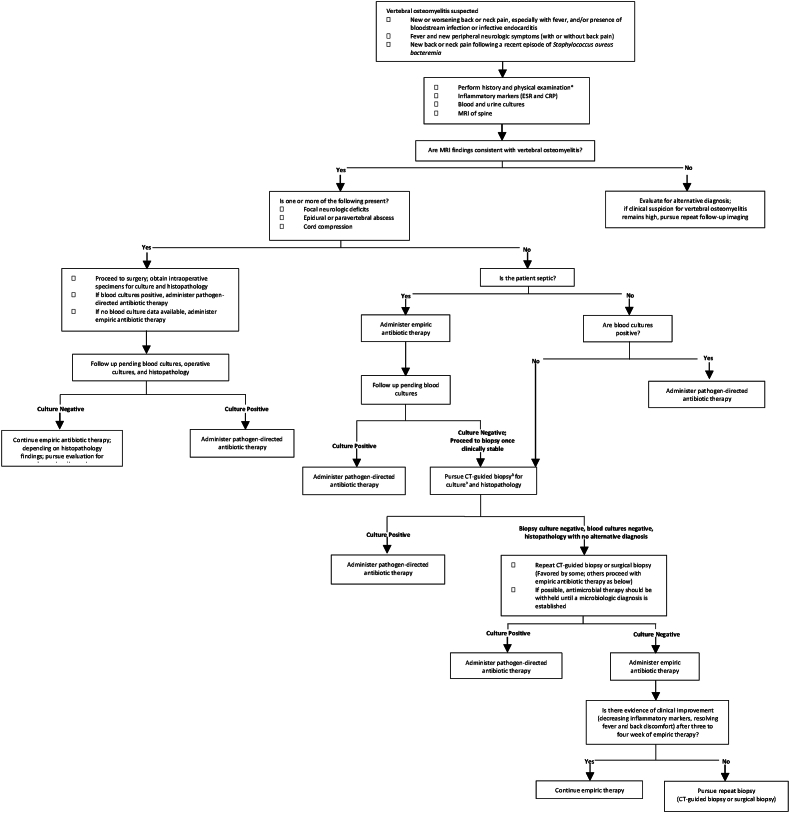
Spondylodiscitis (SD) is an infection of the intervertebral disc with involvement of the adjacent vertebral bodies. Diagnostic tests with CT-guided biopsy only provide a positive yield in 14%-48% of cases. Percutaneous endoscopic debridement and drainage (PEDD) has recently shown promise in the treatment of spondylodiscitis.
The purpose of this study is to determine differences in pathogen identification and clinical outcomes for PEDD versus CT-guided needle biopsy in SD patients.
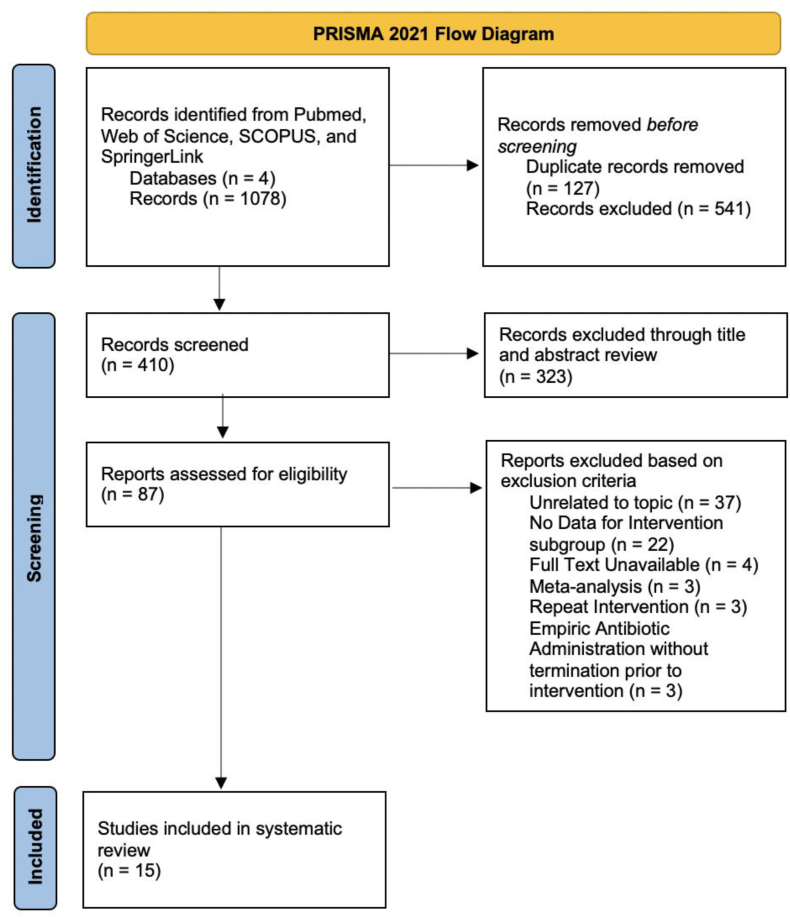
We conducted a systematic review of the literature using PRISMA guidelines to determine differences in positive microbiology results, perioperative complications, pain control, and long-term clinical outcomes for PEDD vs. CT-guided needle biopsy in SD patients.
1078 studies were evaluated, 87 of which underwent full review. 15 studies met the inclusion and exclusion criteria, including 7 PEDD, 7 CT-guided biopsy, and 1 CT-guided biopsy vs. PEDD article, for a total of 192 PEDD patients and 604 CT-guided biopsy patients. We found 36.59% of CT-guided biopsy patients had positive microbiology results, compared to 84.38% of PEDD patients. No major perioperative complications occurred as a result of the PEDD procedure. Of the five PEDD studies that reported pain outcomes, greater than 80% of patients experienced relief after intervention.
These results suggest that PEDD may improve pathogen identification while simultaneously reducing pain compared to CT-guided needle biopsy in SD. Although current treatment guidelines recommend CT-guided biopsy, in patients with severe back pain and suspected SD, PEDD can be considered an alternative intervention.
脊椎椎间盘炎(SD)是一种椎间盘感染,并累及相邻椎体。CT引导下活检的诊断测试在仅14%-48%的病例中能获得阳性结果。经皮内镜清创引流术(PEDD)最近在脊椎椎间盘炎的治疗中显示出前景。
本研究的目的是确定在SD患者中,PEDD与CT引导下针吸活检在病原体鉴定和临床结果方面的差异。
我们使用PRISMA指南对文献进行系统综述,以确定在SD患者中,PEDD与CT引导下针吸活检在微生物学阳性结果、围手术期并发症、疼痛控制和长期临床结果方面的差异。
共评估了1078项研究,其中87项进行了全面审查。15项研究符合纳入和排除标准,包括7项PEDD研究、7项CT引导下活检研究以及1项CT引导下活检与PEDD对比的文章,共有192例PEDD患者和604例CT引导下活检患者。我们发现,CT引导下活检患者中有36.59%微生物学结果呈阳性,而PEDD患者中这一比例为84.38%。PEDD手术未导致重大围手术期并发症。在报告疼痛结果的5项PEDD研究中,超过80%的患者在干预后疼痛缓解。
这些结果表明,与CT引导下针吸活检相比,PEDD可能改善病原体鉴定,同时减轻疼痛。尽管目前的治疗指南推荐CT引导下活检,但对于有严重背痛且疑似SD的患者,PEDD可被视为一种替代干预措施。