
肠道细菌通过调节葡萄糖转运对入侵性树皮甲虫的发育至关重要。
Gut bacteria are essential for development of an invasive bark beetle by regulating glucose transport.
机构信息
College of Life Sciences/Hebei Basic Science Center for Biotic Interactions, Institute of Life Science and Green Development, Hebei University, Baoding 071002, China.
State Key Laboratory of Integrated Management of Pest Insects and Rodents, Institute of Zoology, Chinese Academy of Sciences, Beijing, Chaoyang District 100101, China.
出版信息
Proc Natl Acad Sci U S A. 2024 Aug 13;121(33):e2410889121. doi: 10.1073/pnas.2410889121. Epub 2024 Aug 7.
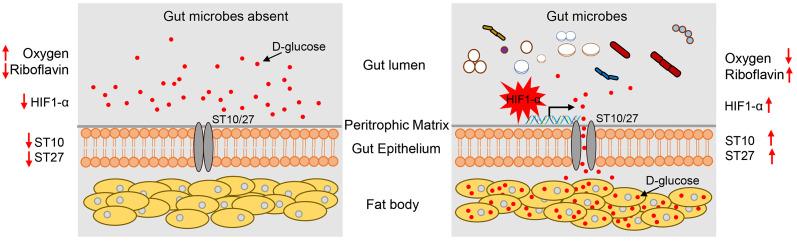
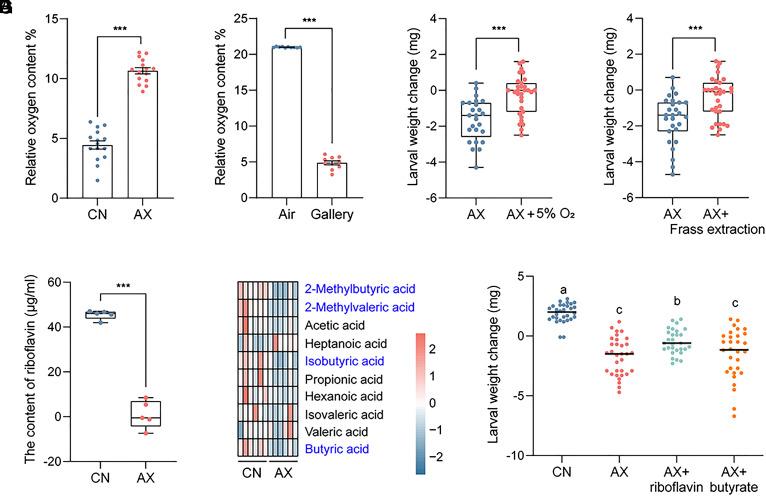
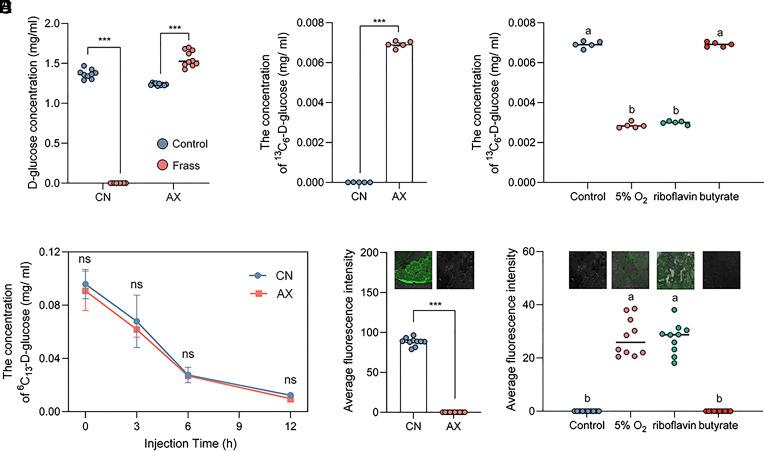
Insects and their gut bacteria form a tight and beneficial relationship, especially in utilization of host nutrients. The red turpentine beetle (RTB), a destructive and invasive pine pest, employs mutualistic microbes to facilitate its invasion success. However, the molecular mechanism underlying the utilization of nutrients remains unknown. In this study, we found that gut bacteria are crucial for the utilization of D-glucose, a main carbon source for RTB development. Downstream assays revealed that gut bacteria-induced gut hypoxia and the secretion of riboflavin are responsible for RTB development by regulating D-glucose transport via the activation of a hypoxia-induced transcription factor 1 (Hif-1α). Further functional investigations confirmed that Hif-1α mediates glucose transport by direct upregulation of two glucose transporters (ST10 and ST27), thereby promoting RTB development. Our findings reveal how gut bacteria regulate the development of RTB, and promote our understanding of the mutualistic relationship of animals and their gut bacteria.
昆虫与其肠道细菌形成紧密且有益的关系,特别是在利用宿主营养方面。红脂大小蠹(RTB)是一种破坏性和入侵性的松树害虫,它利用共生微生物来促进其入侵成功。然而,利用营养物质的分子机制尚不清楚。在本研究中,我们发现肠道细菌对于 D-葡萄糖的利用至关重要,D-葡萄糖是 RTB 发育的主要碳源。下游试验表明,肠道细菌诱导的肠道缺氧和核黄素的分泌通过激活缺氧诱导转录因子 1(Hif-1α)来调节 D-葡萄糖的转运,从而促进 RTB 的发育。进一步的功能研究证实,Hif-1α 通过直接上调两种葡萄糖转运蛋白(ST10 和 ST27)来介导葡萄糖的转运,从而促进 RTB 的发育。我们的研究结果揭示了肠道细菌如何调节 RTB 的发育,并促进了我们对动物与其肠道细菌共生关系的理解。



 Zotero 插件