Ayoob Fathima, Manivannan Jawahar R, Ahamed Ashikh, Murikkanchery Afsal K, Mondal Ankita, Bhatnagar Gowri, Nongrum Melari S, Albert Sandra, Mathur Pulkit, Verma Lalita, Madhari Radhika, Brinda Srirangam A, Ghosh-Jerath Suparna, Nambiar Vanisha, Gandhi Hemangini, Quazi Syed Z, Gupta Rachita, Sachdev Harshpal S, Kurpad Anura V, Thomas Tinku
Division of Epidemiology & Biostatistics, St John's Research Institute, Bengaluru, Karnataka, India.
Indian Institute of Public Health Shillong, Shillong, Meghalaya, India.
Curr Dev Nutr. 2024 Jun 29;8(7):104409. doi: 10.1016/j.cdnut.2024.104409. eCollection 2024 Jul.
In large supplementary feeding programs for children, it is challenging to create and sustain contextual, acceptable, nutritionally complete, and diverse supplemental foods. For example, the Indian Supplementary Nutrition Program (SNP) supplements the dietary intake of children, pregnant and lactating women, and severely acutely malnourished (SAM) children by offering dry take home rations (THRs) or hot cooked meals (HCMs) across India, but an optimization tool is necessary to create local contextual recipes for acceptable and nutritionally adequate products.
This study aimed to create a linear programming (LP) model to optimize diverse food provisions for a SNP to meet its program guidelines, using locally available foods, within budgetary allocations.
A LP algorithm with appropriate constraints was used to generate an optimal THR based on raw foods, or an optimal weekly HCM menu comprised of a lunch meal with mid-morning snacks, based on user choices of foods and recipes. The database of foods used was created by a prospective survey conducted across all states of India for this purpose, such that the recipe and food optimization was diverse and specific to the guidelines for each beneficiary group.
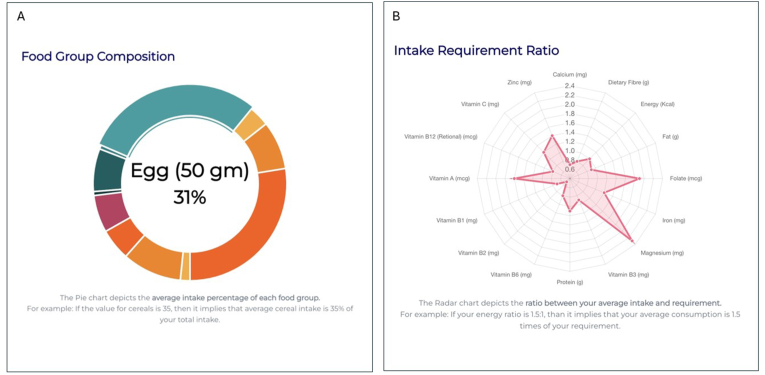
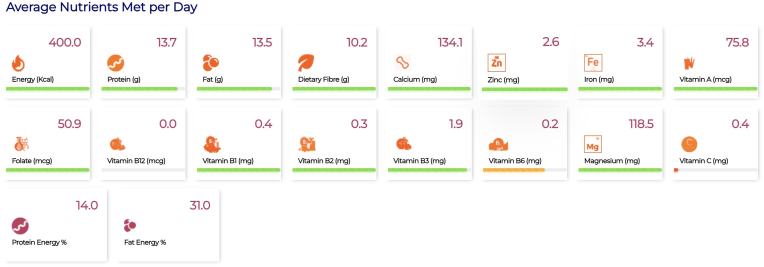
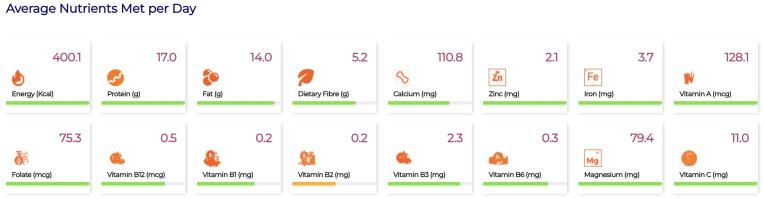
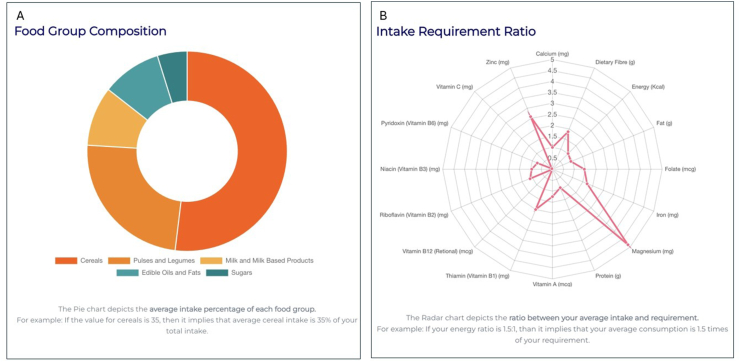
An interactive web-based app, which can optimize feeding programs at any population level, was developed for use by program implementers and is hosted at https://www.datatools.sjri.res.in/SNP/. In the Indian example analyzed here, the recommended optimized diets met the guidelines for diversified and nutritionally complete SNP provision but at a cost that was almost 25% higher than the present Indian budget allocation.
The optimization model developed demonstrates that contextual SNP diets can be created to meet macronutrient and most essential micronutrient needs of large-scale feeding programs, but appropriate diversification entails additional costs.
在针对儿童的大型补充喂养计划中,创建并维持符合当地情况、可接受、营养全面且多样的补充食品具有挑战性。例如,印度补充营养计划(SNP)通过在印度各地提供干制家庭配给食品(THR)或热煮膳食(HCM)来补充儿童、孕妇和哺乳期妇女以及重度急性营养不良(SAM)儿童的膳食摄入量,但需要一个优化工具来制定适合当地情况且营养充足的可接受产品的本地食谱。
本研究旨在创建一个线性规划(LP)模型,以利用当地可得食物,在预算分配范围内优化SNP的多样食物供应,以满足其计划指南。
使用具有适当约束条件的LP算法,根据用户对食物和食谱的选择,生成基于生食的最佳THR,或由午餐和上午中间小吃组成的最佳每周HCM菜单。为此,通过对印度所有邦进行的前瞻性调查创建了所用食物的数据库,从而使食谱和食物优化具有多样性且符合每个受益群体的指南。
开发了一个基于网络的交互式应用程序,可在任何人口水平上优化喂养计划,供计划实施者使用,该应用程序托管于https://www.datatools.sjri.res.in/SNP/ 。在此分析的印度案例中,推荐的优化饮食符合SNP多样化和营养全面供应的指南,但成本比目前印度的预算分配高出近25%。
所开发的优化模型表明,可以制定符合当地情况的SNP饮食,以满足大规模喂养计划中宏量营养素和最基本微量营养素的需求,但适当的多样化会带来额外成本。