Department of Pharmaceutical Sciences, College of Pharmacy, The University of Tennessee Health Science Center, Memphis, TN, United States.
Department of Anatomy and Neurobiology, College of Medicine, The University of Tennessee Health Science Center, Memphis, TN, United States.
Exp Biol Med (Maywood). 2024 Jul 25;249:10123. doi: 10.3389/ebm.2024.10123. eCollection 2024.
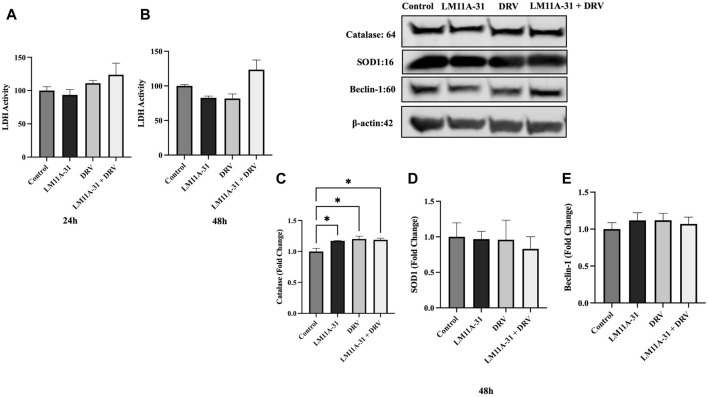
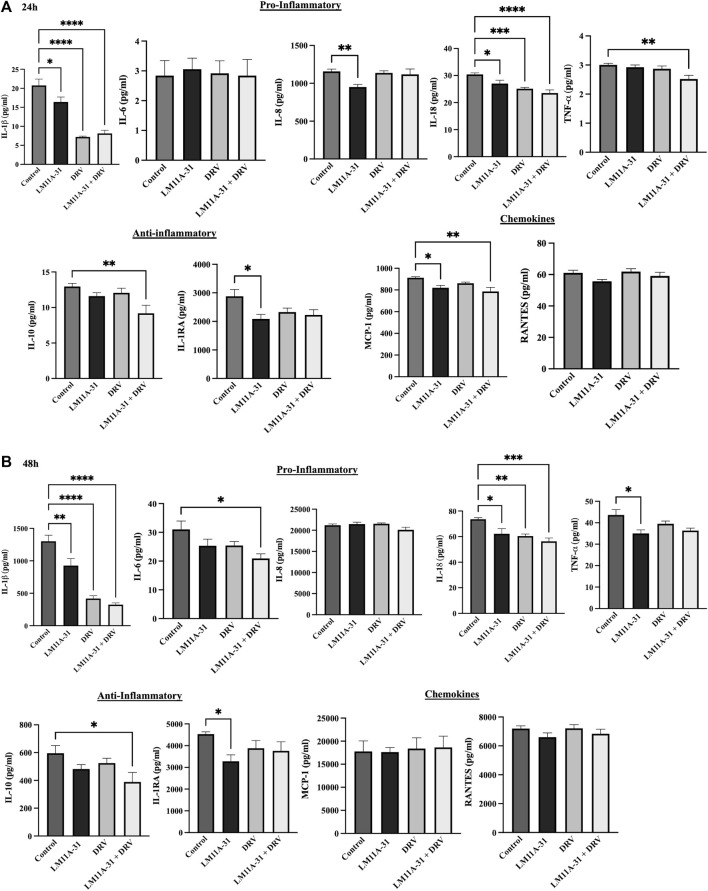
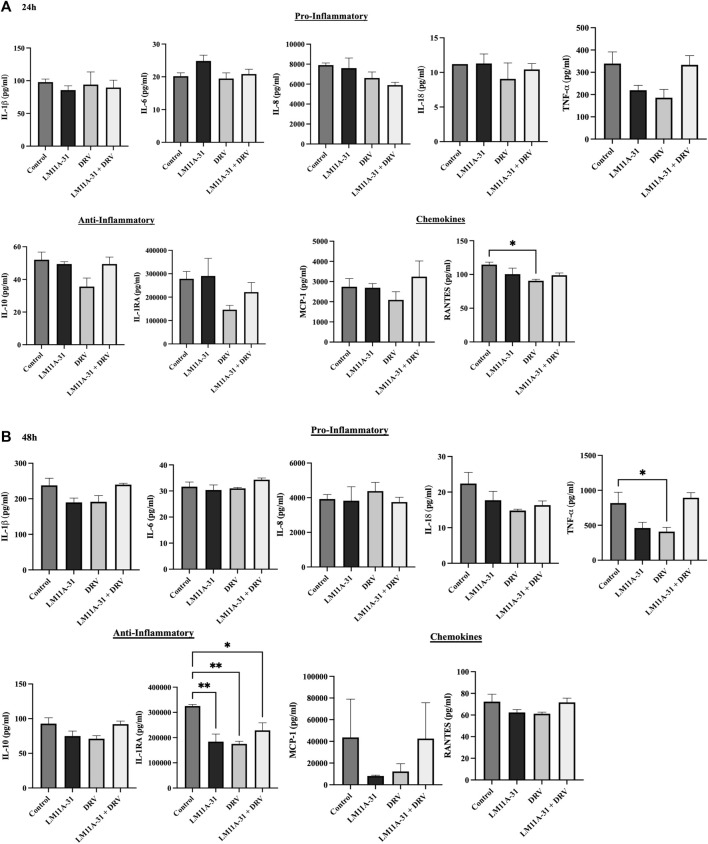
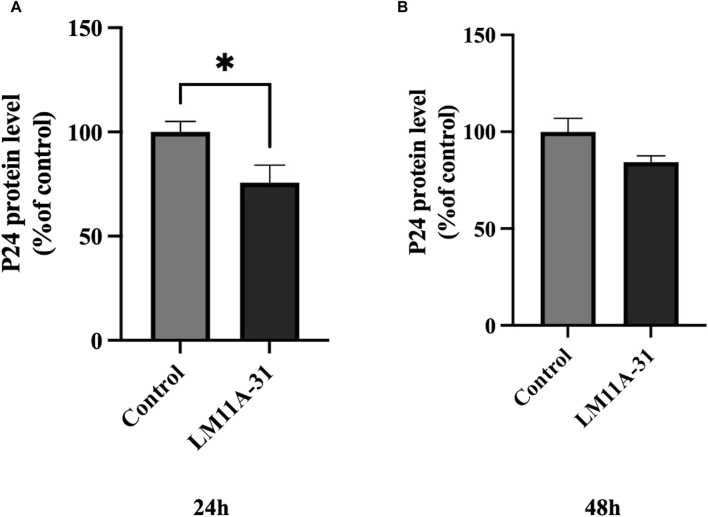
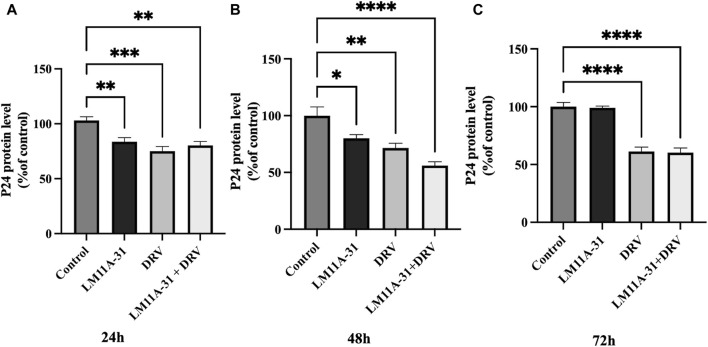
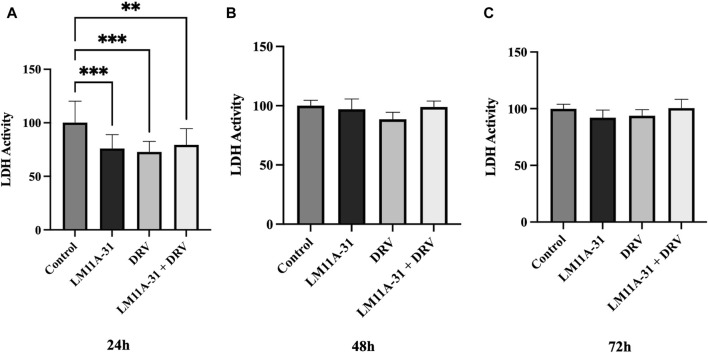
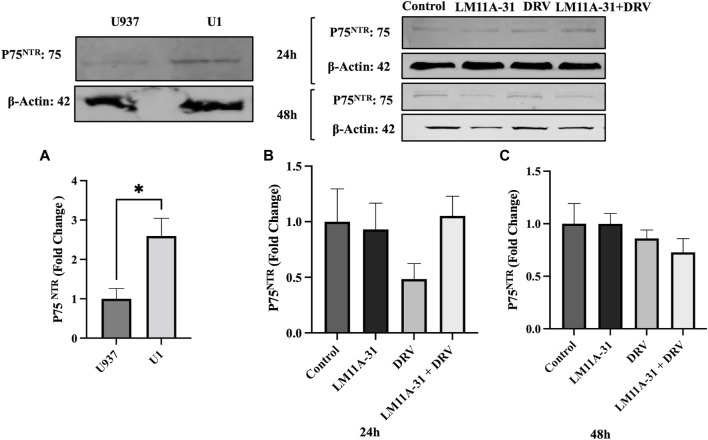
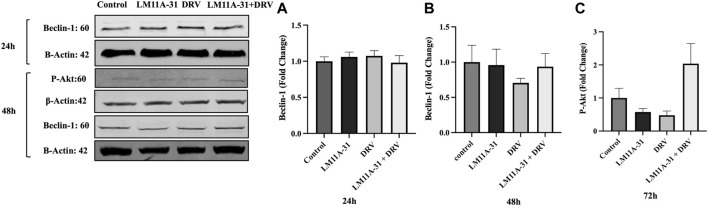
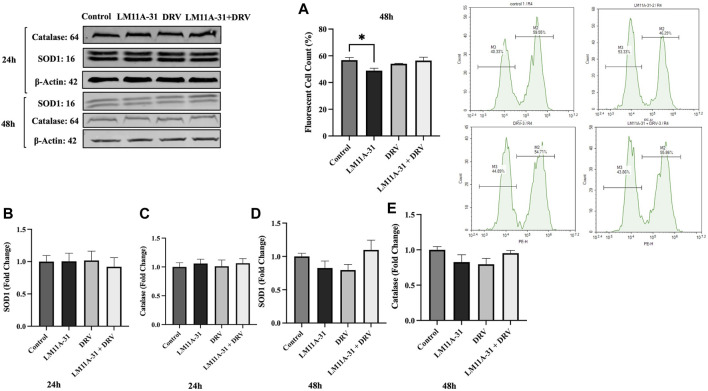
Antiretroviral drugs have made significant progress in treating HIV-1 and improving the quality of HIV-1-infected individuals. However, due to their limited permeability into the brain HIV-1 replication persists in brain reservoirs such as perivascular macrophages and microglia, which cause HIV-1-associated neurocognitive disorders. Therefore, it is highly desirable to find a novel therapy that can cross the blood-brain barrier (BBB) and target HIV-1 pathogenesis in brain reservoirs. A recently developed 2-amino-3-methylpentanoic acid [2-morpholin-4-yl-ethyl]-amide (LM11A-31), which is a p75 neutrotrophin receptor (p75) modulator, can cross the BBB. In this study, we examined whether LM11A-31 treatment can suppress HIV-1 replication, oxidative stress, cytotoxicity, and inflammatory response in macrophages. Our results showed that LM11A-31 (100 nM) alone and/or in combination with positive control darunavir (5.5 µM) significantly suppresses viral replication and reduces cytotoxicity. Moreover, the HIV-1 suppression by LM11A-31 was comparable to the HIV-1 suppression by darunavir. Although p75 was upregulated in HIV-1-infected macrophages compared to uninfected macrophages, LM11A-31 did not significantly reduce the p75 expression in macrophages. Furthermore, our study illustrated that LM11A-31 alone and/or in combination with darunavir significantly suppress pro-inflammatory cytokines including IL-1β, IL-8, IL-18, and TNF-α and chemokines MCP-1 in HIV-induced macrophages. The suppression of these cytokines and chemokines by LM11A-31 was comparable to darunavir. In contrast, LM11A-31 did not significantly alter oxidative stress, expression of antioxidant enzymes, or autophagy marker proteins in U1 macrophages. The results suggest that LM11A-31, which can cross the BBB, has therapeutic potential in suppressing HIV-1 and inflammatory response in brain reservoirs, especially in macrophages.
抗逆转录病毒药物在治疗 HIV-1 和提高 HIV-1 感染者的生活质量方面取得了显著进展。然而,由于其进入大脑的通透性有限,HIV-1 在血管周围巨噬细胞和小胶质细胞等脑内储库中持续复制,导致 HIV-1 相关神经认知障碍。因此,非常需要寻找一种能够穿过血脑屏障(BBB)并针对大脑储库中 HIV-1 发病机制的新型治疗方法。最近开发的 2-氨基-3-甲基戊酸[2-吗啉-4-基-乙基]-酰胺(LM11A-31)是一种 p75 神经生长因子受体(p75)调节剂,可以穿过 BBB。在这项研究中,我们研究了 LM11A-31 治疗是否可以抑制巨噬细胞中的 HIV-1 复制、氧化应激、细胞毒性和炎症反应。我们的结果表明,LM11A-31(100 nM)单独和/或与阳性对照药物达鲁那韦(5.5 μM)联合使用可显著抑制病毒复制并降低细胞毒性。此外,LM11A-31 对 HIV-1 的抑制作用与达鲁那韦相当。尽管与未感染的巨噬细胞相比,感染 HIV-1 的巨噬细胞中 p75 上调,但 LM11A-31 并未显著降低巨噬细胞中的 p75 表达。此外,我们的研究表明,LM11A-31 单独和/或与达鲁那韦联合使用可显著抑制 HIV-1 诱导的巨噬细胞中包括 IL-1β、IL-8、IL-18 和 TNF-α 在内的促炎细胞因子和趋化因子 MCP-1 的表达。LM11A-31 对这些细胞因子和趋化因子的抑制作用与达鲁那韦相当。相比之下,LM11A-31 并未显著改变 U1 巨噬细胞中的氧化应激、抗氧化酶表达或自噬标记蛋白。结果表明,能够穿过 BBB 的 LM11A-31 具有抑制 HIV-1 和大脑储库中炎症反应的治疗潜力,特别是在巨噬细胞中。