Rehman Ayesha, Marigliano Martina, Torsiello Martina, La Noce Marcella, Papaccio Gianpaolo, Tirino Virginia, Del Vecchio Vitale, Papaccio Federica
Department of Experimental Medicine, Section of Human Histology and Embryology, University of Campania "L. Vanvitelli", Via L. Armanni 5, 80128 Naples, NA, Italy.
Department of Medicine, Surgery and Dentistry "Scuola Medica Salernitana", Via S. Allende 43, 84081 Baronissi, SA, Italy.
Cancers (Basel). 2024 Aug 5;16(15):2769. doi: 10.3390/cancers16152769.
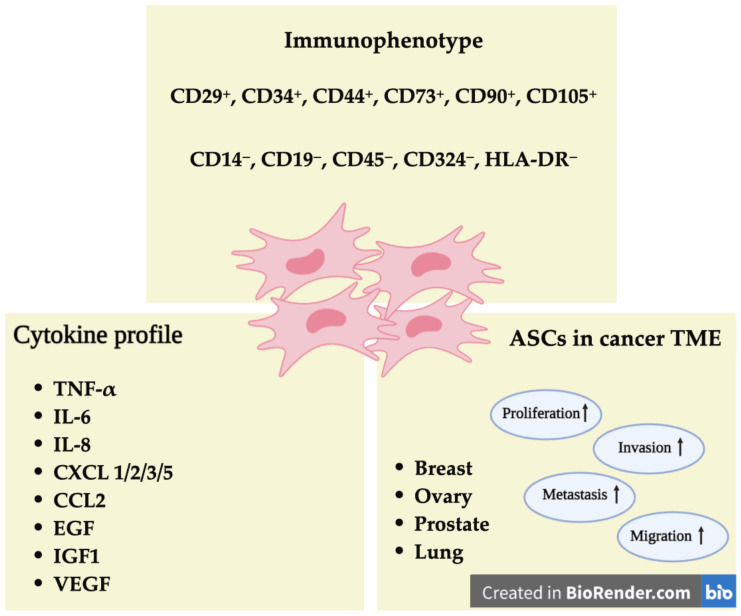
Adipose-derived stem cells (ASCs) significantly influence tumor progression within the tumor microenvironment (TME). This review examines the pro-tumorigenic roles of ASCs, focusing on paracrine signaling, direct cell-cell interactions, and immunomodulation. ASC-mediated mitochondrial transfer through tunneling nanotubes (TNTs) and gap junctions (GJs) plays a significant role in enhancing cancer cell survival and metabolism. Cancer cells with dysfunctional mitochondria acquire mitochondria from ASCs to meet their metabolic needs and thrive in the TME. Targeting mitochondrial transfer, modulating ASC function, and influencing metabolic pathways are potential therapeutic strategies. However, challenges like TME complexity, specificity, safety concerns, and resistance mechanisms must be addressed. Disrupting the ASC-cancer cell-mitochondria axis offers a promising approach to cancer therapy.
脂肪来源干细胞(ASCs)在肿瘤微环境(TME)中显著影响肿瘤进展。本综述探讨了ASCs的促肿瘤作用,重点关注旁分泌信号传导、直接细胞间相互作用和免疫调节。ASCs通过隧道纳米管(TNTs)和间隙连接(GJs)介导的线粒体转移在增强癌细胞存活和代谢方面发挥着重要作用。线粒体功能失调的癌细胞从ASCs获取线粒体以满足其代谢需求并在TME中茁壮成长。靶向线粒体转移、调节ASC功能和影响代谢途径是潜在的治疗策略。然而,必须应对TME复杂性、特异性、安全问题和耐药机制等挑战。破坏ASC-癌细胞-线粒体轴为癌症治疗提供了一种有前景的方法。