Hauptmann M, Kalsdorf B, Akoh-Arrey J E, Lange C, Schaible U E
Priority Area Infections, Division of Cellular Microbiology.
Outpatient Pulmonology Ward, and.
IJTLD Open. 2024 Aug 1;1(8):355-361. doi: 10.5588/ijtldopen.24.0325. eCollection 2024 Aug.
We investigated alterations of human microbiota under anti-TB therapies in relationship to the level of drug response.
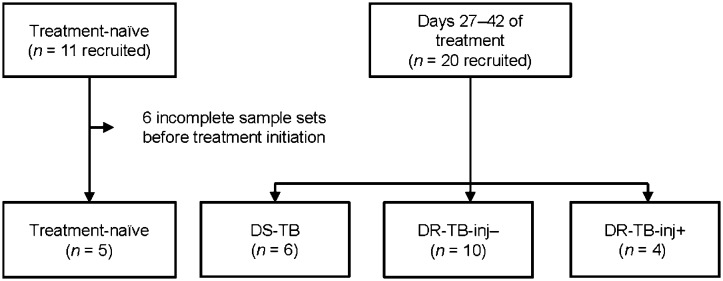
Stool, sputum, and oral swab samples were analysed from participants with treatment-naïve TB and participants treated for drug-susceptible TB (DS-TB), drug-resistant TB without injectable drugs (DR-TB-inj-), or with injectable drugs (DR-TB-inj+) at 27-42 days of therapy.
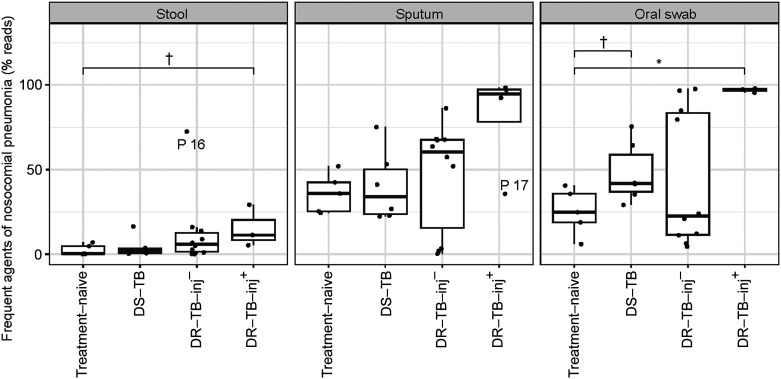
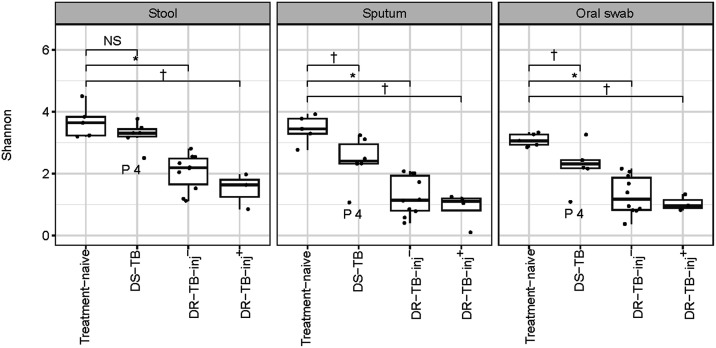
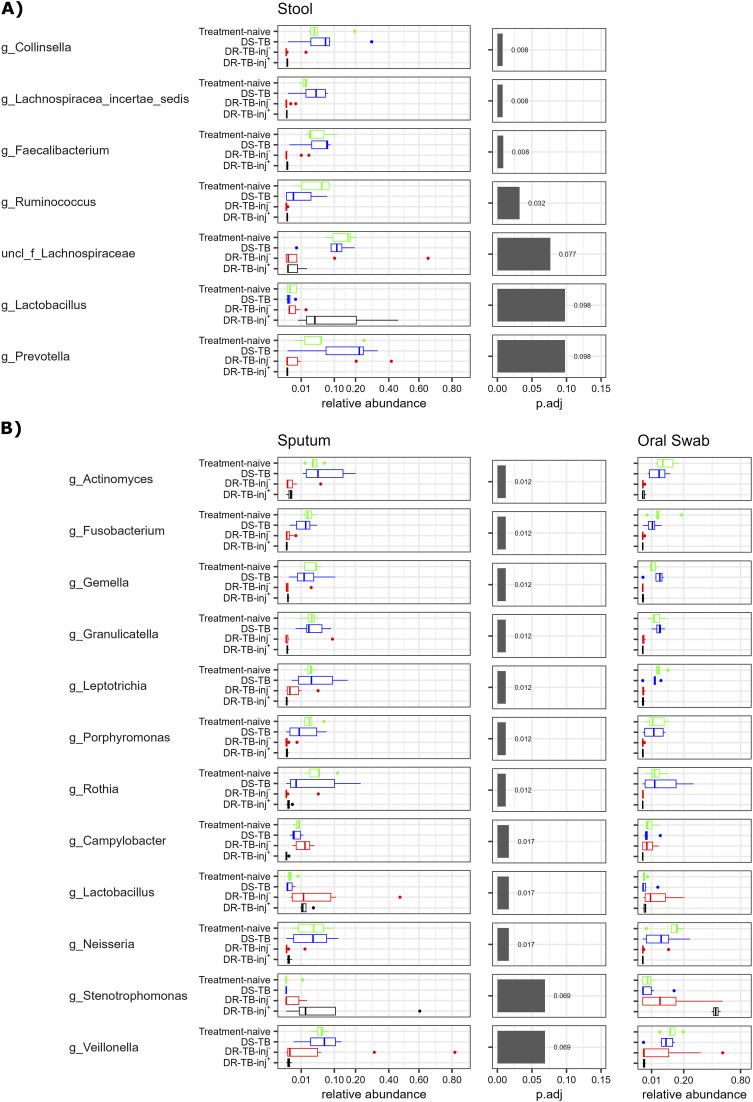
From September 2018 to December 2019, 5 participants with treatment-naïve TB, 6 participants with DS-TB, 10 participants with DR-TB-inj-, and 4 participants with DR-TB-inj+ were recruited. Reduced alpha diversities in stool samples indicated more profound dysbiosis in participants treated for DR-TB than in participants treated for DS-TB (-12% (non-significant) for DS-TB, -44% ( < 0.001) for DR-TB-inj-, and -60% ( < 0.05) for DR-TB-inj+ compared to treatment-naïve participants). While reduced abundances were observed in numerous taxa, genus revealed the most substantial abundance increase in sputa of participants treated for DR-TB compared to treatment-naïve ones ( < 0.05 for DR-TB-inj- and DR-TB-inj+). Notably, a group of nosocomial pneumonia-associated taxa was increased in oral swabs of the DR-TB-inj+ compared to the treatment-naïve group ( < 0.05).
Second-line anti-TB therapy in participants with DR-TB results in altered microbiota, including reduced alpha diversity and expansion of phylogenetically diverse taxa, including pathobionts.
我们研究了抗结核治疗下人类微生物群的变化及其与药物反应水平的关系。
对初治结核病患者以及接受药物敏感结核病(DS-TB)、无注射用药物的耐药结核病(DR-TB-inj-)或有注射用药物的耐药结核病(DR-TB-inj+)治疗的患者在治疗27 - 42天时的粪便、痰液和口腔拭子样本进行分析。
2018年9月至2019年12月,招募了5名初治结核病患者、6名DS-TB患者、10名DR-TB-inj-患者和4名DR-TB-inj+患者。粪便样本中α多样性降低表明,与DS-TB患者相比,DR-TB患者的菌群失调更为严重(与初治患者相比,DS-TB患者为-12%(无统计学意义),DR-TB-inj-患者为-44%(<0.001),DR-TB-inj+患者为-60%(<0.05))。虽然在众多分类群中观察到丰度降低,但与初治患者相比,DR-TB患者痰液中属的丰度增加最为显著(DR-TB-inj-和DR-TB-inj+患者均<0.05)。值得注意的是,与初治组相比,DR-TB-inj+患者口腔拭子中一组与医院获得性肺炎相关的分类群增加(<0.05)。
DR-TB患者的二线抗结核治疗导致微生物群改变,包括α多样性降低和系统发育多样的分类群(包括致病共生菌)的扩张。