King R Wilson, Canonico Mario Enrico, Bonaca Marc P, Hess Connie N
Department of Surgery, University of Colorado, Aurora, Colorado.
CPC Clinical Research, Aurora, Colorado.
J Soc Cardiovasc Angiogr Interv. 2022 Oct 28;1(6):100513. doi: 10.1016/j.jscai.2022.100513. eCollection 2022 Nov-Dec.
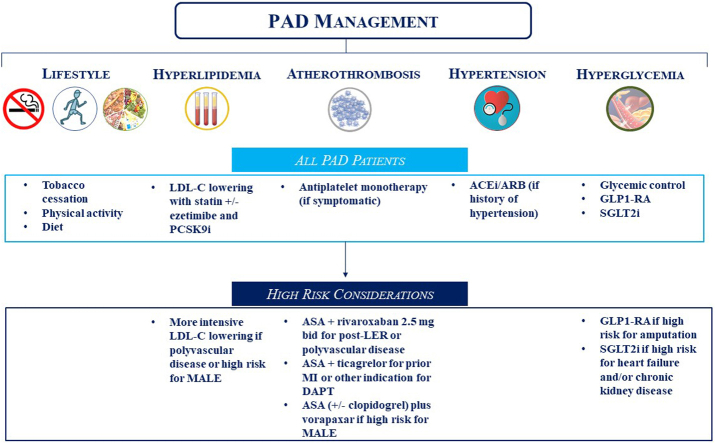
Peripheral artery disease (PAD) commonly refers to atherosclerotic narrowing of noncoronary arteries, primarily those supplying the lower extremities. The risk factors for PAD include smoking, hyperlipidemia, hypertension, and diabetes mellitus. Patients with PAD are at a heightened risk of major adverse cardiovascular events (including myocardial infarction, stroke, and cardiovascular death) and major adverse limb events (including progressive symptoms or limb ischemia requiring peripheral revascularization, amputation, and acute limb ischemia), highlighting the need for guideline-directed therapies. Lifestyle modifications and medical therapies are utilized to improve function and outcomes in this patient population. Adherence to a healthy diet and smoking cessation are both associated with better outcomes in patients with PAD. Medical therapies targeting axes of risk, including lipid-modifying therapies, antithrombotic therapies, and targeted diabetes therapies, are available to reduce this risk in patients with PAD; however, significant residual risk remains. Unfortunately, despite guideline recommendations and efforts at education, even available medical therapies remain underutilized in patients with PAD. Continued development of novel therapies and efforts to improve the provision of care in patients with PAD are needed.
外周动脉疾病(PAD)通常指非冠状动脉的动脉粥样硬化性狭窄,主要是那些供应下肢的动脉。PAD的危险因素包括吸烟、高脂血症、高血压和糖尿病。PAD患者发生主要不良心血管事件(包括心肌梗死、中风和心血管死亡)和主要不良肢体事件(包括需要外周血管重建的进行性症状或肢体缺血、截肢和急性肢体缺血)的风险增加,这突出了指南指导治疗的必要性。生活方式改变和药物治疗被用于改善该患者群体的功能和预后。坚持健康饮食和戒烟都与PAD患者更好的预后相关。针对风险轴的药物治疗,包括调脂治疗、抗栓治疗和针对性糖尿病治疗,可用于降低PAD患者的这种风险;然而,仍存在显著的残余风险。不幸的是,尽管有指南推荐和教育努力,但即使是现有的药物治疗在PAD患者中仍未得到充分利用。需要持续开发新疗法并努力改善PAD患者的护理服务。