Min Hyun Jin, Choi Bo-Yun, Sul Woo Jun, Cho Hyung-Ju
Department of Otorhinolaryngology-Head and Neck Surgery, Chung-Ang University College of Medicine, Seoul, Korea.
Biomedical Research Institute, Chung-Ang University Hospital, Seoul, Korea.
Clin Exp Otorhinolaryngol. 2024 Nov;17(4):292-301. doi: 10.21053/ceo.2024.00167. Epub 2024 Aug 13.
Microorganisms are likely present in continuous positive airway pressure (CPAP) devices in daily use. Given the potential risk of infection among CPAP users, we aimed to compare the microbiomes of CPAP devices with those of nasal mucosa samples obtained from patients using these devices.
We conducted a prospective cohort study at multiple tertiary medical institutions. Samples were collected from the tubes and filters of CPAP devices and the nasal mucosa of device users. Microbiomes and mycobiomes were analyzed using 16S ribosomal RNA and internal transcribed spacer region sequencing. The results were compared according to sampling site and usage duration for each patient.
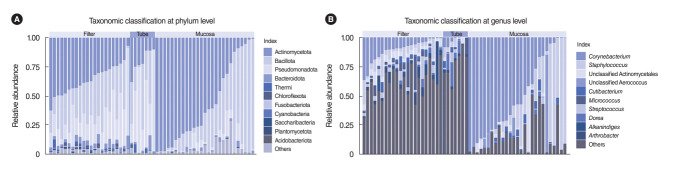
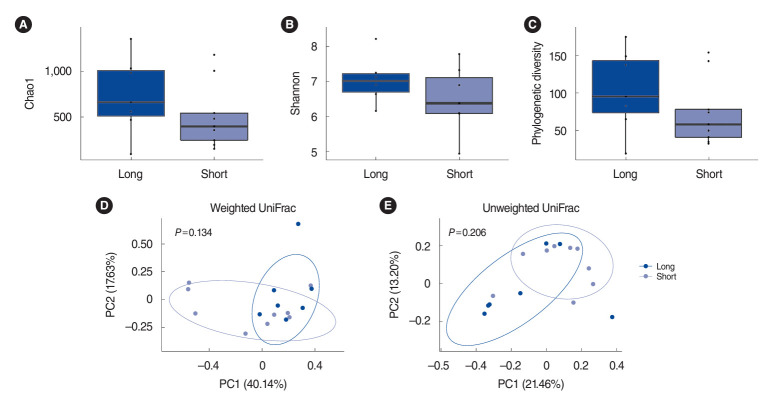
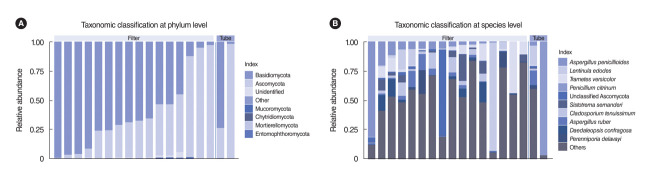
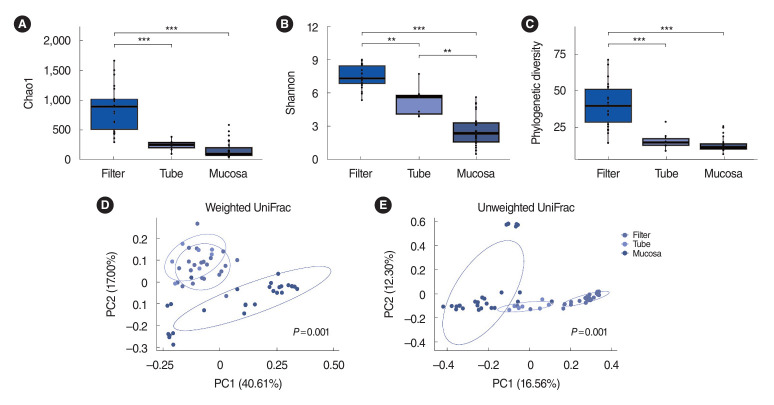
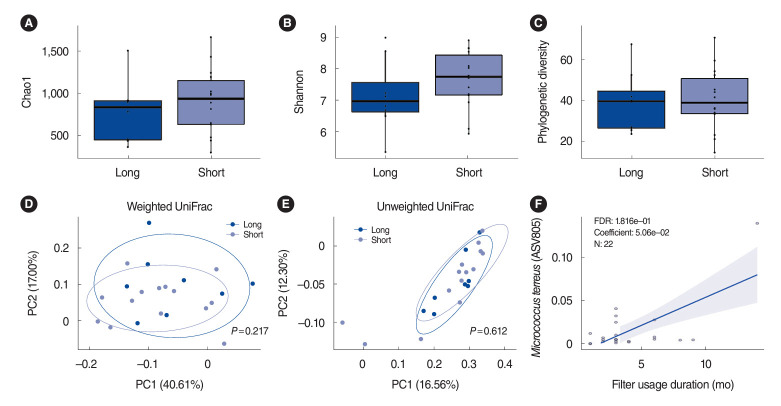
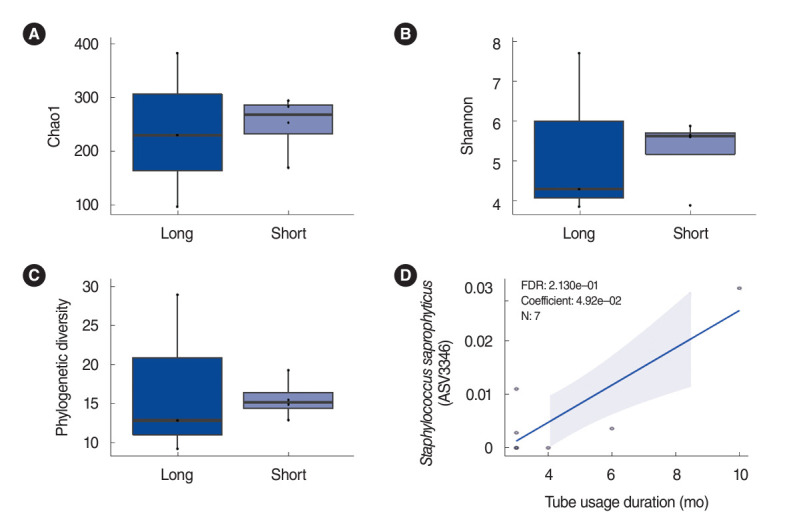
Overall, 27 paired samples of human nasal mucosa and CPAP components were analyzed. Bacteria were detected in 7 of the 27 tubes (25.9%) and in 22 of the 27 filters (81.5%). Fungi were found in 2 tubes (7.4%) and 16 filters (59.3%). The most prevalent bacterial phyla across all samples were Actinobacteria and Firmicutes. Fungi were not detected in any nasal mucosa samples. However, fungi were identified in the CPAP filters and tubes, with the Basidiomycota and Ascomycota phyla predominating. No significant associations were identified according to sampling site or duration of CPAP use.
Some bacteria or fungi are detectable in CPAP samples, even after a short period of CPAP usage. However, the association between respiratory infections and these microbiomes or mycobiomes was not investigated. Further research is required to clarify the risk posed by CPAP devices as a microbial contamination source.
日常使用的持续气道正压通气(CPAP)设备中可能存在微生物。鉴于CPAP使用者存在感染的潜在风险,我们旨在比较CPAP设备的微生物群与使用这些设备的患者鼻腔黏膜样本的微生物群。
我们在多家三级医疗机构进行了一项前瞻性队列研究。从CPAP设备的管道和过滤器以及设备使用者的鼻腔黏膜采集样本。使用16S核糖体RNA和内部转录间隔区测序分析微生物群和真菌群。根据每位患者的采样部位和使用时长对结果进行比较。
总体而言,共分析了27对人鼻腔黏膜和CPAP组件样本。在27根管道中的7根(25.9%)以及27个过滤器中的22个(81.5%)检测到细菌。在2根管道(7.4%)和16个过滤器(59.3%)中发现了真菌。所有样本中最常见的细菌门是放线菌门和厚壁菌门。在任何鼻腔黏膜样本中均未检测到真菌。然而,在CPAP过滤器和管道中鉴定出了真菌,以担子菌门和子囊菌门为主。根据采样部位或CPAP使用时长未发现显著关联。
即使在短期使用CPAP后,在CPAP样本中也可检测到一些细菌或真菌。然而,未研究呼吸道感染与这些微生物群或真菌群之间的关联。需要进一步研究以阐明CPAP设备作为微生物污染源所带来的风险。