Departments of Neurosurgery, The Third Affiliated Hospital, Naval Medical University, Shanghai, P.R. China.
Departments of Orthopaedics, The Second Affiliated Hospital, Naval Medical University, Shanghai, P.R. China.
Neurosurg Rev. 2024 Aug 13;47(1):421. doi: 10.1007/s10143-024-02589-5.
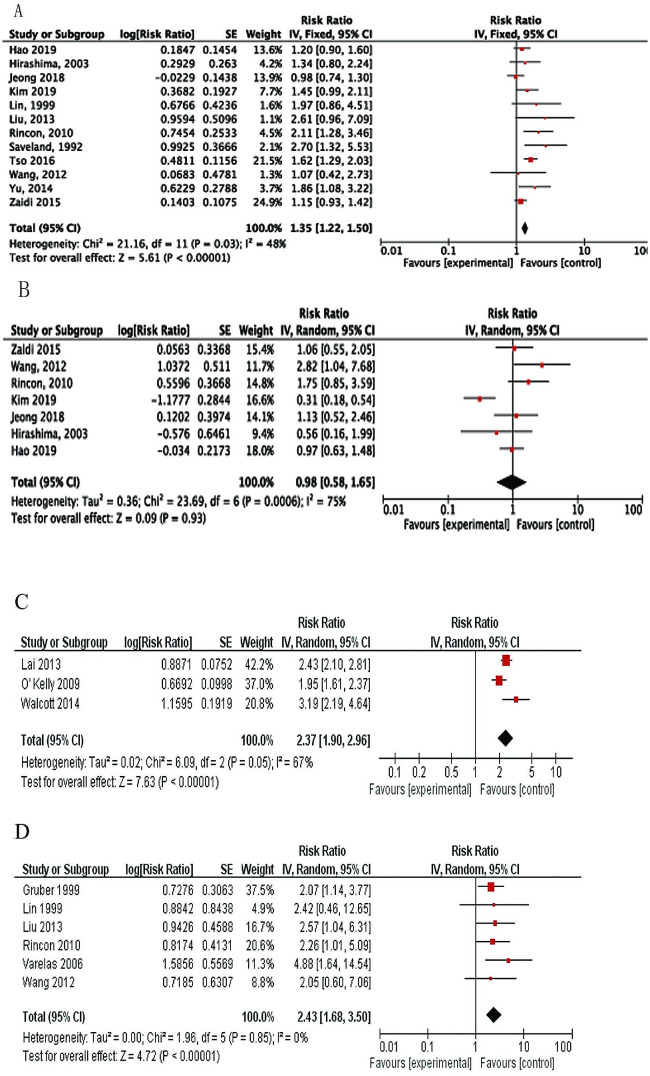
Shunt dependent hydrocephalus (SDHC) is a common sequel after aneurysmal subarachnoid hemorrhage (aSAH) and factors contributing to the development of SDHC remain obscure. The aim of this study was to identify predictors of SDHC following aSAH. We conducted a systematic review based on the Meta-analysis of Observational Studies in Epidemiology (MOOSE) guidelines. We searched electronic databases including Pubmed, Embase, and Cochrane databases from 1980 through August 2019 for studies on the risk factors of SDHC after aSAH. Inclusion criteria were: (1) SAH and hydrocephalus confirmed by CT or magnetic resonance imaging findings; (2) the odds ratios (ORs) or the relative risk (RR) with 95% confidence interval (95%CI; or crude data that allowed their calculation) were reported; and (3) languages were restricted to English and Chinese. Two independent authors collected the data including study design, characteristics of patients and potential risk factors. Random-effects models were used to estimate weighted mean differences (WMD), relative risks (RR) with corresponding 95% confidence intervals (CI). For analysis with significant heterogeneity, subgroup analyses stratified by study design and geographic area were performed. In all, 37 cohort studies met inclusion criteria. Several factors were associated with SDHC. Infection, acute hydrocephalus, placement of external ventricular drainage, older age, higher Hunt and Hess grade, intraventricular hemorrhage, rebleeding, and mechanical ventilation were associated with greater 2-fold increased risk of SDHC. Vasospasm, female gender, high Fisher grade, preexisting hypertension, aneurysm in posterior location and intracerebral hemorrhage were associated with less than 2-fold increased risk. Treatment modality and diabetes mellitus were not associated with SDHC. SDHC is a multi-factorial disease that is associated with patient and treatment factors. Acknowledgement of these potential factors could help prevent SDHC.
分流依赖性脑积水(SDHC)是蛛网膜下腔出血(aSAH)后的常见后遗症,其发病因素仍不清楚。本研究旨在确定 aSAH 后 SDHC 的预测因素。我们按照观察性研究荟萃分析(MOOSE)指南进行了系统评价。我们检索了电子数据库,包括 1980 年至 2019 年 8 月的 Pubmed、Embase 和 Cochrane 数据库,以获取关于 aSAH 后 SDHC 危险因素的研究。纳入标准为:(1)通过 CT 或磁共振成像发现的蛛网膜下腔出血和脑积水;(2)报道了比值比(OR)或相对风险(RR)及 95%置信区间(95%CI);或报告了原始数据,允许计算其数值;(3)语言限于英语和中文。两名独立的作者收集了数据,包括研究设计、患者特征和潜在的危险因素。使用随机效应模型估计加权均数差(WMD)、相应的相对风险(RR)及 95%置信区间(CI)。对于具有显著异质性的分析,按研究设计和地理区域进行了亚组分析。共有 37 项队列研究符合纳入标准。一些因素与 SDHC 相关。感染、急性脑积水、放置外引流管、年龄较大、Hunt 和 Hess 分级较高、脑室出血、再出血和机械通气与 SDHC 的 2 倍以上风险增加相关。血管痉挛、女性、Fisher 分级较高、原有高血压、后颅窝位置的动脉瘤和脑出血与小于 2 倍的风险增加相关。治疗方式和糖尿病与 SDHC 无关。SDHC 是一种多因素疾病,与患者和治疗因素有关。认识到这些潜在的因素可以帮助预防 SDHC。