Key Laboratory of Imaging Diagnosis and Minimally Invasive Intervention Research, The Fifth Affiliated Hospital of Wenzhou Medical University, No 289, Kuocang Road, Lishui, 323000, China.
Department of Interventional Radiology, The Fifth Affiliated Hospital of Wenzhou Medical University, No 289, Kuocang Road, Lishui, 323000, China.
J Nanobiotechnology. 2024 Aug 12;22(1):478. doi: 10.1186/s12951-024-02703-1.
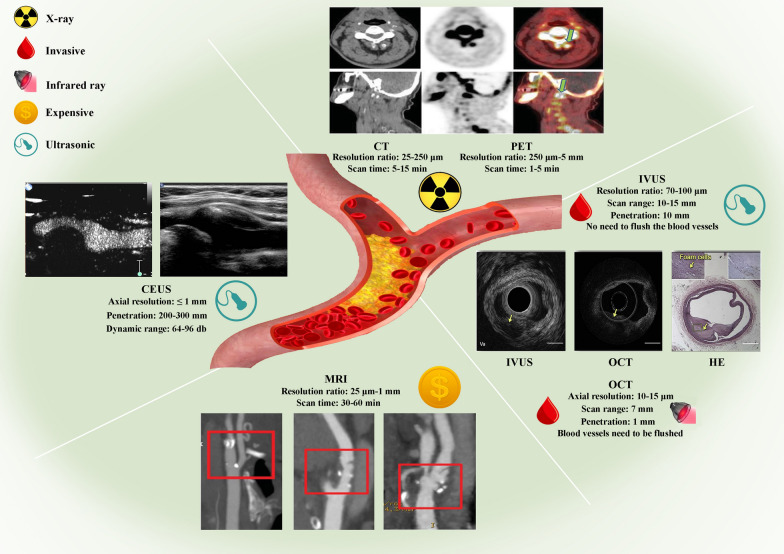
Atherosclerosis, a highly pathogenic and lethal disease, is difficult to locate accurately via conventional imaging because of its scattered and deep lesions. However, second near-infrared (NIR-II) nanomaterials show great application potential in the tracing of atherosclerotic plaques due to their excellent penetration and angiographic capabilities.
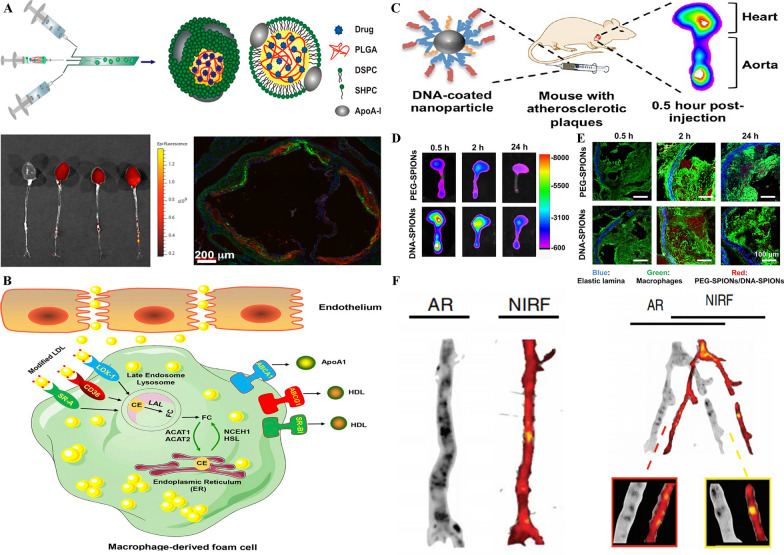
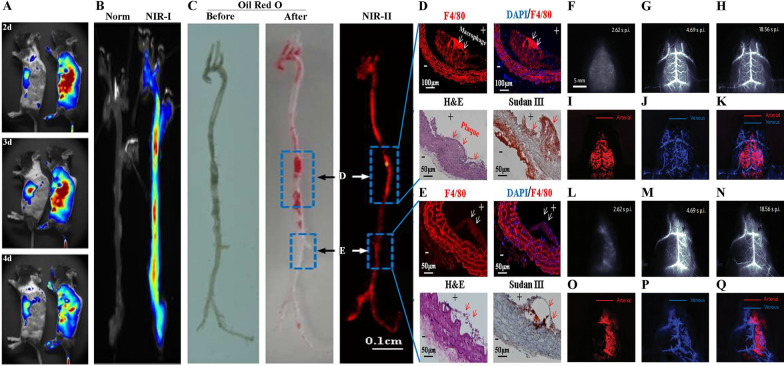
With the development of nanotechnology, among many nanomaterials available for the visual diagnosis and treatment of cardiovascular diseases, optical nanomaterials provide strong support for various biomedical applications because of their advantages, such as noninvasive, nondestructive and molecular component imaging. Among optical nanomaterials of different wavelengths, NIR-II-range (900 ~ 1700 nm) nanomaterials have been gradually applied in the visual diagnosis and treatment of atherosclerosis and other vascular diseases because of their deep biological tissue penetration and limited background interference. This review explored in detail the prospects and challenges of the biological imaging and clinical application of NIR-II nanomaterials in treating atherosclerosis.
动脉粥样硬化是一种高度致病和致命的疾病,由于其病变分散且较深,常规成像技术难以准确定位。然而,由于具有优异的穿透性和血管造影能力,第二代近红外二区(NIR-II)纳米材料在动脉粥样硬化斑块的示踪中具有巨大的应用潜力。
随着纳米技术的发展,在可用于心血管疾病的可视化诊断和治疗的众多纳米材料中,光纳米材料因其具有非侵入性、非破坏性和分子成分成像等优点,为各种生物医学应用提供了强有力的支持。在不同波长的光纳米材料中,近红外二区(900 ~ 1700nm)纳米材料由于具有较深的生物组织穿透性和有限的背景干扰,已逐渐应用于动脉粥样硬化和其他血管疾病的可视化诊断和治疗中。本综述详细探讨了 NIR-II 纳米材料在治疗动脉粥样硬化中的生物成像和临床应用的前景和挑战。