Htun Nay Min, Chen Yung Chih, Lim Bock, Schiller Tara, Maghzal Ghassan J, Huang Alex L, Elgass Kirstin D, Rivera Jennifer, Schneider Hans G, Wood Bayden R, Stocker Roland, Peter Karlheinz
Baker IDI Heart & Diabetes Institute, Melbourne, VIC, Australia.
Department of Medicine, Monash University, Melbourne, VIC, Australia.
Nat Commun. 2017 Jul 13;8(1):75. doi: 10.1038/s41467-017-00138-x.
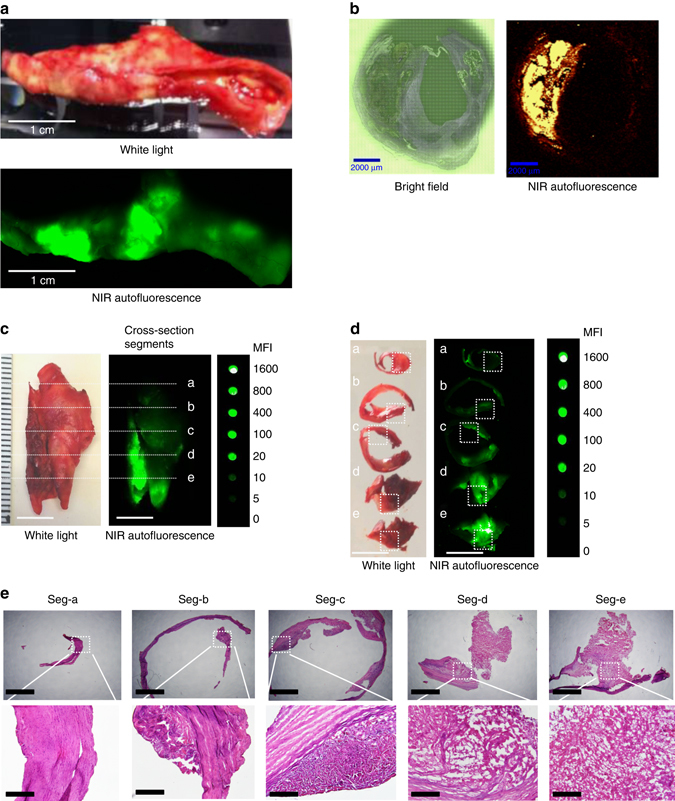
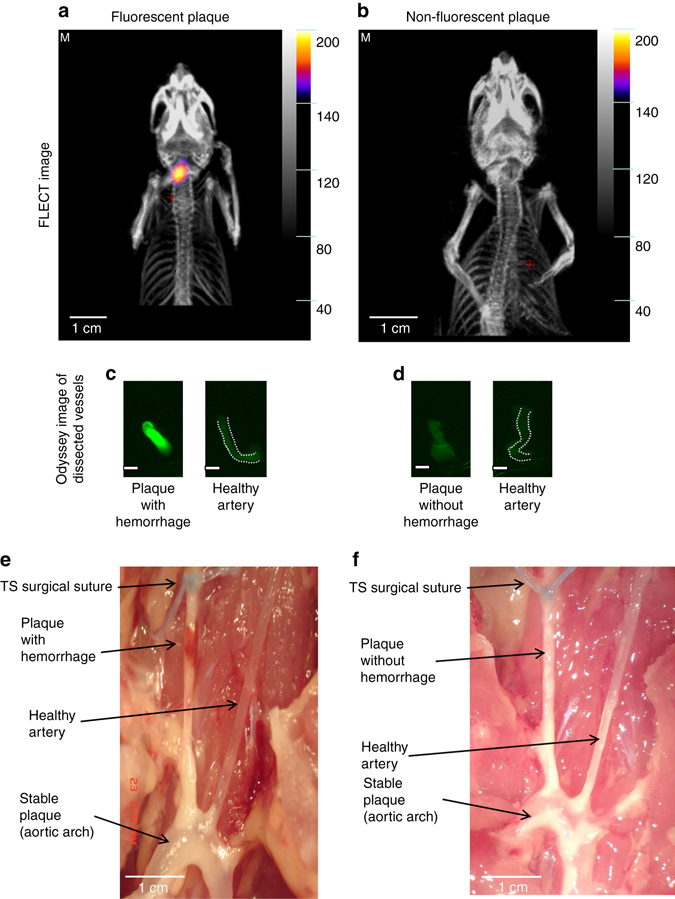
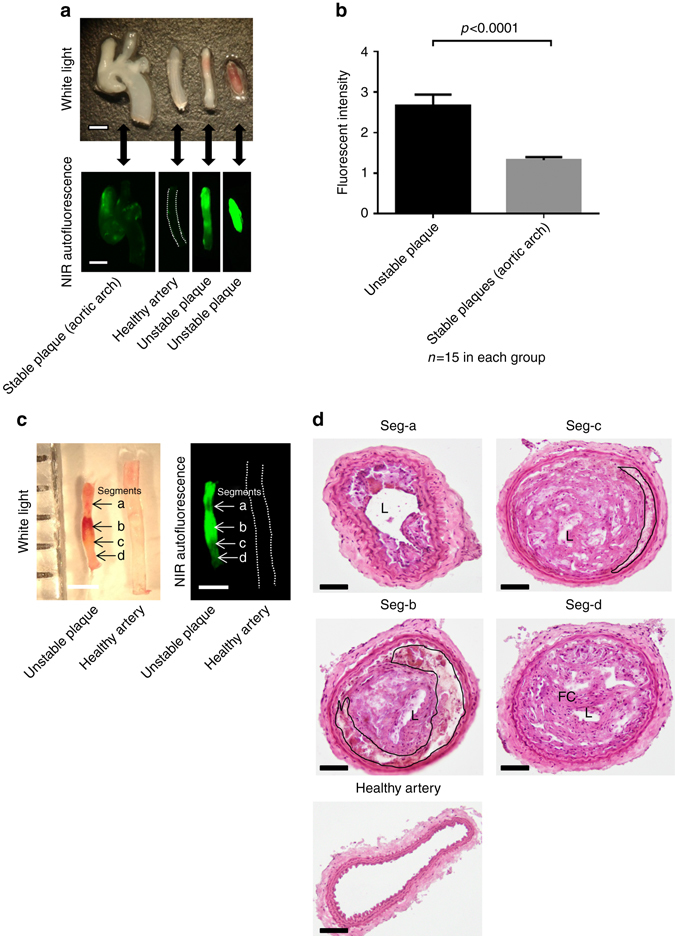
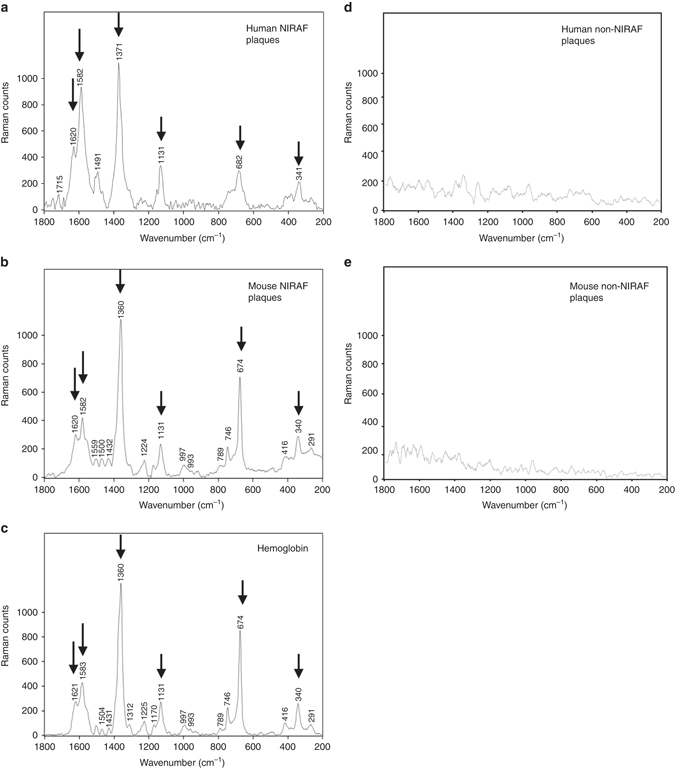
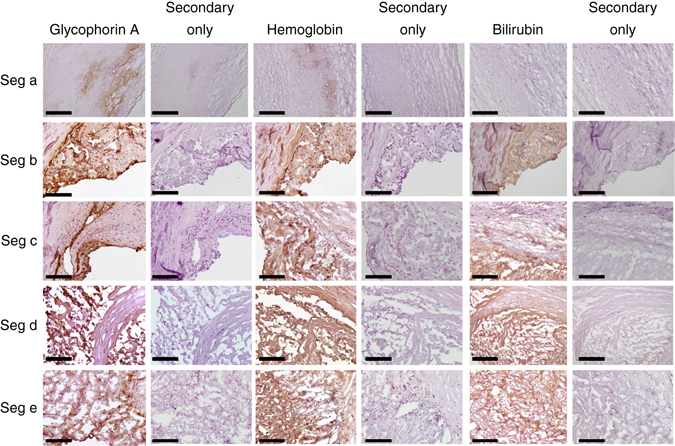
Atherosclerosis is a major cause of mortality and morbidity, which is mainly driven by complications such as myocardial infarction and stroke. These complications are caused by thrombotic arterial occlusion localized at the site of high-risk atherosclerotic plaques, of which early detection and therapeutic stabilization are urgently needed. Here we show that near-infrared autofluorescence is associated with the presence of intraplaque hemorrhage and heme degradation products, particularly bilirubin by using our recently created mouse model, which uniquely reflects plaque instability as seen in humans, and human carotid endarterectomy samples. Fluorescence emission computed tomography detecting near-infrared autofluorescence allows in vivo monitoring of intraplaque hemorrhage, establishing a preclinical technology to assess and monitor plaque instability and thereby test potential plaque-stabilizing drugs. We suggest that near-infrared autofluorescence imaging is a novel technology that allows identification of atherosclerotic plaques with intraplaque hemorrhage and ultimately holds promise for detection of high-risk plaques in patients.Atherosclerosis diagnosis relies primarily on imaging and early detection of high-risk atherosclerotic plaques is important for risk stratification of patients and stabilization therapies. Here Htun et al. demonstrate that vulnerable atherosclerotic plaques generate near-infrared autofluorescence that can be detected via emission computed tomography.
动脉粥样硬化是导致死亡和发病的主要原因,主要由心肌梗死和中风等并发症引发。这些并发症是由位于高危动脉粥样硬化斑块部位的血栓性动脉闭塞引起的,因此迫切需要对其进行早期检测和治疗性稳定。在此,我们利用最近创建的小鼠模型(该模型独特地反映了人类中所见的斑块不稳定性)以及人类颈动脉内膜切除术样本,表明近红外自发荧光与斑块内出血和血红素降解产物(特别是胆红素)的存在相关。检测近红外自发荧光的荧光发射计算机断层扫描能够对斑块内出血进行体内监测,建立了一种临床前技术来评估和监测斑块不稳定性,从而测试潜在的斑块稳定药物。我们认为,近红外自发荧光成像技术是一种能够识别伴有斑块内出血的动脉粥样硬化斑块的新技术,最终有望用于检测患者中的高危斑块。动脉粥样硬化的诊断主要依赖于成像,早期检测高危动脉粥样硬化斑块对于患者的风险分层和稳定治疗非常重要。在此,吞等人证明易损动脉粥样硬化斑块会产生可通过发射计算机断层扫描检测到的近红外自发荧光。