Gastroenterology Unit, Department of Medicine, University of Nigeria Teaching Hospital, Ituku-Ozalla, Nigeria.
Department of Chemical Pathology, Benue State University, Makurdi, Nigeria.
BMC Gastroenterol. 2024 Aug 12;24(1):259. doi: 10.1186/s12876-024-03353-1.
Liver cirrhosis is a chronic and progressive liver disease with significant global health implications. Recent evidence suggests an association between serum vitamin D levels and the severity of liver cirrhosis, potentially serving as a therapeutic target. This study aimed to investigate the relationship between serum vitamin D status and the severity of liver cirrhosis in a population of Nigerian patients.
This analytical, cross-sectional study involved 201 participants, including 103 with liver cirrhosis and 98 age- and sex-matched controls. Serum vitamin D was measured using ELISA, with deficiency defined as < 20 ng/ml. Cirrhosis severity was assessed using Child-Pugh and MELD scores. Spearman's correlation was used to assess the relationship between vitamin D and severity of liver cirrhosis while ordinal regression analysis assessed its performance as an indicator of the disease severity.
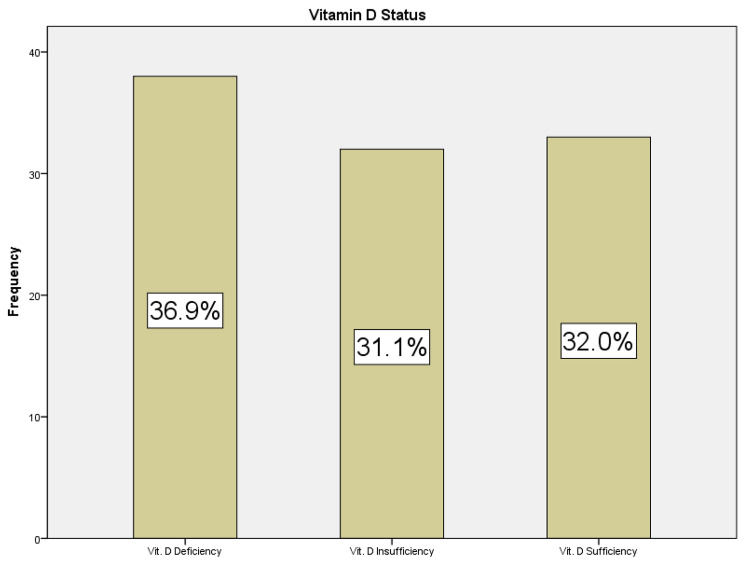
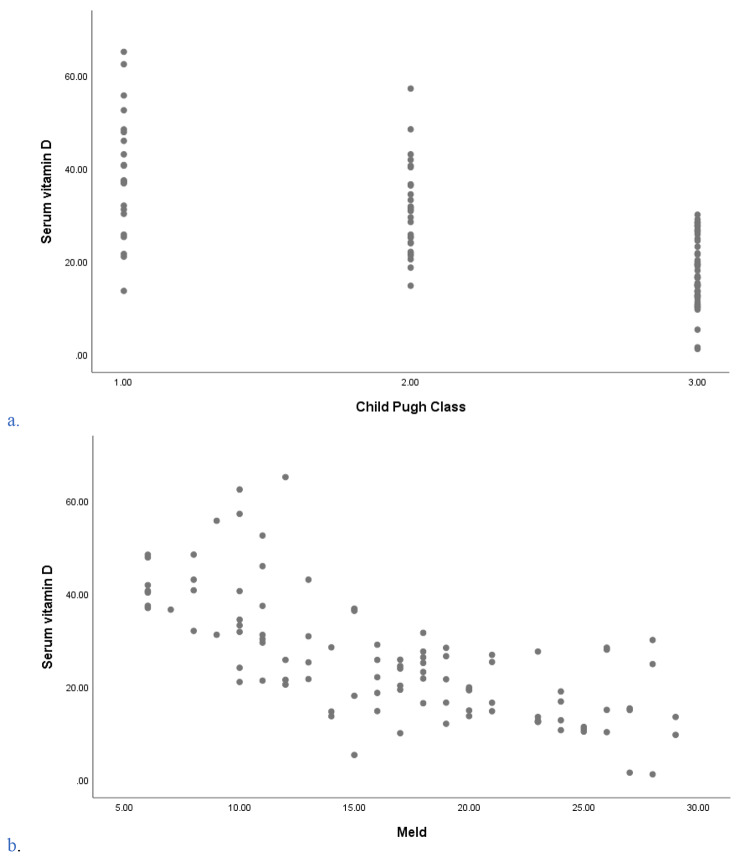
Among cirrhotic patients, 36.9% were deficient, 31.1% insufficient, and 32.0% had sufficient vitamin D levels. Serum vitamin D showed strong negative correlations with Child-Pugh and MELD scores (r = -0.696, p < 0.001; r = -0.734, p < 0.001, respectively). Ordinal regression showed that higher vitamin D levels were associated with lower severity scores (Child-Pugh: OR = 0.856, 95% CI: 0.815-0.900, p < 0.001; MELD: OR = 0.875, 95% CI: 0.837-0.915, p < 0.001).
Lower serum vitamin D levels correlated with increased liver cirrhosis severity, suggesting its potential as both a prognostic marker and therapeutic target. Further studies should investigate the efficacy of vitamin D supplementation in improving cirrhosis outcomes.
肝硬化是一种具有重大全球健康意义的慢性进行性肝病。最近的证据表明,血清维生素 D 水平与肝硬化的严重程度之间存在关联,可能成为治疗靶点。本研究旨在调查尼日利亚患者人群中血清维生素 D 状况与肝硬化严重程度之间的关系。
这是一项分析性、横断面研究,共纳入 201 名参与者,包括 103 名肝硬化患者和 98 名年龄和性别匹配的对照者。采用 ELISA 法测定血清维生素 D,以<20ng/ml 定义为缺乏。采用 Child-Pugh 和 MELD 评分评估肝硬化严重程度。采用 Spearman 相关分析评估维生素 D 与肝硬化严重程度之间的关系,采用有序回归分析评估其作为疾病严重程度指标的性能。
在肝硬化患者中,36.9%存在维生素 D 缺乏,31.1%存在维生素 D 不足,32.0%存在维生素 D 充足。血清维生素 D 与 Child-Pugh 和 MELD 评分呈强烈负相关(r=-0.696,p<0.001;r=-0.734,p<0.001)。有序回归显示,较高的维生素 D 水平与较低的严重程度评分相关(Child-Pugh:OR=0.856,95%CI:0.815-0.900,p<0.001;MELD:OR=0.875,95%CI:0.837-0.915,p<0.001)。
血清维生素 D 水平较低与肝硬化严重程度增加相关,表明其可能既是预后标志物,也是治疗靶点。进一步的研究应调查维生素 D 补充剂改善肝硬化结局的疗效。