Ouédraogo Jean Claude Romaric Pingdwindé, Addo-Lartey Adolphina Addoley
Department of Epidemiology and Disease Control University of Ghana School of Public Health, Legon, Accra, Ghana.
Laboratory for Research and Development in Phytomedicines and Medicines (LR-D/PM) Research Institute of Health Sciences (IRSS/CNRST), Ouagadougou, Burkina Faso.
J Trop Med. 2024 Aug 5;2024:9924852. doi: 10.1155/2024/9924852. eCollection 2024.
Preventive chemotherapy with anthelminthic drugs is meant to control soil-transmitted helminthiases, but some children may experience adverse reactions.
This study investigated why some school-age children did not receive the medication as well as the side effects experienced by those who did during the 2019 preventive chemotherapy in Krachi East Municipal, Oti Region, Ghana.
Using a two-stage stratified sampling, a community-based cross-sectional study was conducted among 352 school-age children and their caregivers living in three urban and five rural communities.
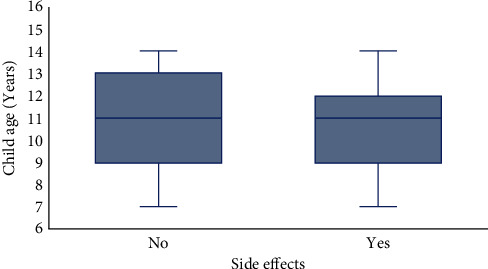
Most children (93.8%) were in primary school, aged 11 to 12 years (28.1%), male (53.1%), and resided in an urban area (83.8%). Due to concerns about side effects (28.1%), absenteeism (25.0%), and sickness (9.4%), 32 (9.09%) children did not receive the anthelminthic medication. Of the 320 children who received and ingested the anthelmintic drug, 50.3% experienced at least one side effect. Common side effects included dizziness (58.4%), feeling weak (27.3%), and stomach issues such as vomiting (17.4%), abdominal pain (11.8%), and nausea (6.2%). In adjusted analyses, children aged 11-12 years had higher odds of side effects (aOR: 2.40, 95% CI: 1.22-4.76) than children aged 7-8 years. Male children were also less likely than female children to experience adverse effects (aOR: 0.43, 95% CI: 0.27-0.68). . Ghana's national goal of 100% therapeutic coverage was unmet. Medication consumption during prophylactic chemotherapy may be hampered due to the high prevalence of side effects among school-age children. It is necessary to educate caregivers on how to handle these negative effects.
使用驱虫药物进行预防性化疗旨在控制土源性蠕虫病,但一些儿童可能会出现不良反应。
本研究调查了加纳奥蒂地区克拉奇东市2019年预防性化疗期间,一些学龄儿童未接受药物治疗的原因以及接受治疗的儿童所经历的副作用。
采用两阶段分层抽样,对居住在三个城市社区和五个农村社区的352名学龄儿童及其照顾者进行了一项基于社区的横断面研究。
大多数儿童(93.8%)在上小学,年龄在11至12岁(28.1%),男性(53.1%),居住在城市地区(83.8%)。由于担心副作用(28.1%)、旷课(25.0%)和生病(9.4%),32名(9.09%)儿童未接受驱虫药物治疗。在320名接受并服用驱虫药物的儿童中,50.3%至少经历了一种副作用。常见的副作用包括头晕(58.4%)、感觉虚弱(27.3%)和胃部问题,如呕吐(17.4%)、腹痛(11.8%)和恶心(6.2%)。在调整分析中,11至12岁的儿童出现副作用的几率(调整后比值比:2.40,95%置信区间:1.22 - 4.76)高于7至8岁的儿童也比女性儿童更不容易出现不良反应(调整后比值比:0.43,95%置信区间:0.27 - 0.68)。加纳100%治疗覆盖率的国家目标未实现。由于学龄儿童中副作用的高发生率,预防性化疗期间的药物消费可能会受到阻碍。有必要教育照顾者如何应对这些负面影响。