Odarenko Kirill V, Sen'kova Aleksandra V, Salomatina Oksana V, Markov Oleg V, Salakhutdinov Nariman F, Zenkova Marina A, Markov Andrey V
Institute of Chemical Biology and Fundamental Medicine, Siberian Branch of the Russian Academy of Sciences, Novosibirsk, Russia.
N.N. Vorozhtsov Novosibirsk Institute of Organic Chemistry, Siberian Branch of the Russian Academy of Sciences, Novosibirsk, Russia.
Front Pharmacol. 2024 Jul 29;15:1428924. doi: 10.3389/fphar.2024.1428924. eCollection 2024.
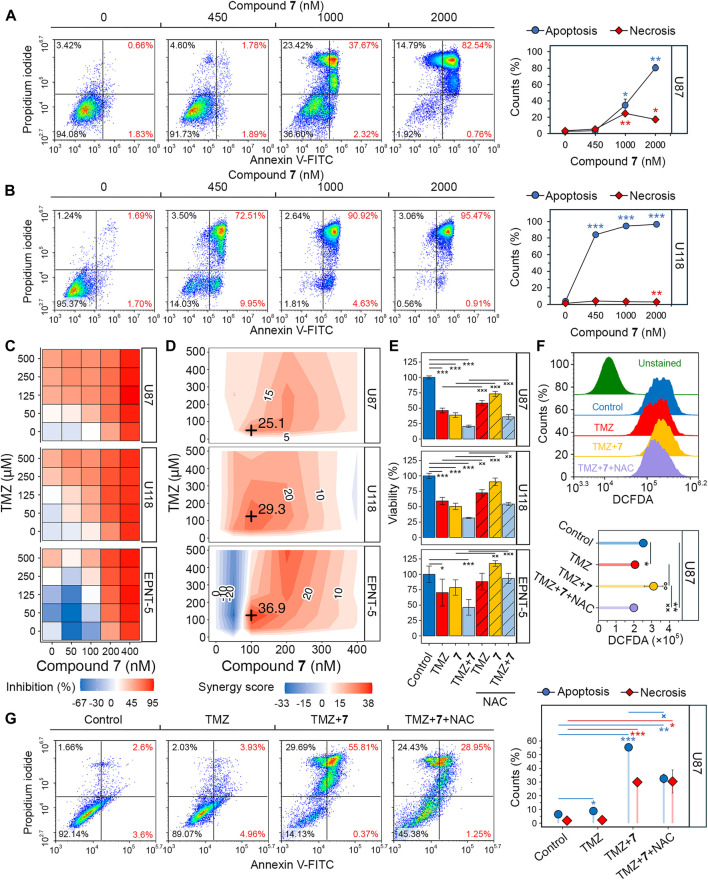
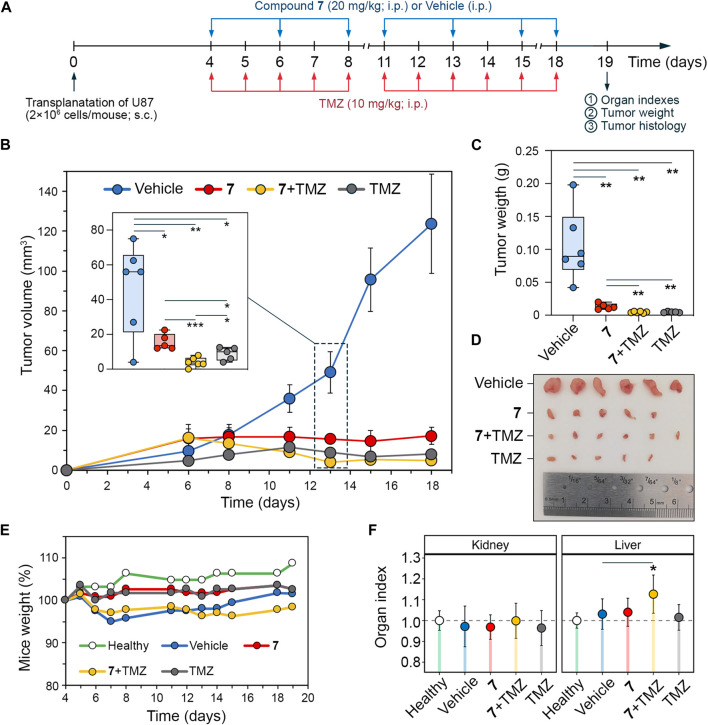
Soloxolone amides are semisynthetic triterpenoids that can cross the blood-brain barrier and inhibit glioblastoma growth both and . Here we investigate the impact of these compounds on processes associated with glioblastoma invasiveness and therapy resistance. Screening of soloxolone amides against glioblastoma cells revealed the ability of compound (soloxolone -methylanilide) to inhibit transforming growth factor-beta 1 (TGF-β1)-induced glial-mesenchymal transition Compound inhibited morphological changes, wound healing, transwell migration, and expression of mesenchymal markers (N-cadherin, fibronectin, Slug) in TGF-β1-induced U87 and U118 glioblastoma cells, while restoring their adhesiveness. Confocal microscopy and molecular docking showed that reduced SMAD2/3 nuclear translocation probably by direct interaction with the TGF-β type I and type II receptors (TβRI/II). In addition, suppressed stemness of glioblastoma cells as evidenced by inhibition of colony forming ability, spheroid growth, and aldehyde dehydrogenase (ALDH) activity. Furthermore, exhibited a synergistic effect with temozolomide (TMZ) on glioblastoma cell viability. Using N-acetyl-L-cysteine (NAC) and flow cytometry analysis of Annexin V-FITC-, propidium iodide-, and DCFDA-stained cells, was found to synergize the cytotoxicity of TMZ by inducing ROS-dependent apoptosis. Further studies showed that , alone or in combination with TMZ, effectively suppressed the growth of U87 xenograft tumors in mice. Thus, demonstrated promising potential as a component of combination therapy for glioblastoma, reducing its invasiveness and increasing its sensitivity to chemotherapy.
索洛索隆酰胺是半合成三萜类化合物,能够穿过血脑屏障并抑制胶质母细胞瘤的生长。在此,我们研究这些化合物对与胶质母细胞瘤侵袭性和治疗抗性相关过程的影响。针对胶质母细胞瘤细胞筛选索洛索隆酰胺发现,化合物(索洛索隆 - 甲基苯胺)能够抑制转化生长因子 - β1(TGF - β1)诱导的胶质 - 间充质转化。化合物抑制了TGF - β1诱导的U87和U118胶质母细胞瘤细胞中的形态变化、伤口愈合、Transwell迁移以及间充质标志物(N - 钙黏蛋白、纤连蛋白、Slug)的表达,同时恢复了它们的黏附性。共聚焦显微镜和分子对接显示,可能通过与TGF - β I型和II型受体(TβRI/II)直接相互作用,减少了SMAD2/3的核转位。此外,抑制了胶质母细胞瘤细胞的干性,这通过抑制集落形成能力、球体生长和醛脱氢酶(ALDH)活性得以证明。此外,与替莫唑胺(TMZ)对胶质母细胞瘤细胞活力表现出协同作用。使用N - 乙酰 - L - 半胱氨酸(NAC)以及对膜联蛋白V - FITC、碘化丙啶和DCFDA染色细胞进行流式细胞术分析,发现通过诱导ROS依赖性凋亡增强了TMZ的细胞毒性。进一步的研究表明,单独或与TMZ联合使用,均能有效抑制小鼠U87异种移植肿瘤的生长。因此,作为胶质母细胞瘤联合治疗的一个组成部分,显示出有前景的潜力,降低其侵袭性并增加其对化疗的敏感性。