Kramer Ton, Cornelison Alyssa S, Klein Alan, Socha Mike T, Rapp Christof, Rodrigues Lucas A, Alberton Geraldo C
Programa de Pós-graduação em Ciências Veterinárias, Universidade Federal do Paraná-Setor Palotina, Palotina, Brazil.
Zinpro Corporation, Eden Prairie, MN, United States.
Front Vet Sci. 2024 Jul 29;11:1400630. doi: 10.3389/fvets.2024.1400630. eCollection 2024.
Claw lesions significantly contribute to lameness, greatly affecting sow welfare. This study investigated different factors that would impact the severity of claw lesions in the sows of Brazilian commercial herds.
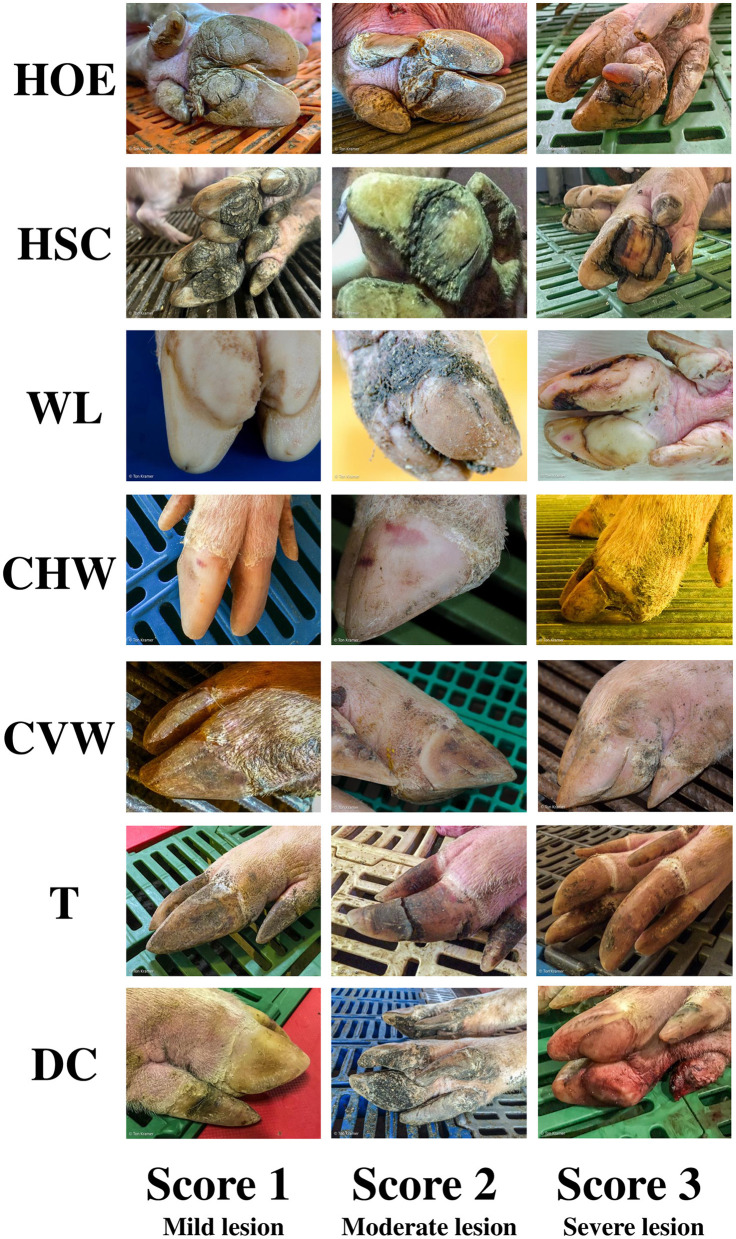
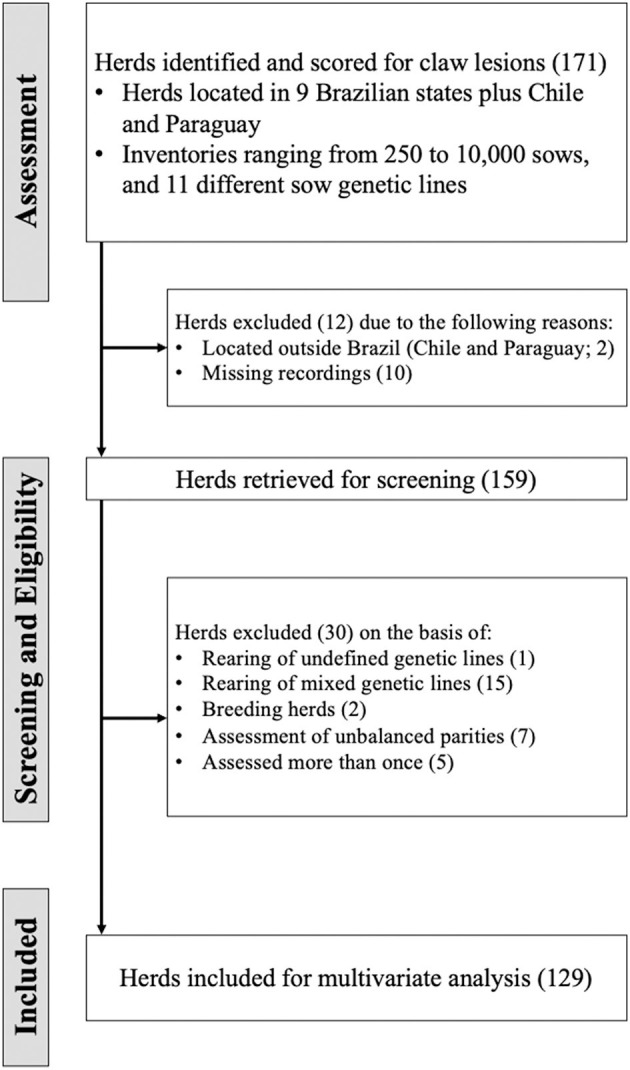
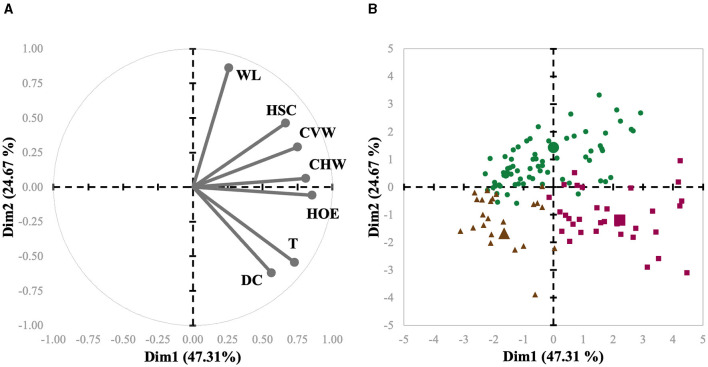
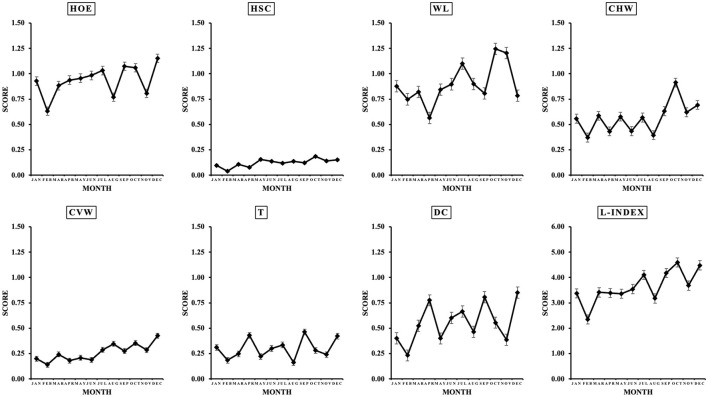
A total of 129 herds ( = 12,364 sows) were included in the study. Herds were in the Midwest, Southeast, or South regions of Brazil. Inventory sizes were stratified into 250-810 sows, 811-1,300 sows, 1,301-3,000 sows, and 3,001-10,000 sows. Herds belonged to Cooperative (Coop), Integrator, or Independent structures. The herd management was conducted either maintaining breeds from stock on-site (internal), or through purchase of commercially available genetics (external). Herds adopted either individual crates or group housing during gestation. Within each farm, one randomly selected group of sows was scored by the same evaluator (two independent experts evaluated a total of 129 herds) from 0 (none) to 3 (severe) for heel overgrowth and erosion (HOE), heel-sole crack (HSC), separation along the white line (WL), horizontal (CHW) and vertical (CVW) wall cracks, and overgrown toes (T), or dewclaws (DC) in the hind legs after parturition. The study assessed differences and similarities between herds using Principal Component Analysis (PCA) and Hierarchical Agglomerative Clustering (HAC) analysis. The effects of factors (i.e., production structure, management, housing during gestation, and region) were assessed using the partial least squares method (PLS).
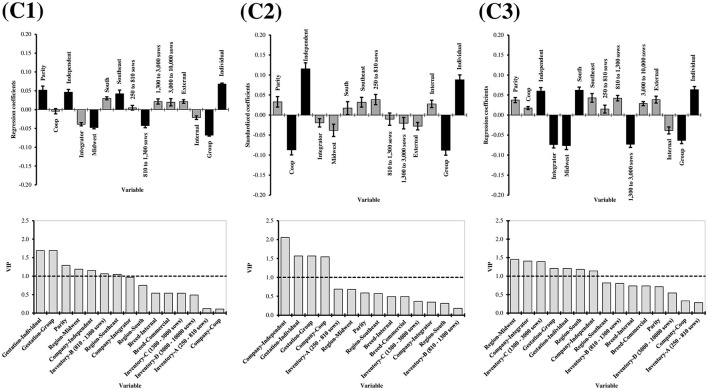
Heel overgrowth and erosion had the highest prevalence, followed by WL and CHW, while the lowest scores were observed for T, DC, and CVW. Herds were grouped in three clusters (i.e., C1, C2, and C3). Heel overgrowth and erosion, HSC, WL, CHW, CVW, and T were decreased by 17, 25, 11, 25, 21, and 17%, respectively, in C3 compared to C1 and 2 combined. Independent structure increased the L-Index in all three clusters. Furthermore, individual housing increased the L-Index regardless of the cluster. The results suggest that shifting toward larger, more technologically advanced herds could potentially benefit claw health. Additionally, adopting group gestation housing appears to mitigate the adverse effects on claw health, although further validation is necessary, as Brazil has only recently transitioned from individual housing practices.
爪部病变是导致母猪跛行的重要因素,严重影响母猪福利。本研究调查了影响巴西商业猪场母猪爪部病变严重程度的不同因素。
本研究共纳入129个猪场(12364头母猪)。猪场分布在巴西的中西部、东南部或南部地区。存栏规模分为250 - 810头母猪、811 - 1300头母猪、1301 - 3000头母猪和3001 - 10000头母猪。猪场属于合作社(Coop)、一体化企业或独立结构。猪场管理方式分为在现场留种繁殖(内部)或购买商业可用的种猪(外部)。母猪妊娠期采用个体限位栏或群养。在每个猪场,由同一名评估员(两名独立专家共评估129个猪场)对随机选取的一组母猪产后的足跟过度生长和侵蚀(HOE)、足跟 - 蹄底裂缝(HSC)、白线处分离(WL)、水平(CHW)和垂直(CVW)蹄壁裂缝、趾过度生长(T)或后腿悬蹄(DC)进行评分,从0(无)到3(严重)。本研究使用主成分分析(PCA)和层次聚类分析(HAC)评估猪场之间的差异和相似性。使用偏最小二乘法(PLS)评估生产结构、管理方式、妊娠期饲养方式和地区等因素的影响。
足跟过度生长和侵蚀的发生率最高,其次是WL和CHW,而T、DC和CVW的评分最低。猪场分为三个聚类(即C1、C2和C3)。与C1和C2合并组相比,C3组的足跟过度生长和侵蚀、HSC、WL、CHW、CVW和T分别降低了17%、25%、11%、25%、21%和17%。独立结构在所有三个聚类中均增加了L指数。此外,无论聚类如何,个体限位栏饲养均增加了L指数。结果表明,向更大、技术更先进的猪场转变可能有利于爪部健康。此外,采用群养妊娠方式似乎可以减轻对爪部健康的不利影响,不过由于巴西最近才从个体限位栏饲养方式转变过来,还需要进一步验证。